Created by:
 Amelia Wilson
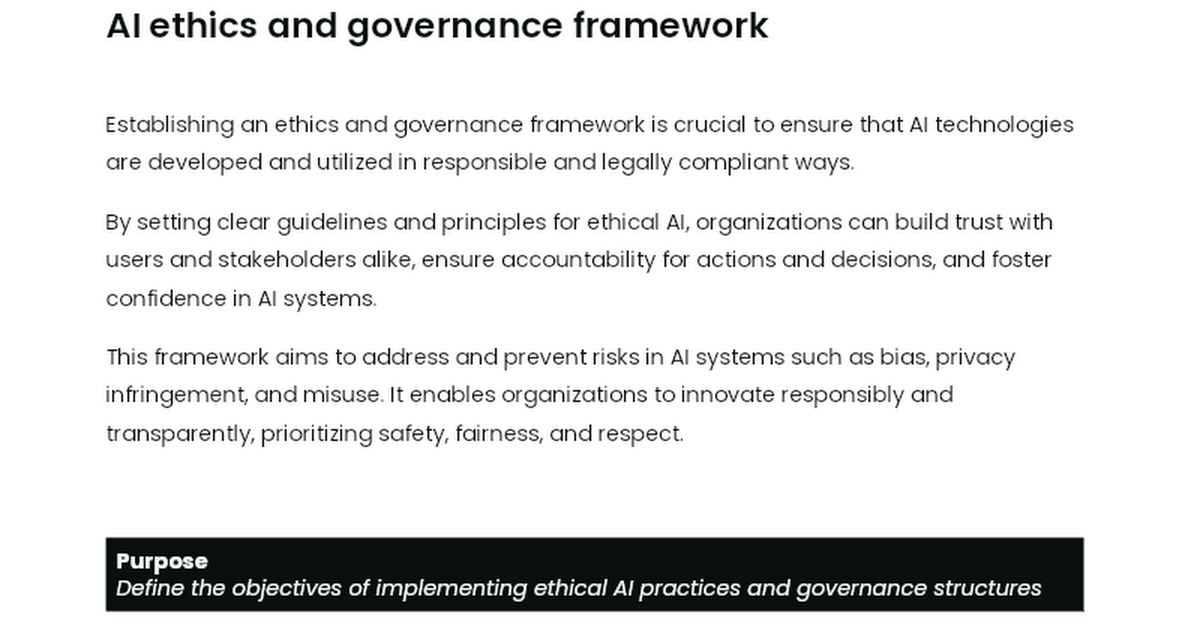
As AI becomes more integrated into your products, it’s not enough to focus solely on innovation – you’ve also got to think about responsibility. That’s where this AI ethics and governance framework template comes in.
Designed to help your team create guardrails for responsible AI use, this framework helps you document principles, identify risks, assign roles, and plan for ethical deployment.
Whether you're launching a new AI feature or reviewing an existing system, this template helps ensure your approach is transparent, fair, and legally sound.
What is an AI ethics and governance framework template?
The AI ethics and governance framework template is a practical, fill-in-the-blanks document that helps you outline how AI is used across your organization – and more importantly, how it should be used.
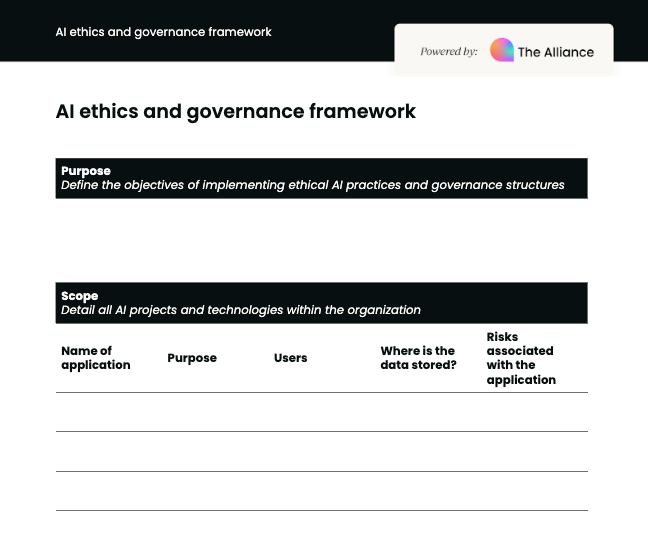
It covers everything from defining ethical principles and AI-specific policies to mapping out roles, responsibilities, and risk mitigation strategies. There’s space to identify your AI applications, where data is stored, and any potential limitations or biases. It even includes sections for committee members, training plans, and reporting channels.
In short, it's a structured way to embed ethical thinking into the everyday development and deployment of AI systems.
Who’s it for?
If you’re working in product, tech, or operations and your org is building with or around AI, this template is for you.
It’s especially useful for:
- Product managers and product ops pros tasked with overseeing responsible AI usage
- Engineering and data science leads who need to think beyond performance and into ethics
- Compliance, legal, or governance teams who want to ensure regulatory alignment
- Cross-functional committees or working groups focused on responsible AI practices
Even if your team’s just getting started with AI, this template gives you a shared starting point to build from.
How to use the template
You can download the framework as a PDF, Word doc, or copy it straight into your Google Drive. Here’s how to get the most from it:
- Start with scope: List all AI-related systems in use, including purpose, users, data storage locations, and known risks.
- Define your principles and policies: Use the prompts to align your team on what “ethical AI” actually means for your org.
- Assign roles and responsibilities: Identify your AI ethics committee, note who’s responsible for what, and outline training requirements.
- Set deployment and reporting processes: Establish how you'll review, approve, and monitor AI projects before and after launch.
- Track progress: Use the built-in tables to keep tabs on employee training and goal completion over time.
It’s built to be collaborative, so loop in stakeholders early and treat it as a living doc.
Grab your AI ethics and governance framework



Become a PLA Insider
Thank you for subscribing
Get exclusive insights, frameworks, and strategies from product leaders driving real business impact.
An email has been successfully sent to confirm your subscription.
 Follow us on LinkedIn