
You're probably feeling a bit worn out by all the AI talk right now. Trust me, you're not alone. We've passed the peak on the Gartner hype curve – you know, where expectations are sky-high and reality hasn't quite caught up yet. Many of us are sliding down into what they call the "trough of disillusionment."
But here's the thing: AI is already here. It's not coming. It's here.
Now, before you roll your eyes thinking this is another technical piece about agentic AI and how to navigate it, let me stop you right there. This isn't really about AI at all. It's about people. It's about you, your team, and how we're all going to work together in this new reality.
Here’s a taste of what we’ll cover:
- The productivity paradox: Why past “productivity tools” haven’t made us more productive – and what that means for AI.
- The changing nature of work: How AI is reshaping roles, creativity, and the way teams operate.
- Where to start: Practical frameworks for examining workflows, identifying opportunities, and building meaningful AI capability.
Wait… why is someone from Tesco talking to you about AI?
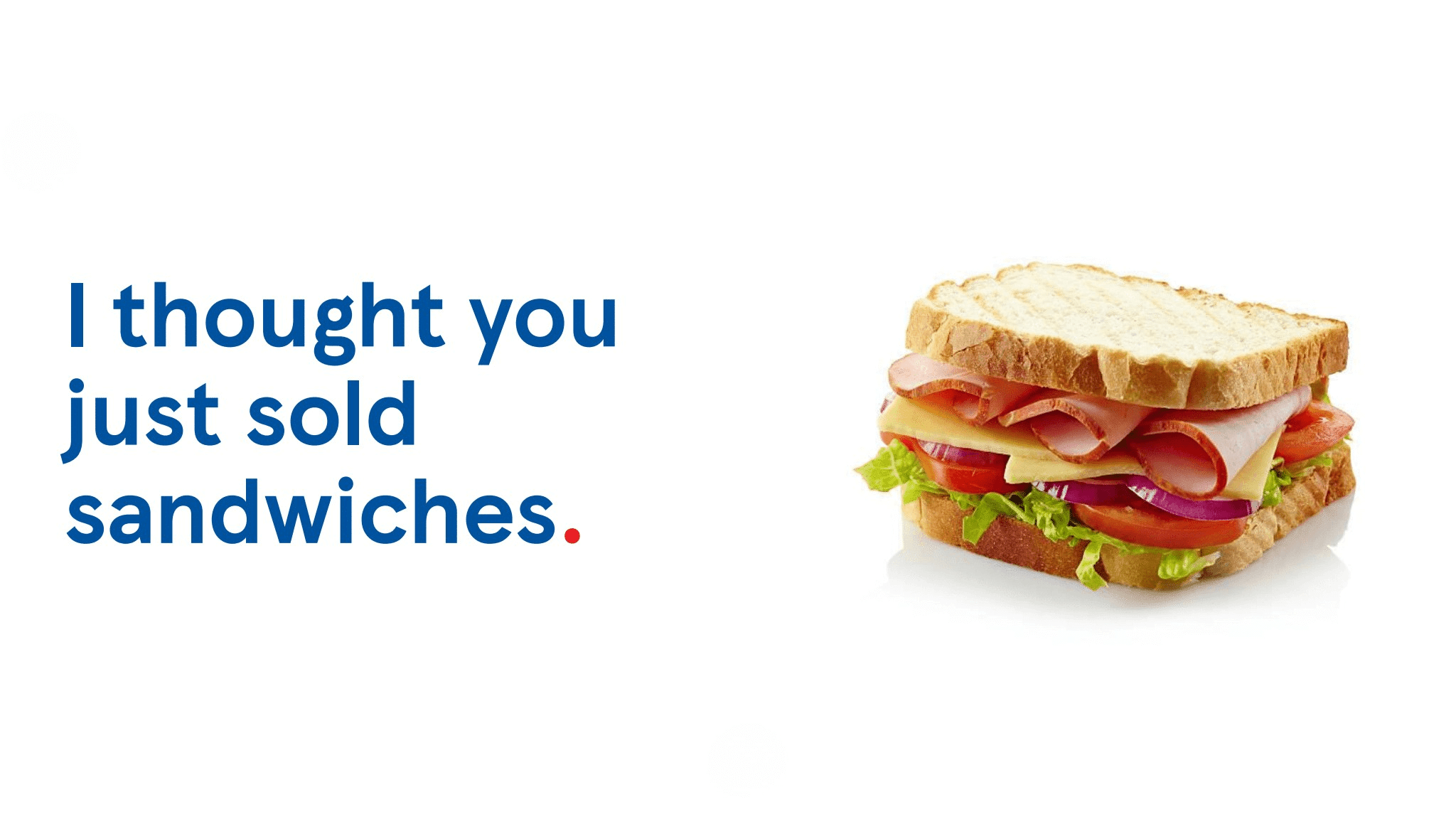
First, let me introduce myself. I’m Chris Browne, Head of Product Management at Tesco. You might be wondering why someone from a grocery chain is talking about artificial intelligence. Fair question. Yes, we sell sandwiches – lots of them, actually. But there's more to the story.
We're the UK's biggest employer. One in every hundred working-age adults in the UK works for Tesco. We're also one of the country's fastest-growing tech businesses, with 5,000 people working in technology globally.
Given our scale, each department is pretty sizable. Our cybersecurity team is huge. We've got legal departments, robotics teams, and even fashion departments. Name an area, and we've probably got a team working on it.
As for me? I've been in product for about 18 years, mostly focused on adopting emerging technologies. I started my career in mobile phones back in 2006 – those pre-iPhone days, when people were starting to get an inkling that smartphones would be big.
These days, I'm also working with the Better Hiring Institute on the government's UK hiring task force, looking at how the UK can hire faster, fairer, and leverage technology ethically.
Why am I telling you all this? Because this moment feels exactly like those early smartphone days nearly 20 years ago. We're at that tipping point again.
The next era of work is already being built. The question is how we navigate it ethically and effectively.
The productivity paradox: When good intentions go sideways
Let me take you on a quick journey through history. Remember the washing machine? Revolutionary invention, right? Economists predicted it would save people (mostly women at the time) so much time that more would enter the workforce. Game-changer.
What actually happened? We just wash our clothes more often now, which means we buy more clothes, which is terrible for the environment.
The promised revolution? Not quite what we expected.
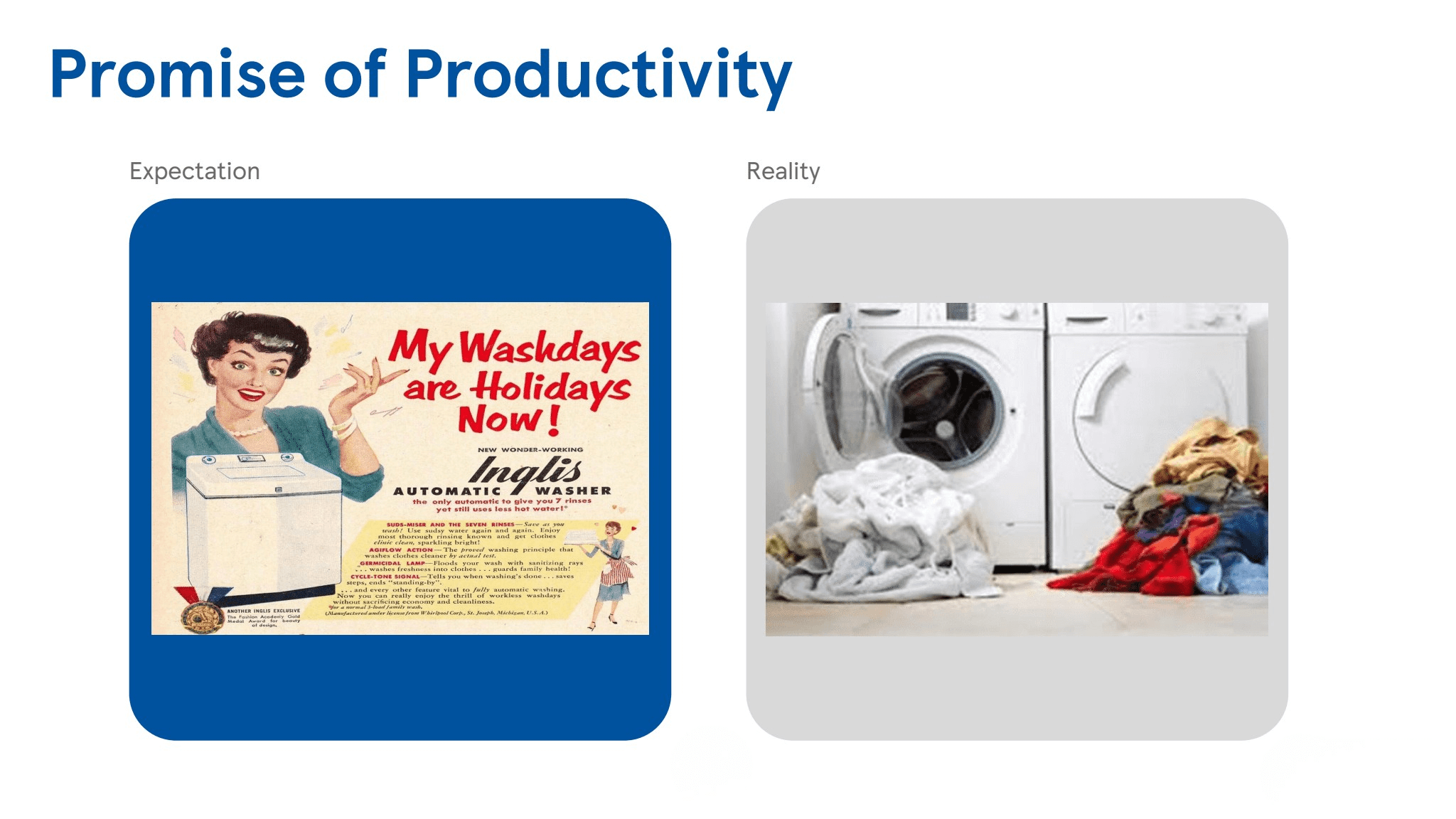
This is a perfect example of something called the Jevons paradox – a 160-year-old economic concept. Make something more efficient, and you get an efficiency gain initially, but then people just use more of it. The gain is short-lived.
Here's another fascinating one: wheels on suitcases. It was a simple but brilliant innovation, making suitcases much easier to travel with. It should've been an instant hit, right?
Nope. It took 20 years to gain mass adoption.
Why? Cultural backlash. Back then, air travel wasn't really a thing – it was mostly rail travel. In the US, you had these folks called Red Hat Porters who'd load your luggage for a few dollars. Show up with a wheelie suitcase, and you were literally trying to take their jobs. They weren't having it. They'd block your way, create a fuss. Nobody wanted to be that person. Macy's wouldn't even stock them.
It wasn't until air travel became more popular and pilots started using wheelie suitcases – and the Red Caps had already declined as a profession – that they finally took off.
For expert advice like this straight to your inbox twice a month, sign up for Pro+ membership.
You'll also get access to 10 certifications, a complimentary Summit ticket, and 100+ tried-and-true templates.
So, what are you waiting for?
The modern productivity myth
Fast forward to today. I was promised my inbox would have 48% fewer emails. Do I get fewer emails? Not really. What I have instead is a ton of smaller inboxes scattered across Slack, Teams, and who knows where else. I'm getting pinged with messages constantly.
Do I feel more productive? Maybe there's better communication, but I'm drowning in messages. Another beautiful example of the Jevons paradox in action.
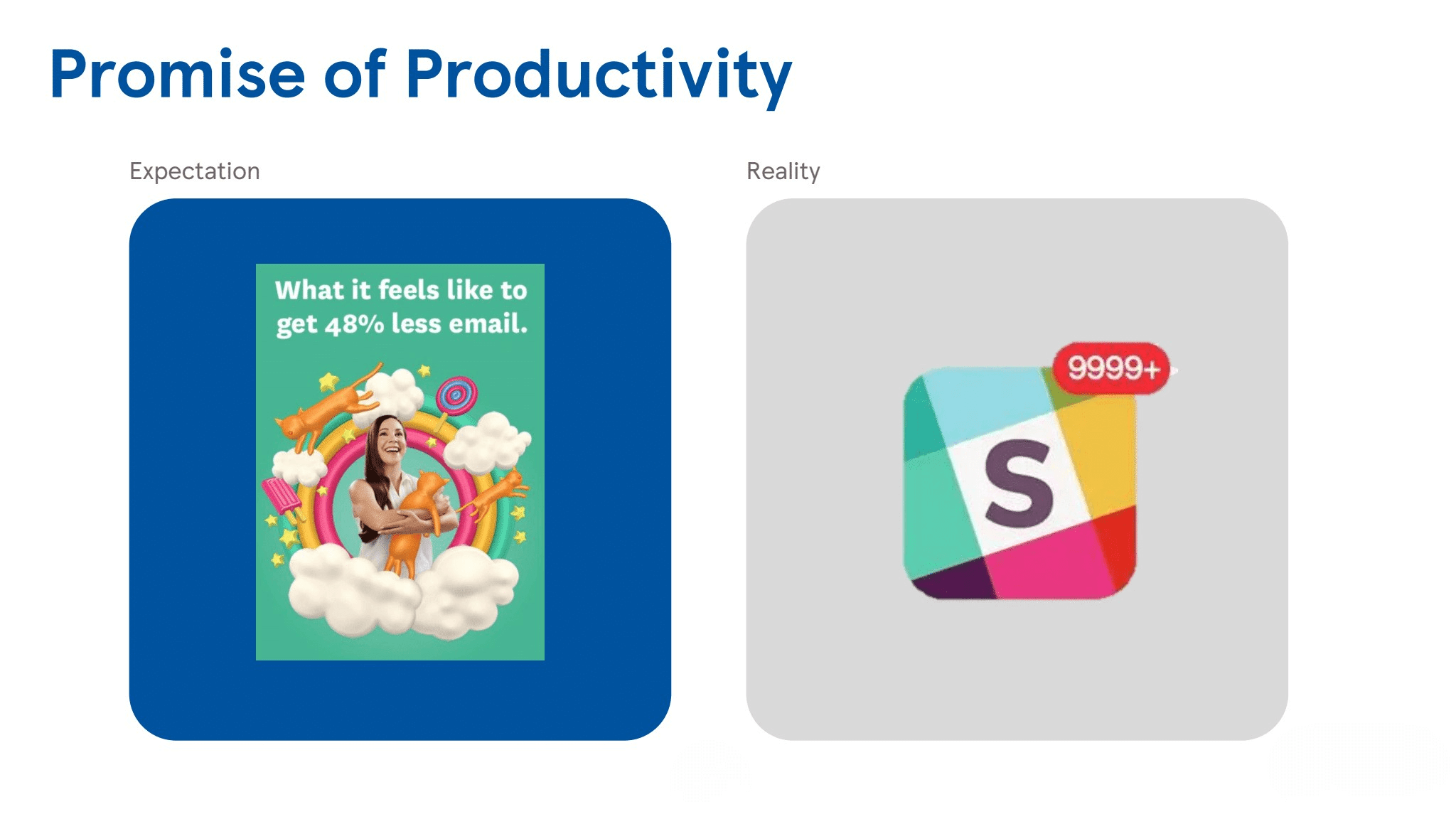
Then there's the recruitment space – more great product intentions that haven't delivered any real gains.
You've got companies telling candidates that AI will automate their job hunt, write their CVs, and get them hired faster. Other companies are telling recruiters they'll help screen candidates quicker, rank them better, and make everything more efficient.
The reality? AI-written CVs are being reviewed by AI. Recruiters aren't hiring any faster. Candidates aren't getting jobs any quicker. It's a false economy.
When demos don't match reality
A lot of companies these days use internal chatbots for Q&A support? These things look amazing in demos.. However, when they hit production, they don't quite perform as well, especially when they're trying to do too much.
"But I saw the demo," people say. "The demo was great. What went wrong?"
Simple: People are messy. Engineers will show you a perfect demo. They'll train generative AI models with clean evaluation sets – question and answer pairs. If you ask this, will the AI answer properly? How can we improve it?
When humans ask good questions, these AI-powered chatbots give good answers based on your company's knowledge, support tickets, et cetera. But people don't ask good questions. They start asking one thing, think of something else mid-conversation, then suddenly they're asking about booking holiday time in the same chat thread. That's when things get confused.


Become a PLA Insider
Thank you for subscribing
Get exclusive insights, frameworks, and strategies from product leaders driving real business impact.
An email has been successfully sent to confirm your subscription.
 Follow us on LinkedIn