





It costs five times more to onboard a new user than it does to retain a current one.
That’s pretty costly, which means you'd better make the onboarding process as seamless as possible. This is your chance to show new prospects just how much your product will improve their life and lock them in as long-term customers.
What is product-led onboarding?
Product-led onboarding is the process of guiding new users through a product in a way that demonstrates its core value quickly and effectively, relying on the product itself to drive user understanding and engagement.
Unlike traditional onboarding, which might involve lengthy tutorials or heavy reliance on sales teams, product-led onboarding leverages intuitive design, self-serve experiences, and in-app guidance to help your new users navigate and experience the product’s benefits firsthand. You want to ensure users achieve their desired outcomes as quickly as possible, all to encourage higher activation rates, retention, and satisfaction.
If you focus on delivering immediate value, product-led onboarding empowers users to independently explore and adopt your product, creating a seamless experience that drives long-term success and growth.
The proof is in the numbers.
A study by Userpilot showed that companies that embraced product-led onboarding were able to increase activation rates by 30% compared to those using traditional means.
Another study by Product Led showed that Freemium models, a common product-led strategy, achieved a conversion rate of 12%, 140% higher than free trials. And if that wasn’t enough to convince you, poor onboarding experience was shown to lose up to 75% of new users within the first week.
Those are some big numbers to work with.
"At Lightning AI, we embraced Product-Led Growth and have been able to increase our activation rates by 164% when onboarding new users."
Colette Nataf, CEO of Lightning AI
Why is onboarding important?
For freemium models adopted by a growing number of SaaS companies, onboarding is the frontline in the battle for the upsell. Users who have parted with their cash straight out of the gate can become super users, advocates and if the onboarding is truly nailed it opens the door for cross-selling and upgrading packages.
For B2C businesses, it promotes brand loyalty and repeat purchases, possibly with even more fervor due to the unwavering passion of users. Tying great onboarding to a great product is a sweet recipe for growth, as once you've hooked users, they won't go elsewhere. I'm looking at you iPhone users.
Remember, the responsibility of onboarding may not solely be in the hands of the product team. Depending on your organization’s size, you may have entire departments dedicated to onboarding, specific hires in the product team to handle it, or a high-quality self-serve system.
However, it’s a vital part of the process of building and releasing products. So it's on your head if you choose to neglect onboarding!
More benefits of perfecting your onboarding process include:
- Improving a customer’s chance of success with your product because they’ll understand how to use your product sooner and be more likely to stick with it, increasing retention and reducing dreaded churn.
- Setting a good first impression and laying the groundwork for a positive and lasting relationship (like a good 'Hello' on Zoom with no awkward small talk at the start) sets the tone for a smooth and pain-free experience.
- It saves time by reducing common customer questions, such as: “Where can I find x?” and “How do I do y?”, sent to your customer support teams.

Your onboarding checklist
Creating an effective onboarding experience is crucial for ensuring users quickly realize the value of your product. Use this checklist to guide your process:
1. Understand your users
- Define the ideal customer profile (ICP): Clearly identify who your users are and what they aim to achieve.
- Map the user journey: Outline key touchpoints from signup to activation.
- Pinpoint success metrics: Determine what "success" looks like for users during onboarding.
2. Simplify the signup process
- Minimize form fields: Collect only essential information to avoid friction.
- Enable single sign-on (SSO): Make account creation seamless with integrations like Google or social login.
- Offer a guided welcome: Use a friendly, personalized greeting to set the tone for a positive experience.
3. Highlight core value quickly
- Identify the ‘Aha!’ moment: Focus on the feature or action that delivers immediate value to users.
- Provide interactive walkthroughs: Guide users through key features using tooltips or checklists.
- Leverage demo content: Preload examples to demonstrate functionality.
4. Use data-driven personalization
- Segment new users: Tailor onboarding flows based on user role, industry, or goals.
- Offer contextual help: Surface tips and guides based on user behavior or milestones.
- Track engagement: Monitor user actions to identify where they may need additional guidance.
 Richard Bracchi
5. Build trust with communication
- Send onboarding emails: Use automated emails to reinforce key steps and provide helpful resources.
- Include in-app messaging: Offer real-time assistance or reminders through chat or pop-ups.
- Enable feedback loops: Include a way for users to share their thoughts or frustrations.
6. Test and iterate
- Conduct A/B tests: Try different onboarding flows to see which performs best.
- Analyze drop-off points: Use analytics to identify where users abandon the process.
- Collect user feedback: Regularly survey new users for insights to improve the experience.
7. Measure and optimize
- Track activation rates: Measure how many users reach the "Aha!" moment.
- Monitor Time-to-Value (TTV): Assess how long it takes users to achieve their first success.
- Assess retention rates: Ensure users stay engaged beyond the onboarding phase.
 Himadri Joshi
Getting together your onboarding process document
An onboarding process document is a comprehensive guide that outlines the steps (see section above), tools, and strategies (see section below) required for you to effectively onboard new users.
In the context of PLG, this document serves as a roadmap to help users quickly understand and extract value from a product. It typically includes detailed workflows, key milestones like the "Aha!" moment, and instructions for guiding users through critical features or actions. It also identifies metrics for success, such as activation rates or time-to-value, and specifies how to measure and optimize these outcomes.
By standardizing the onboarding process, this document ensures consistency, improves the user experience, and provides a foundation for continuous improvement, making it an essential tool for your team to remain focused on growth and engagement.
Onboarding best practices in product-led growth
You’ve got the checklist, so you know what to do, but how do you execute those steps for optimal hit?
Prioritize the “Aha!” moment
The “Aha!” moment is the point when users first realize the value of your product. Successful onboarding focuses on guiding users to this moment quickly and effortlessly. To achieve this, identify the most impactful features that showcase your product’s value and design a clear path for users to engage with them. For instance, if you’re a collaboration tool, highlighting how to invite team members might be the fastest way for users to see the product’s benefits in action.
Make onboarding self-serve and intuitive
PLG emphasizes empowering users to explore and adopt the product independently. This means your onboarding experience should be intuitive, with minimal friction. Use tooltips, progress checklists, and interactive walkthroughs to guide users through key features without overwhelming them. At the same time, provide options for users to dive deeper if they prefer, such as offering demo content or in-app tutorials.
Leverage personalization
No two users are the same, so why should their onboarding experiences be? Tailor your onboarding flow based on user roles, goals, or behaviors. By segmenting users and providing contextual assistance, you can make the experience more relevant and engaging. For example, a project management tool might offer different onboarding paths for team leads versus individual contributors, highlighting features most useful to their roles.
Use data to optimize continuously
Onboarding doesn’t end at activation; it’s an iterative process. Use analytics to track user progress, identify drop-off points, and refine your onboarding flows. For instance, if many users abandon the process before completing a key step, such as connecting an integration, this signals an opportunity to simplify that step or provide more guidance. Regularly gathering feedback from new users can also offer valuable insights into improving their experience.
Provide ongoing support
Even in a self-serve model, support is essential. Offer clear channels for users to access help when needed, such as in-app chat, FAQs, or community forums. Proactively send onboarding emails or nudges to remind users of the next steps or provide tips for maximizing their experience. The goal is to ensure users feel supported throughout their journey, even if they’re navigating independently.
"Most product-led businesses focus on signup conversion. But if you do the math, optimizing the user onboarding process is much more impactful to your company's growth."
Laura Kluz, Head of Content, and Ramli John, Director of Content at Product Led
 LJ Barnum
Real-life examples of onboarding success stories in PLG
Dropbox
Dropbox has become a prime example of effective onboarding in the PLG space. When users sign up, they’re guided through a series of simple steps designed to help them understand and use the product quickly. The onboarding process includes:
- Interactive tutorials: Users are shown how to upload their first file and share it with others, emphasizing the product's core value.
- Gamification: Dropbox incentivizes users to complete onboarding tasks by offering additional free storage space for actions like inviting friends or installing the desktop app.
- Email support: Follow-up emails guide users to explore additional features, such as file recovery and offline access.
The results of this onboarding approach speak for themselves. Dropbox saw a 60% increase in user engagement and a significant uptick in referrals, which fueled its exponential growth from 100,000 users in 2008 to over 700 million today.


Canva
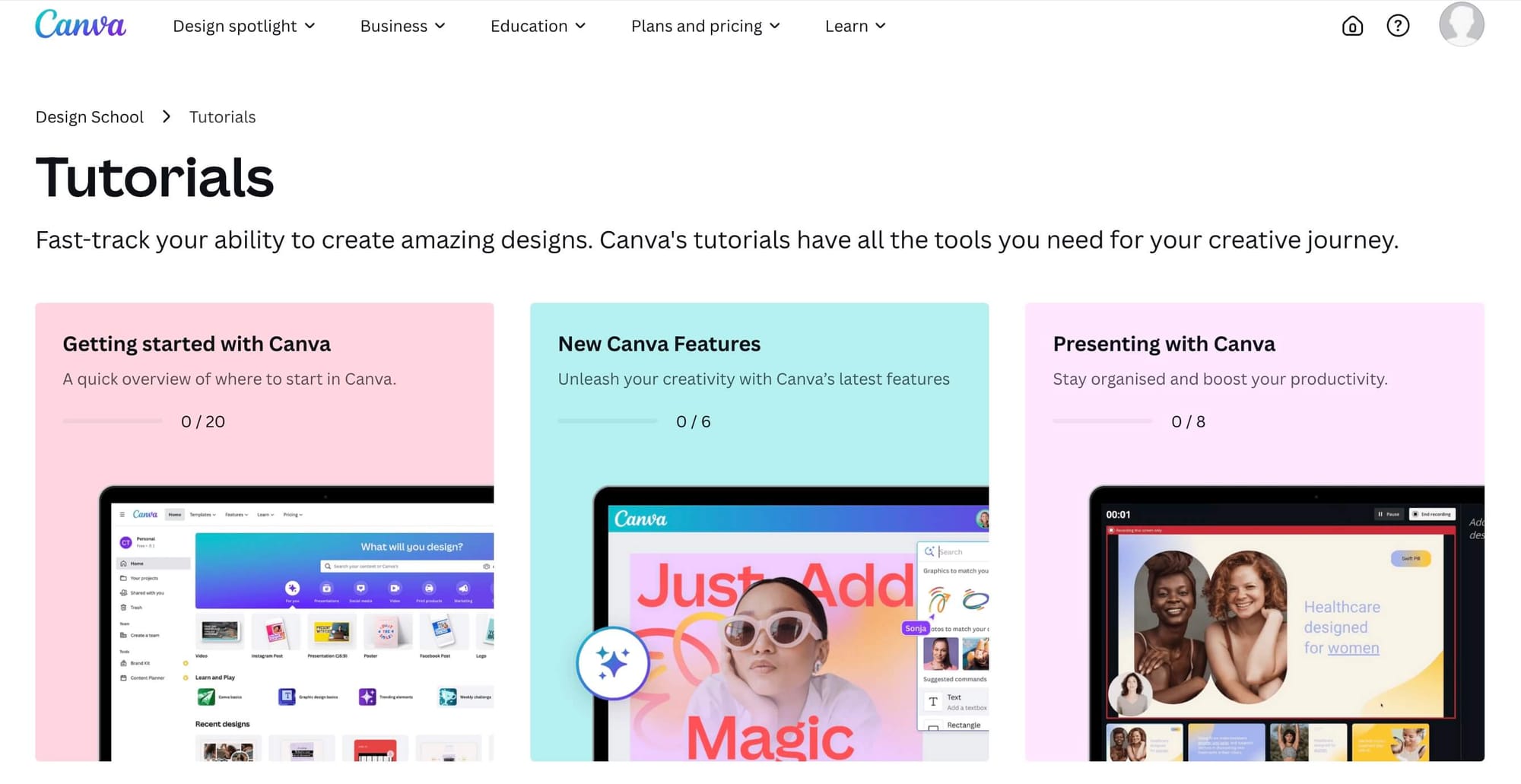
Canva’s onboarding process is tailored to empower users to create stunning designs from the very first interaction. The company simplifies design creation by:
- Step-by-step guidance: New users are prompted to select a design template aligned with their goals (e.g., social media posts, presentations).
- Preloaded content: Canva provides prefilled templates to demonstrate features like drag-and-drop functionality and font selection.
- Personalized suggestions: Based on the user’s initial choices, Canva recommends tools and tutorials to improve their experience.
This approach has helped Canva achieve a rapid learning curve for users, with 85% of customers creating their first design within 10 minutes of signing up. The seamless onboarding experience has contributed to Canva’s status as one of the fastest-growing design platforms globally, with over 125 million monthly users.
Slack
Slack’s onboarding is an industry benchmark for PLG success, focusing on interactive and collaborative user experiences. New users are introduced to the platform through:
- Guided workflows: Slack walks users through creating their first channel, sending messages, and inviting team members.
- Interactive simulations: Users can experiment with features in a controlled environment without fear of making mistakes.
- Emphasis on collaboration: Slack encourages users to invite colleagues during onboarding, ensuring immediate engagement within teams.
This onboarding strategy has led to a 30% increase in team activation rates. Slack’s ability to engage users early has been pivotal to its success, growing to 18 million daily active users and positioning itself as a leader in the collaboration software market.
Onboarding specialists: Is it worth it?
Investing in an onboarding specialist has become a popular strategic move as companies, especially SaaS and product-led growth orgs, double down on delivering seamless product experiences.
Specialized onboarding roles are rising across product, customer success, and product management teams. These specialists are responsible for guiding new users through initial setup, training customers on key features, and ensuring they achieve early value with your product – all of which are critical to user retention and product adoption.
An onboarding specialist brings expertise in designing user-centric, frictionless processes that guide new users to their “aha!” moment quickly and effectively. They often serve as the primary contact during onboarding, tailoring plans to individual customer goals and helping customers complete essential setup tasks like integrations, configurations, or training sessions.
What’s more, companies often look for onboarding specialists with cross-functional skills such as:
- Cross-functional collaboration with support, product, and sales teams
- Data skills to track onboarding metrics
- Systems thinking: Adapt processes based on data and customer feedback.
This evolution reflects a broader trend where onboarding becomes deeply embedded in product adoption strategy.
While the role may seem like an added expense, the return on investment can be substantial: better onboarding drives higher activation rates, improved retention, and increased revenue stability, especially in competitive markets where customers expect rapid time-to-value.
To sum it up
Whether through interactive tutorials, personalized workflows, or collaborative prompts, the best PLG onboarding processes are designed to meet users where they are and help them achieve their goals seamlessly and quickly.
Remember, investing in a robust onboarding experience isn’t just beneficial—it’s essential for scaling a product and maintaining your competitive edge.
Become product-led onboarding certified.
Gain a deeper understanding of how to create successful onboarding experiences and increase engagement with Himadri Joshi.
By the end of this certification you'll be able to:
- Increase engagement. Understand the best practices to instantly hook your users on your product.
- Strategize. Build a data-backed product onboarding strategy from scratch.
- Gain buy-in. Achieve leadership support by proving the value of a strong product-led onboarding program.
What are you waiting for?


Become a PLA Insider
Thank you for subscribing
Get exclusive insights, frameworks, and strategies from product leaders driving real business impact.
An email has been successfully sent to confirm your subscription.
 Follow us on LinkedIn