
What makes one digital experience feel effortless while another leaves you ready to give up? The answer comes down to how dramatically customer expectations have shifted.
We’re more connected than ever before – our phones, wearables, homes, and even our daily habits are shaped by AI-driven, personalized experiences. With every scroll on Instagram or swipe on TikTok, we get instant, tailored results.
Whether we realize it or not, that becomes the benchmark for everything else. As a result, loyalty has become incredibly fragile. One moment of friction, and customers move on.
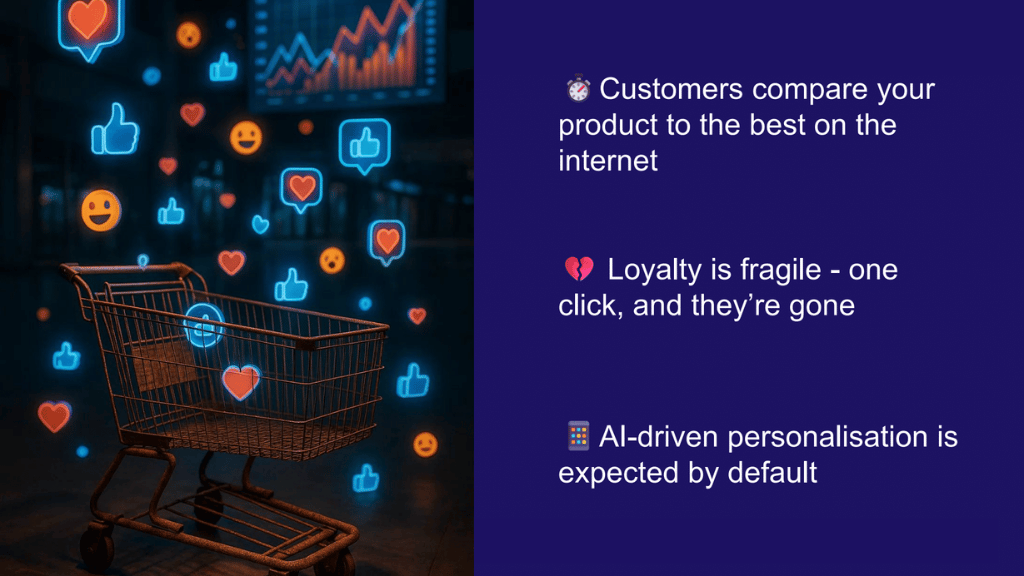
That’s why nailing the customer experience matters more than ever. You’re competing for a split second of attention in a world full of noise, and an outstanding customer experience is often the only real differentiator left.
In this article, I’ll share how we’ve tackled these challenges at Virgin Media O2. You’ll get practical insights, real examples, and clear takeaways you can bring back to your teams to help you deliver exceptional customer experiences in a world where expectations just keep rising.
The secret behind exceptional customer experiences
Let me tell you a secret: your customer experience mirrors your product structure. In other words, the way you structure your company and your product teams will eventually show up in what you serve to customers.
This might sound obvious, but so many companies forget it. I’ll share a few examples so you can see what I mean.
For expert advice like this straight to your inbox twice a month, sign up for Pro+ membership.
You'll also get access to 10 certifications, a complimentary Summit ticket, and 100+ tried-and-true templates.
So, what are you waiting for?
When team silos become customer pain
Let’s start with the image on the left. It’s a screenshot from a well-known retailer’s website. There are about 120 filters. 120! What customer has the time and patience to interact with all of them? I’m willing to bet that those filters exist because there’s a team somewhere whose success metric is filter interaction.
My personal favorite is the “out of stock” filter. It defaults to “show.” Yes, please show me all the items I can’t buy! Super helpful.
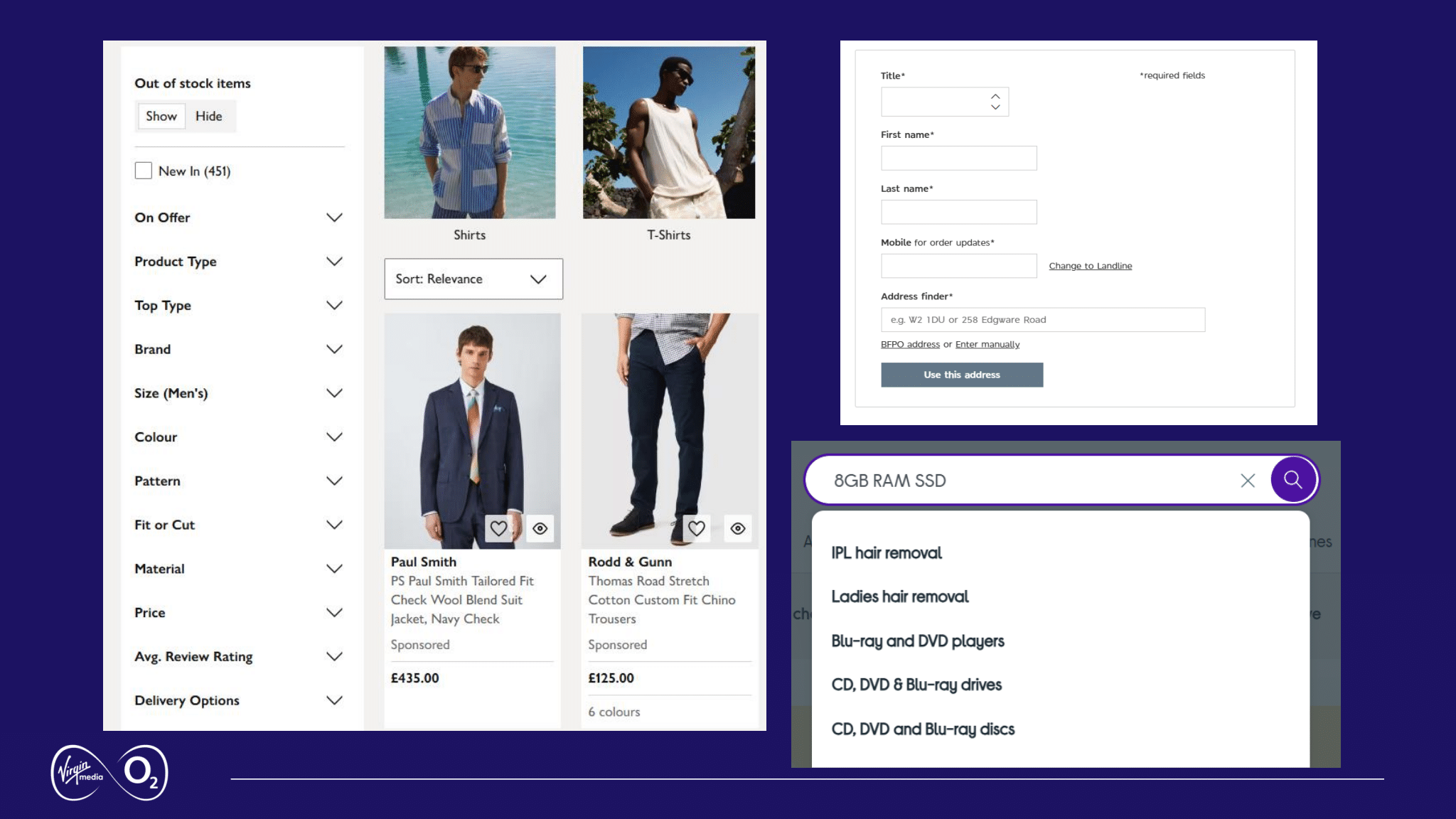
But wait, it gets worse! The moment you apply a couple of filters, you get zero results – so the filters aren’t even fulfilling their purpose. They’re disconnected from the product catalog, stock levels, and overall experience – because that’s exactly how the teams behind them are structured.
Another example: that form in the top right with five separate fields for the customer to fill out. You can sense the mindset: “capture every piece of information possible.” But it’s completely disconnected from how people want to sign up today. We live in a world where you can sign in with one click – customers shouldn’t have to manually fill out every line.
And then there’s my absolute favourite. I searched for an 8GB RAM SSD laptop and was shown… hair removal products. That’s a perfect example of how search, product descriptions, and category teams are working in silos. Each team is chasing its own micro-success, but the end-to-end journey makes no sense.
This is what happens when teams aren’t connected and there’s no overarching product strategy.
What good looks like
It doesn’t have to be this way. Below, you can see an example of filters that are actually helpful – filters that adapt to the customer and what they’re looking for. That’s customer-first thinking.
And then there’s a sign-up page that doesn’t force you to fill in five different fields; instead, it allows you to use your existing Google, Facebook, or Apple login. It’s simple, friction-free, and the customer is at the center.
Lastly, check out this search engine that actually understands what you typed and serves you relevant results. If you search for an 8GB RAM laptop, that’s what you get.
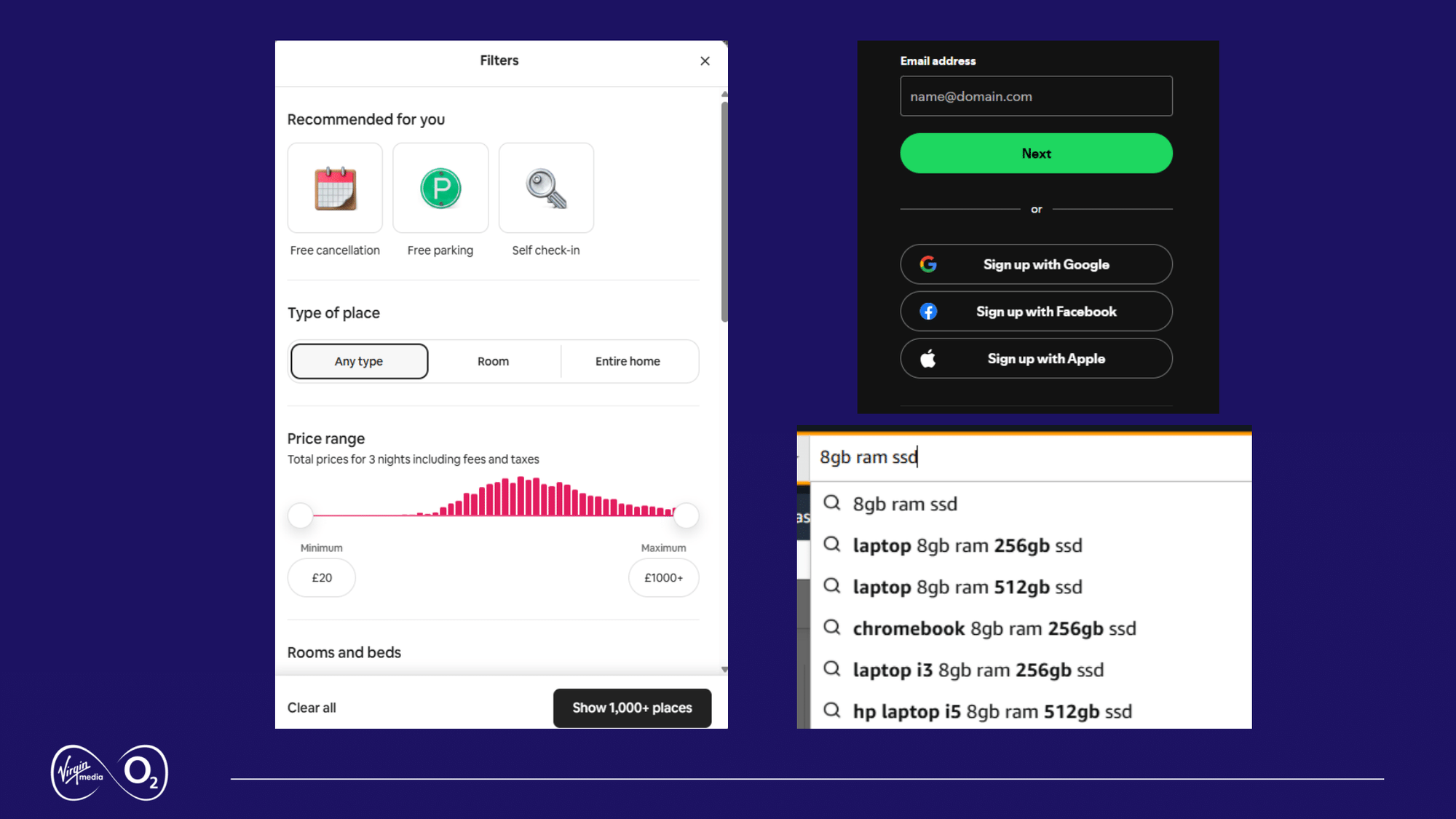
As these examples show, when teams are aligned and connected, the customer experience feels connected too. When they’re not, the experience becomes confusing, inconsistent, and sometimes even a little embarrassing.
The three pillars that anchor seamless, end-to-end experiences
Here’s the key thing to remember: customers don’t see your org chart. They don’t know which team owns which page. They only feel the friction created by a disjointed journey. Well-structured teams deliver seamless digital experiences. Poorly structured teams deliver broken ones.
About a year ago, we took all of this on board and committed to making real change on the acquisition side at Virgin Media O2. We knew we needed a clear strategy – a blueprint for delivering a truly seamless end-to-end customer journey – and that meant rethinking how our teams worked and how the experience was built.
Our strategy is built on three pillars:


Become a PLA Insider
Thank you for subscribing
Get exclusive insights, frameworks, and strategies from product leaders driving real business impact.
An email has been successfully sent to confirm your subscription.
 Follow us on LinkedIn