


We've all felt it – that relentless pressure to ship, ship, ship. Features flying out the door, teams burning out, and somewhere along the way, we lose sight of what actually matters: creating value for our customers.
Having led transformations at multiple organizations, I can help you change that.
In this article, you’ll learn how to turn your product organization into a value engine by leveraging outcome-driven frameworks. We’ll explore the hidden costs of the feature factory, the strategic role of AI in product ops, and a step-by-step approach to aligning your quarterly planning with customer value.
Let’s dive in.
The hidden cost of the feature factory
You can easily find yourself stuck in the feature factory trap when internal stakeholders drive roadmap priorities. Someone needs X, Y, and Z features by a certain date to close a deal.
Before long, the roadmap becomes a wish list of disconnected features rather than a coherent strategy serving the interests of our existing customers.
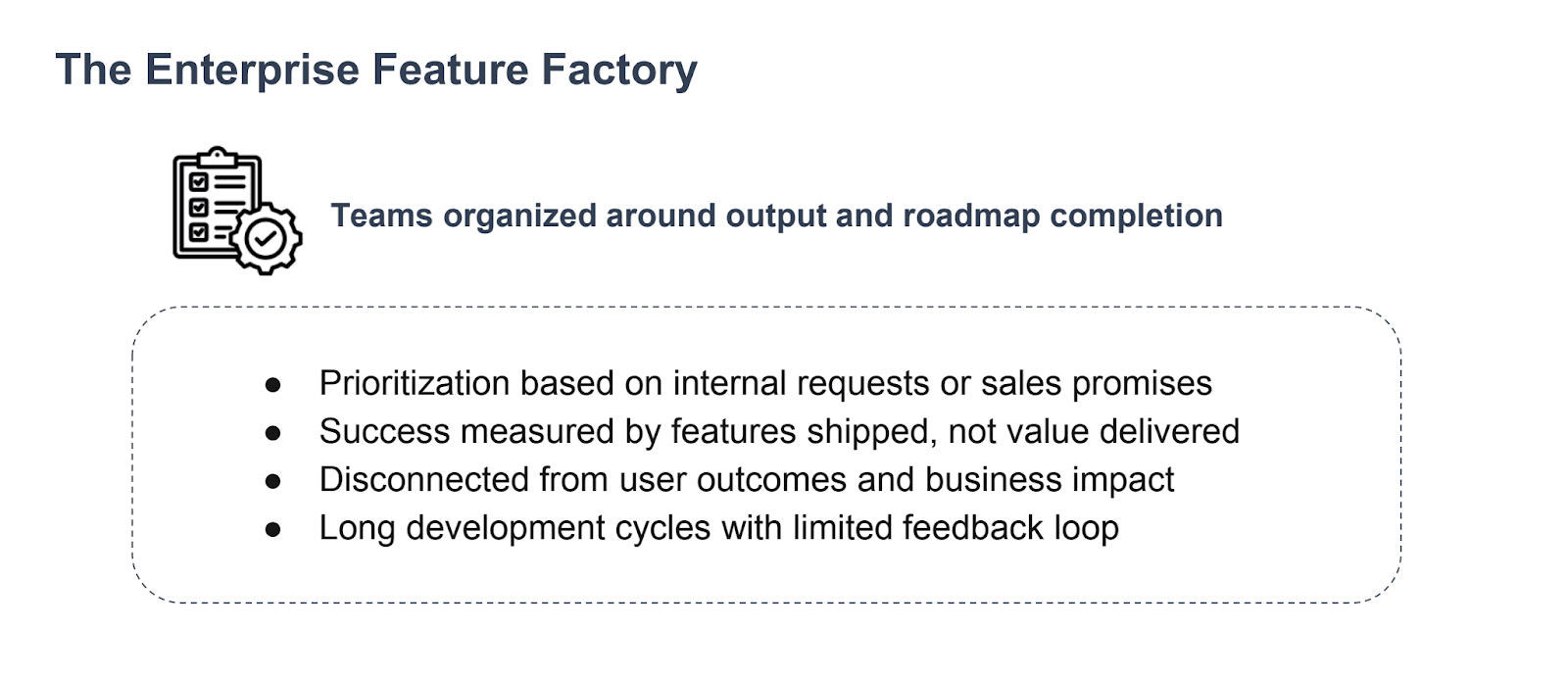
I've been in those rooms. The pressure is real. You're measuring success by counting completed epics in Jira – but are you actually making your customers' lives better? Is onboarding getting smoother? Is the product becoming easier to use? Meanwhile, maintenance costs balloon because every feature you ship needs ongoing support.
The cost goes beyond the obvious monetary impact. Your teams are on a constant treadmill, churning out features that might not even get adopted. Ad hoc requests pile up. The human cost? Team burnout from constantly chasing output metrics instead of meaningful outcomes.
Turning enterprises into value engines
To become a value engine rather than a feature factory, your organization needs to focus on driving outcomes, and that starts with the right metrics. Atlassian is a great example – they made time to first value their North Star. That's a metric that actually means something to customers.
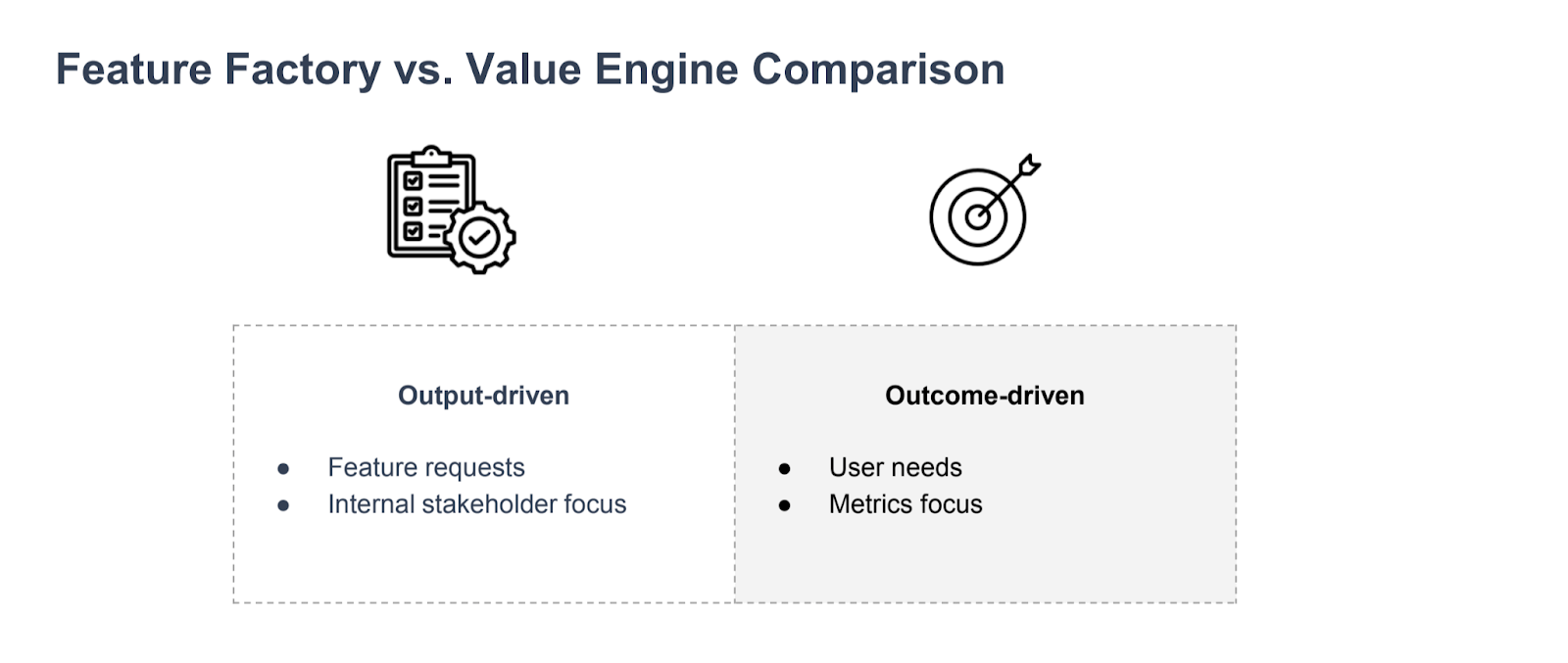
Starting with metrics sounds obvious, but you'd be surprised how many companies skip this step. What do your customers actually care about? Map your prioritization to those metrics.
For expert advice like this straight to your inbox twice a month, sign up for Pro+ membership.
You'll also get access to 10 certifications, a complimentary Summit ticket, and 100+ tried-and-true templates.
So, what are you waiting for?
Product operations as strategic enablers
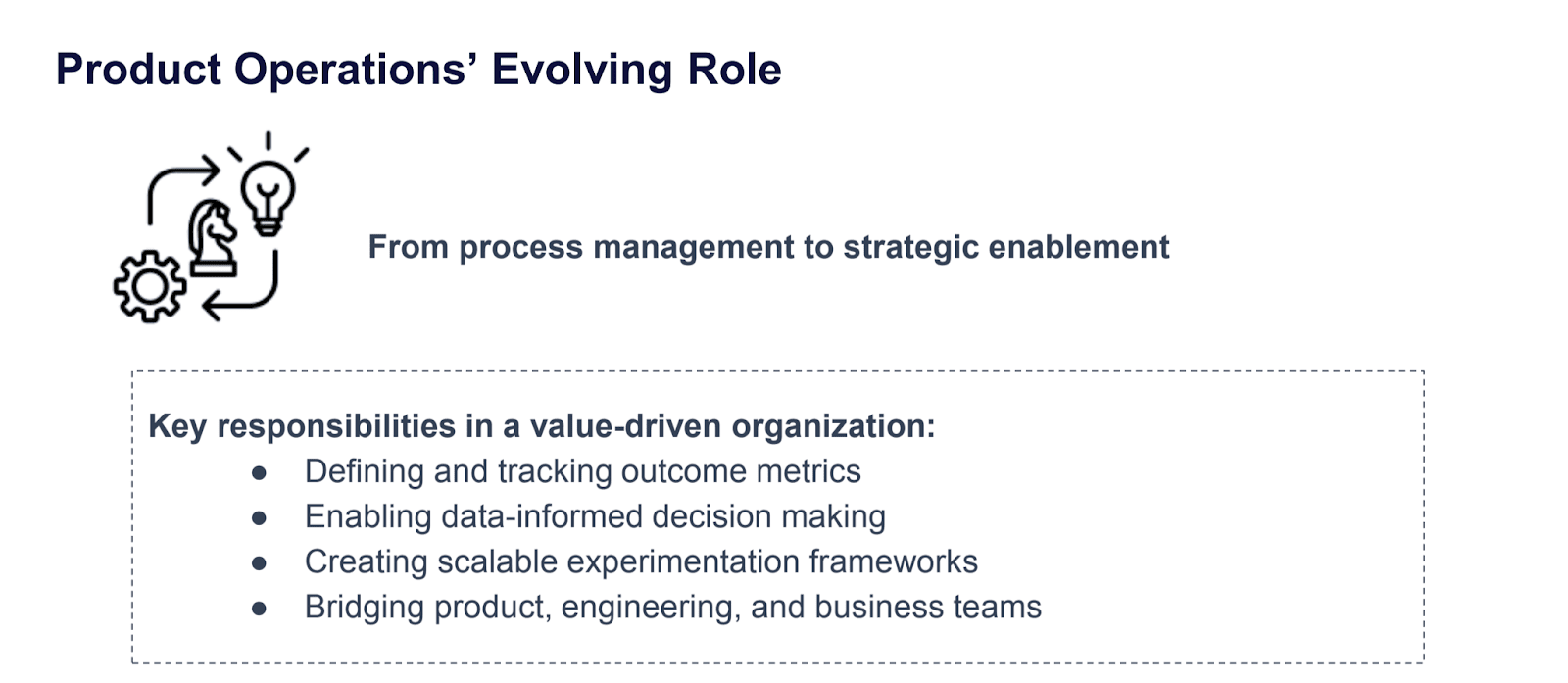
Here's where product operations comes in. We've evolved from being process enforcers to strategic enablers. Our role isn't well-defined in many organizations, which actually gives us an opportunity. We can provide the structure teams need to define and track meaningful metrics.
AI is changing the game for us, too. Recently, I needed to analyze quarterly metrics spanning product adoption, operations availability, and everything in between. I fed four different reports into Amazon Q, and within seconds, I had insights that would have taken me hours to compile manually.
But that's just the beginning. We can now identify patterns in customer behavior that we couldn't see before. The key is feeding the right data into these systems and creating visibility for leadership to make informed decisions.
We need to adopt AI quickly, but thoughtfully. It's about augmenting our capabilities, not replacing human judgment.
Frameworks for value measurement
Let me share a few frameworks you can put into practice right away.
Framework 1: Outcome-based roadmapping
Outcome-based roadmapping starts with the bigger picture. Rather than beginning with a list of features, start with your vision and work backwards from where you want to be.
When you're planning a quarter, it can help to ask a simple question: By the end of this quarter, what will we have achieved that meaningfully improves the customer experience? Those outcomes should connect directly to the key business drivers you’re trying to move.
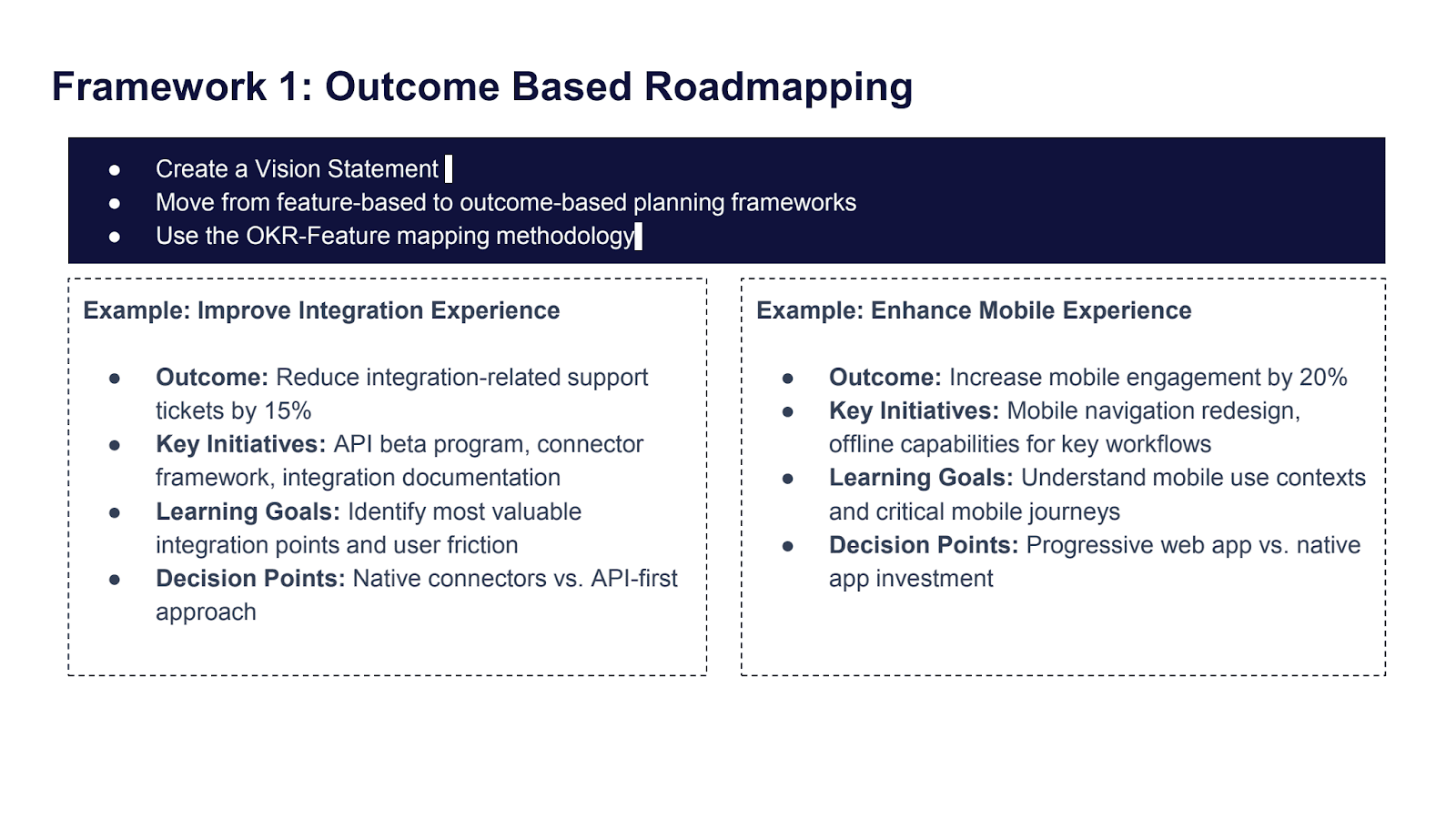
From there, initiatives and features become ways to achieve those outcomes. For example, a team might focus on reducing integration-related support tickets or increasing mobile engagement. The specific initiatives – whether that’s improving documentation, redesigning navigation, or building new capabilities – flow naturally from the outcome you’re trying to achieve.
The same framework can be applied across many different contexts. Whether you’re improving integrations, enhancing a mobile experience, or tackling another customer challenge, starting with the desired outcome helps ensure your roadmap stays aligned with real user value.
Framework 2: Value measurement system


Become a PLA Insider
Thank you for subscribing
Get exclusive insights, frameworks, and strategies from product leaders driving real business impact.
An email has been successfully sent to confirm your subscription.
 Follow us on LinkedIn