
Cross-functional collaboration gets talked about endlessly in product operations, but what does it actually look like day to day?
For me, the real impact of product operations comes not only from working inside the product team, but from mastering the collaboration that happens outside of it, especially with our commercial teams.
When I joined The Trade Desk as the first product ops hire in EMEA, I wasn’t seated with product at all – I landed next to the commercial operations org. That placement opened my eyes to how much value product ops can create when it sits close to the business side of things.
In a company of 4000 people, with just three of us in product ops, we had to define our roles clearly. One colleague naturally became our engineering partner, while I became the business partner. That outward-facing work quickly became the most energizing part of my role.
And it led us to the heart of our collaboration model: product strategy groups – a structured way for business teams to understand product decisions, influence the roadmap, and contribute to truly two-way partnerships.
In this article, I’ll share how these groups work. You’ll learn:
- Why we created product strategy groups
- How they help teams align on the “why,” not just the what
- Who participates and how we keep conversations strategic
- The principles that make these groups work across regions and communication styles
Let’s dive in.
The challenge of roadmap alignment
Aligning teams outside of product on the roadmap is one of the hardest challenges in any organization. Share the roadmap too early, and people rush off to talk to clients about things that might never ship. Share it too late, and valuable opportunities slip through the cracks. Striking that balance is never straightforward.
For us, the goal has always been twofold:
- Make sure everyone understands what product is working on
- Make it easy for other teams to share the insights we need
Publishing a roadmap alone won’t get you there. Teams need to understand the why behind our decisions – why one initiative moves forward while another doesn’t. And for genuine collaboration to take hold, people outside the product organization need to feel like they’re part of the decision-making process, not just spectators to it.
Creating two-way dialogue with product strategy groups
To achieve greater transparency with our roadmaps, we created product strategy groups. The core objective of these groups is to enable business teams to influence the roadmap.
When competing priorities arise – and believe me, they always do – we start with the why. Why is this a priority? What budget or profit are we looking at? Often, priorities fall away when people realize it's just one client pushing for something that won't help the broader platform.
Sometimes, though, competing priorities remain, and someone has to make an executive decision. That's where these groups prove their worth.
We run regular surveys to check how well these groups are working. Right now, 67% of people say they can influence the roadmap through these groups. Not perfect, but we're getting there.
Who attends product strategy groups?
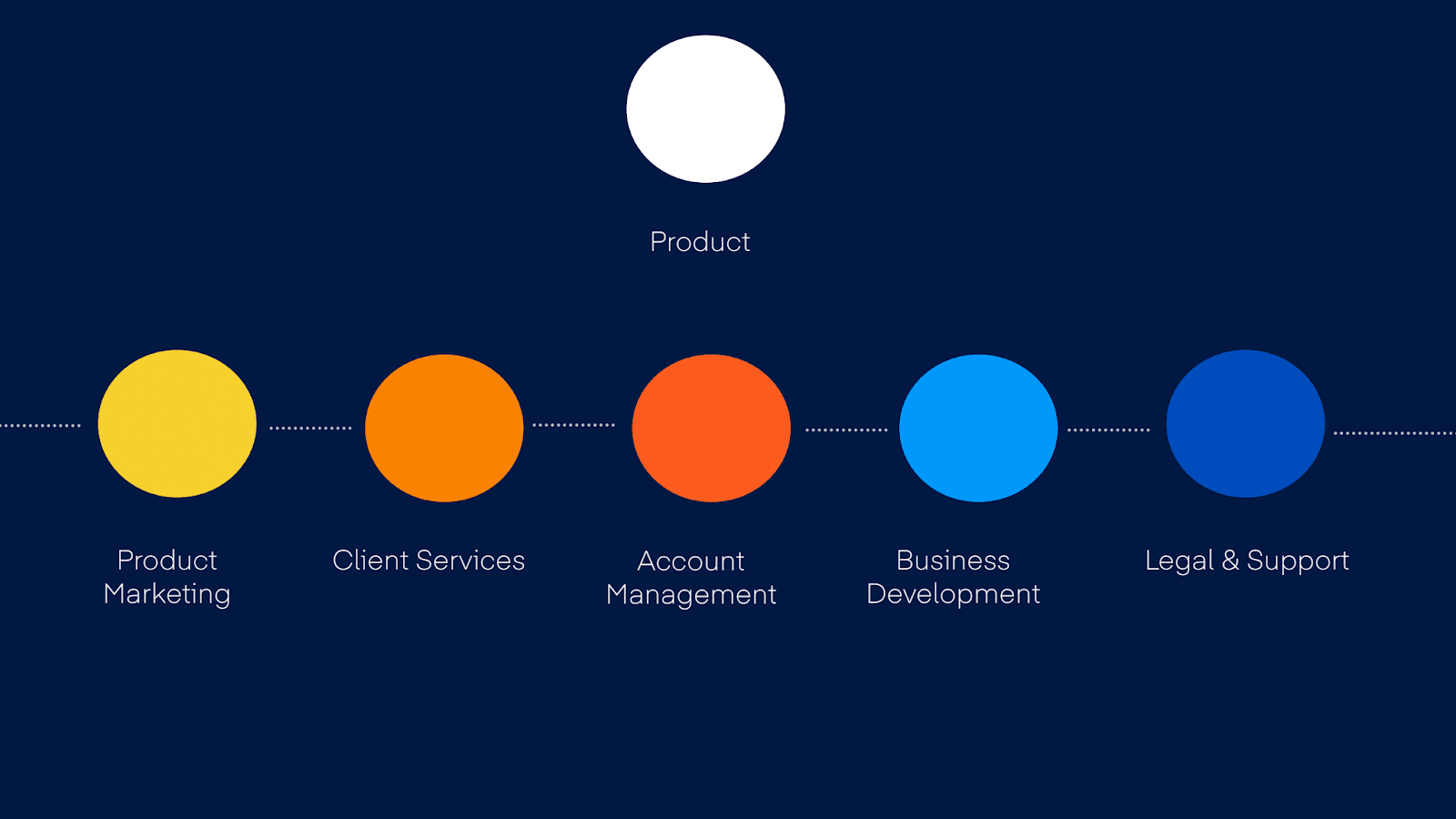
These groups are set up for all different product areas, and we currently run about nine different groups. Key attendees include:
- Client services: Our top stakeholder, as they talk with clients regularly.
- Account managers: They act as internal clients, using the platform on behalf of external clients, and understand the needs deeply.
- Product marketing: Critical for figuring out the go-to-market strategy.
- Legal and support: They don't have to join every time, but their input is required for specific types of areas.
The continuous design sprint approach
I see these groups as continuous design sprints. Day one of a design sprint brings stakeholders together to gather insights. Subject matter experts share perspectives on problems from client or technical viewpoints.
From there, we explore potential solutions, run tests (alpha and beta with client involvement), and then move to build and launch with our go-to-market strategy.
What teams value most in strategy groups
We run surveys twice a year to see how well our product strategy groups are working, and the feedback always points to the same priorities. At the top of the list is discussing product roadmaps and plans.
We used to handle those conversations in a separate monthly meeting between business and product leadership – complete with a chip system where engineers allocated 100 chips to different features. In the end, it only confused people, and the real decisions still came from the top, so we scrapped it.
Today, roadmap discussions happen directly within the product strategy groups. It’s a much better fit, even though each product area has its own engineering team and its own roadmap. Occasionally, we have to shift teams around when a particular initiative becomes the priority, but having those conversations in one place keeps everyone aligned.
Beyond roadmaps, a few other topics consistently prove valuable in these groups:
- Product vision and strategy: Helping teams understand not just what we’re building, but why.
- Business feedback from clients: Grounding our decisions in real needs, challenges, and expectations.
- Execution tactics: These sit lower on the list. Senior leaders want confirmation, not debates about implementation.
- Testing opportunities: Identifying the right clients for beta feedback.
Guiding principles for effective product strategy groups
To make our product strategy groups work, we follow a few key principles:
- Regional nuances matter: Don't talk to your APAC team about what works in the US – they’ll quickly lose interest. Keep teams engaged with what matters to them.
- Train your presenters: We treat these groups seriously, meeting at least fortnightly – sometimes weekly for key areas. People need to engage effectively and ask clear, open, non-leading questions, just like user researchers do.
- Create symmetry between product and business: Enable commercial teams to bring topics too. It's not all PM-driven. Shared ownership matters.
- Keep the dialogue going between meetings: Don't wait two weeks to share important insights.
Recognizing different communication styles
Finally, working in a global company means working across different cultures and communication styles. We often talk about bringing "vocal people" into the room, but this sometimes translates to prioritizing people who are loud or aggressive.
We must remember that people have different communication styles. Some wait until they are asked directly, "Would you like to say something?" to offer their insight. That quiet insight might be the best one you get all day.
Whatever kind of meeting you’re in, always keep in mind that we all have different habits, personalities, and needs. I recommend reading The Culture Map by Erin Meyer for a deeper dive on this topic.
Key takeaways
Product strategy groups work because they bring clarity, structure, and shared ownership to some of the most complex decisions in a product organization. When teams understand the “why,” feel heard, and see how their input shapes direction, collaboration becomes faster, smoother, and far more impactful.
If you’re feeling inspired to launch your own product strategy groups, keep these lessons in mind:
✨ Start with the why: Ensure everyone understands the reasoning behind product decisions.
🤝 Create genuine two-way dialogue: Let business teams influence priorities, not just react to them.
🧠 Train facilitators well: Good questions and well-run sessions make all the difference.
🔄 Keep the conversation going: Don’t wait for the next meeting to share important updates or insights.
📊 Listen to the data: Use surveys and stakeholder feedback to refine how the groups operate.
This article is based on Ashka Komorowska-Jalal’s talk at the Product Operations Summit, London, 2023. Pro and Pro+ members can enjoy the complete recording here.


Become a PLA Insider
Thank you for subscribing
Get exclusive insights, frameworks, and strategies from product leaders driving real business impact.
An email has been successfully sent to confirm your subscription.
 Follow us on LinkedIn