





The first time a major on-sale went live on a platform I owned, I did the thing every PM is trained to do. I opened the dashboard and watched the conversion.
It was a disaster by every metric I trusted. Sessions spiked to a number our infrastructure had never seen. Conversion rate cratered. The drop-off at the seat-selection step looked like a fire. My instincts, honed over years at Careem and talabat, screamed one thing: broken funnel, find the friction, kill it.
I was wrong about almost all of it. The funnel wasn't broken. My instincts were. What I was watching wasn't a failing checkout. It was thousands of people fighting over a scarce, emotional, time-boxed thing they desperately wanted. And most of the rules I'd brought with me from delivery weren't just unhelpful. They were pointing me in the exact wrong direction.
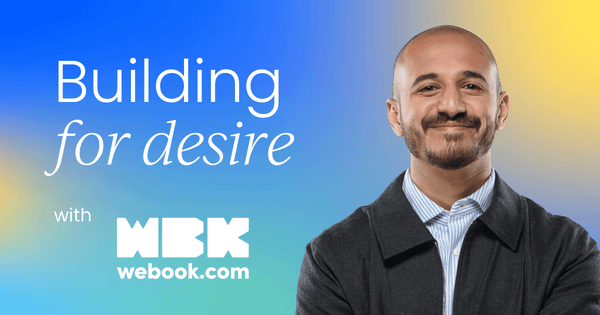
I've spent most of my career building consumer products in habit categories. Ride-hailing at Careem, food delivery at talabat. Then I moved into entertainment and events. First helping build ticketing in Iraq, now leading product at webook.com across a much larger regional footprint.
The move looked lateral on paper. Same consumer marketplaces, same mobile-first users, same MENA context. It was not lateral. Entertainment quietly broke four beliefs I didn't even know I was holding.
What I had to unlearn
I believed frequency was the goal. It isn't.
In delivery, frequency is the religion. Reorder rate is the north star. A user who orders four times a week is gold. A user who hasn't opened the app in 30 days is nearly churned, and you spend real money to win them back. The entire product is tuned to compress the gap between one transaction and the next.
I carried that straight into entertainment and immediately started worrying about the wrong people. In events, a user might transact a handful of times a year and still be among the most valuable customers you have. Someone who buys two big experiences annually – a concert, a match, a festival – can sit in your top decile of value while looking, to a delivery-trained eye, like a dormant account you should be targeting with win-back messages.
Here's the trap in one sentence. In delivery, a 30-day-silent user is nearly churned. In entertainment, the same user might be your best customer, waiting for the right event to exist. Same dashboard, opposite conclusion. If you let delivery instincts drive your lifecycle strategy, you’ll spend your retention budget nagging your highest-value customers to behave like low-value ones.
The fix wasn't a better win-back campaign. It was throwing out frequency as the primary lens entirely and rebuilding the value model around occasions, not visits.
I believed friction was always the enemy. It isn't.
The deepest reflex from ride-hailing is friction-hatred. Every tap is a leak. You measure the journey in seconds and treat each one as a cost. Get the user from intent to outcome as fast as physically possible. That's the whole craft.
Entertainment doesn't work like that, and the place I learned it most violently was the on-sale. When tickets for a high-demand event go live, the experience is not a smooth glide to checkout. It's a queue. It's a countdown. It's "you have 7 minutes to complete your purchase." Seats vanish in real time. Every single one of those is friction. Removing them doesn't help. It destroys the thing.
Because in entertainment, the friction is the product. Scarcity, anticipation, the slightly anxious thrill of trying to get something before it's gone. That isn't a tax on the experience. It's a large part of why people want it. A drop that's instantly, frictionlessly available to everyone forever isn't a drop. It's inventory.
This took me a while to accept, because it felt like heresy. The reframe that finally clicked: delivery removes friction to reduce anxiety; entertainment shapes friction to create desire. The skill isn't eliminating friction. It's knowing which friction to engineer and which to kill. A confusing payment step? Kill it. The fairness mechanics of a queue that make a sold-out show feel earned rather than rigged? Protect them with your life.
I believed demand was a curve. It's a spike.
In delivery, you plan around a curve. There are lunch and dinner peaks, but they're predictable; they repeat daily, and your whole operation is built to smooth them. The art is dampening volatility.
Entertainment demand isn't a curve you smooth. It's a spike you survive.
I learned this in Iraq, where football is not a category; it's a national nervous system. An on-sale for the right match wasn't a gradual ramp. It was the entire country arriving at the same door in the same instant. I'm seeing the same physics now at a much larger scale around season-level events, where a single moment can generate more load than a normal week.
And here's what makes it genuinely harder than a delivery peak. An on-sale spike is three different problems wearing one trenchcoat:
- It's a load problem: Can the system stay up?
- It's a fairness problem: When demand is 50x a fixed supply, who gets it, and does the mechanism feel just?
- It's an emotional problem: The people who don't get a ticket are now your angriest users, and how you handle that loss shapes whether they come back.
Delivery has the first problem occasionally. Entertainment has all three, simultaneously, every time, with an audience that cares enormously.
You don't optimize a spike. You design it as a discrete event with its own playbook. And you accept that the calmest, most frictionless version of it would also be the deadest.
I believed I was selling a transaction. I was selling a feeling.
This is the one underneath all the others.
A delivery order is a utility. Someone is hungry; you end the hunger. The emotional arc is short and shallow. Mild want, quick satisfaction, done. The product job is to be reliable and invisible. Nobody tells a story about the time their shawarma arrived in 22 minutes.
Entertainment is the opposite. A ticket is not a seat. It's the anticipation in the weeks before, the experience itself, and the memory and status afterward. People announce the purchase before they've gone. They count down. They post about it. The transaction is the smallest, least important part of a long emotional arc that starts before you've taken any money and continues long after the event ends.
Which means the product surface I'd spent years perfecting, the clean, fast, forgettable checkout, was solving for the wrong moment entirely. In delivery, the product is the transaction. In entertainment, the transaction is just the receipt for a feeling that started long before and lasts long after. If you only build the receipt, you've built the least valuable 2% of the experience.
That reframe changes everything downstream. What you put in a confirmation screen. Whether your notifications build anticipation or just nag. What "post-purchase" even means. What you do about an event that's already happened. You stop optimizing a funnel and start designing an arc.
I believed my instincts were the problem. Only half of them were.
For all of that, the two worlds share a spine. Missing it would have been its own mistake.
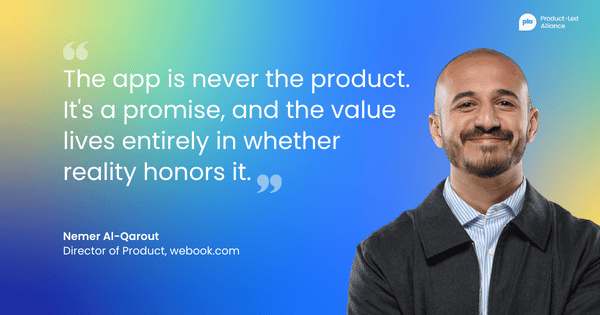
Both are promises about the physical world. You tap a button on a screen, and something has to happen offline. A car shows up. Food arrives hot. You get through the gate and into your seat. The app is never the product. It's a promise, and the value lives entirely in whether reality honors it. Get that wrong in either category and nothing else you built matters.
This is why the idea underlying all four differences is the same. Trust is everything, because you're asking people to pay before they receive. Local payment rails decide whether you exist, not just whether you're convenient. Supply is the real constraint. Drivers and restaurants in one world, events and inventory in the other, and no amount of demand-side polish papers over a thin supply side. And the moment of truth is always physical, never digital. The ride, the meal, the match. That's where you keep or lose the customer, and no funnel optimization reaches it.
So, the instincts that transfer are the ones about reality, not the ones about behavior. How people behave changes completely from one category to the next. What it takes to deliver on a promise in the real world barely changes at all. My mistake wasn't trusting my old instincts. It was trusting the wrong half of them.
If you've moved between consumer categories yourself, I'd bet the same split holds. The surface rules were all different. The thing underneath was the same.


Become a PLA Insider
Thank you for subscribing
Get exclusive insights, frameworks, and strategies from product leaders driving real business impact.
An email has been successfully sent to confirm your subscription.
 Follow us on LinkedIn