








Product management is often discussed as if the same playbook applies everywhere. In reality, approaches that work in mature organizations don’t always translate well to zero-to-one environments. That’s because product teams in companies with a working structure and existing users can focus on optimization, improving conversion rates, and prioritizing features based on customer feedback.
Venture studios function differently because, often, there are no users or revenue, and no validated problem statement. The challenge goes beyond building a product to deciding if a product deserves to be built at all. This completely changes product reasoning.
The first responsibility within venture studios is analysing risk before investing resources. To do this, operators focus on four major challenges before drafting a single line of code:
- Is there a real and important market problem?
- Can customers be acquired easily?
- Is the idea achievable and feasible in the current marketplace?
- Can the result be defended if successful?
Product development only begins when these questions have been answered.
Market risk: Is the problem real, valuable, and timely?
Confusing enthusiasm with evidence is a huge mistake in the early stage of product building. The reason is that different creative processes start from energy and a strong narrative, with little market validation.
The first stage in venture studios is often more about investigation than creation. This means that operators have to understand whether the opportunity is promising enough before investing meaningful capital or time. The process usually starts with three basic concerns:
- Who is this for?
- Why now?
- What exactly are we solving?
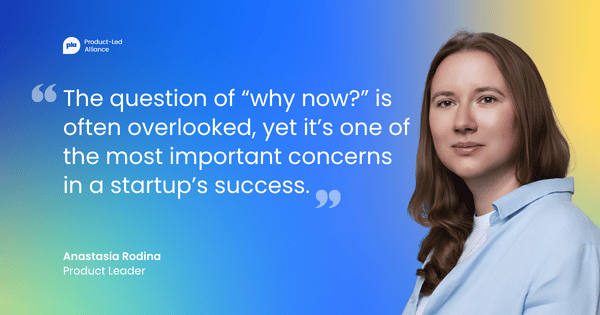
The question of “why now?” is often overlooked, yet it’s one of the most important concerns in a startup’s success.
Markets grow quickly, and customer behavior can change overnight. The entire industry can be quickly transformed by factors such as platform changes and technological shifts. Also, a problem that seems urgent today may become irrelevant tomorrow. That’s why better venture studios focus on rapid market validation, like understanding customer challenges at a practical level and evaluating competitors.
The objective at this stage is to gather enough evidence to determine whether the market opportunity is real and commercially meaningful.
Competition plays a role too: if a market's already crowded, acquiring customers becomes more expensive. And if a product can be copied easily, without much coding required, differentiation can disappear before meaningful traction is gained. Competing directly against dominant incumbents requires a realistic understanding of how much market share can actually be captured. At this stage, evidence should carry more weight than optimism.
Distribution risk: Can we reach customers before we build?
Another significant difference in venture studio spaces is the relevance of customer acquisition before product development begins. Some teams quickly go into building after validating customer pain. This is understandable because building feels productive. Plus, modern tools have made software design faster than ever.
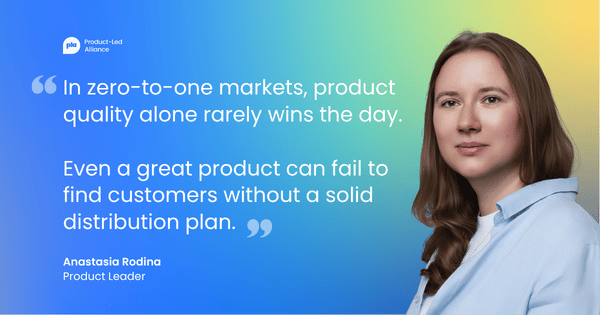
The difference is that in zero-to-one markets, product quality alone rarely wins the day. Even a great product can fail to find customers without a solid distribution plan. That's why venture studios test their acquisition assumptions before investing in development.
Some key questions to consider include:
- Where do the target customers exist?
- Will they comply?
- What channels can realistically reach them?
- Will they convert into sign-ups, demos, pilots, or commercial interactions?
- Can acquisition economies support a viable business?
This often means starting with early commercial conversations or landing pages, especially in B2B, where behavioral signals can offer proof long before a finished product exists.
A signed pilot customer or a strong letter of intent is worth more than a polished MVP. Many teams validate opinions, while stronger teams validate behavior. If users aren't willing to sign up or show real intent, the product isn't the main problem; the acquisition assumptions are. Venture studios treat distribution as an early risk to validate, not a problem to solve after launch.
Feasibility risk: Can this actually operate in the real world?
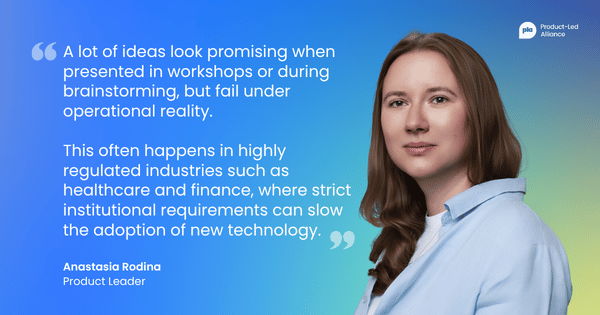
A lot of ideas look promising when presented in workshops or during brainstorming, but fail under operational reality. This often happens in highly regulated industries such as healthcare and finance, where strict institutional requirements can slow the adoption of new technology.
Founders often ask why competitors have yet to launch certain ideas. The answer may be a lack of creativity, but there’s a good chance that operational burdens and legal risk make the idea commercially unattractive.
This is why experienced venture operators check feasibility earlier than some traditional product teams. Early checks include evaluating the following:
- Compliance requirements
- Security obligations
- Licensing needs
- Data privacy restrictions
- Operating servicing demands
- Long-term sustainability.
Feasibility is about more than technical possibility; it's commercial and operational too. No matter how appealing a concept seems on paper, it has little value if it can't function safely in the real world.
This stage deserves attention because modern tooling can make anything look easy to build. But the hardest problems startups face today aren't technical; they're operational and organizational. That's why even the strongest ideas can fail when real-world constraints are ignored.
Defensibility risk: If it works, can it survive?
The barriers to building software have been reduced by AI-powered tools. This is a double-edged sword, as the same features that streamline creation can also make imitation easier.
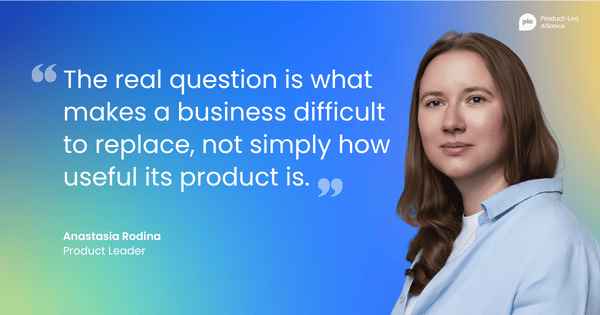
That's why venture studios consider defense mechanisms right from the start. The real question is what makes a business difficult to replace, not simply how useful its product is. These advantages can take different forms, including proprietary distribution channels, trusted brand positioning, switching costs, network effects, and operational excellence.
The most successful companies don’t rely on technology alone. They combine product value with structural merits that are difficult for other businesses to copy over time. This is an important feature in places where AI and no-code features speed up product development.
Venture studios pay attention to how a product can succeed and maintain useful differentiation as the market changes. The businesses most successful are often those that create advantages that competitors cannot easily copy.
Conclusion
In venture studios, coding only begins once the hardest questions have been answered. From day one, operators work systematically to reduce risk across defensibility and customer acquisition. This is about more than launching quickly; it's about allocating capital intelligently and building on evidence rather than assumption.
Seen this way, the real "first product" is a validated conviction, built through rigorous testing, that lets venture studios move forward with less capital and sharper focus.


Become a PLA Insider
Thank you for subscribing
Get exclusive insights, frameworks, and strategies from product leaders driving real business impact.
An email has been successfully sent to confirm your subscription.
 Follow us on LinkedIn