





Created by:
 Product-Led Alliance
Growth without a model is just guesswork. To make consistent, measurable progress, you need a structured way to identify your growth levers, prioritize the initiatives most likely to move the needle, and execute with enough rigor to learn from every experiment.
This framework walks you through that process from end to end, giving you a repeatable system for building a hypothesis-driven growth strategy.
What is a growth model?
A growth model is similar to a financial model, but focused on the metrics you can actually influence – things like conversion rates, referrals, and click rates, rather than output metrics like revenue or total acquisitions.
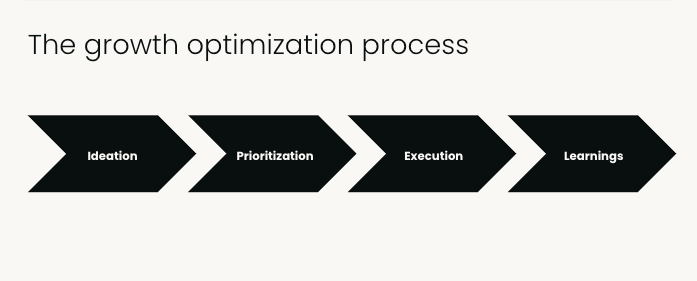
This framework helps you identify and prioritize your growth levers across areas like paid, content, virality, monetization, and retention, then break each lever down into specific initiatives. It covers the full growth optimization process: ideation, prioritization using the ICE scoring method, execution, and learnings.
Who is it for?
This framework is for product managers and product leaders who are responsible for driving growth and want a more structured approach to doing it. It's particularly useful if you're working across multiple growth levers and need a consistent way to evaluate and prioritize where to focus your team's time and effort. It's also a strong foundation for anyone building or refining a growth function from scratch.
How to use the framework
Start by working through the ideation phase, drawing on a range of sources – comparable products, user research, data and analytics, subject matter experts, and prior experiments. Aim for three to five validated idea sources before moving forward. From there, use the ICE method to score each initiative on impact, confidence, and effort, and use those scores to decide what to double down on, apply an 80/20 approach to, or deprioritize entirely.
In the execution phase, track three key metrics: velocity, win rate, and average impact per winning experiment. Over time, these throughput metrics help you calibrate expectations by lever and estimate revenue potential more accurately. Use the learnings phase to standardize what's working, identify win and loss themes, and continuously sharpen your backlog for maximum ROI.
Get your framework



Become a PLA Insider
Thank you for subscribing
Get exclusive insights, frameworks, and strategies from product leaders driving real business impact.
An email has been successfully sent to confirm your subscription.
 Follow us on LinkedIn