









Created by:
 Product-Led Alliance
Strong positioning doesn't happen by accident. It requires a clear understanding of your market, your competitors, and, most importantly, the customers who will care most about what makes your product different. Without that clarity, even great products can struggle to cut through.
This template gives you a structured way to work through your positioning thinking and arrive at a message that's grounded in real differentiation and aimed at the right audience.
What is a positioning canvas template?
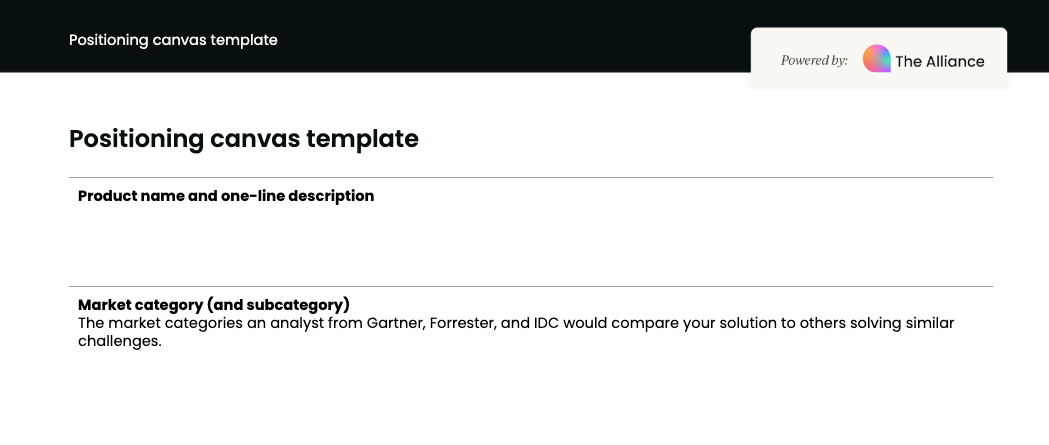
The positioning canvas is a concise, structured framework for defining how your product sits in the market relative to competitors and customer needs. It walks you through five key elements:
- Product name and one-line description: A crisp summary of what your product is and what it does.
- Market category: The category and subcategory your product belongs to — framed in terms of how an industry analyst would compare it to similar solutions.
- Competitive alternatives: What customers would turn to if your product didn't exist.
- Unique attributes: The specific features or capabilities your product offers that competitors don't.
- Value and who cares: What those unique attributes actually enable for customers, and what characteristics define the customers who care most about that value.
Working through these elements in order gives you the building blocks for a positioning statement that's both differentiated and audience-specific.
Who is it for?
This template is for product managers and product leaders who need to define or refine how their product is positioned in the market. It's also a useful tool for anyone working across product and marketing who wants a shared, structured starting point for positioning conversations, particularly when launching a new product or entering a new market segment.
How to use the template
Start with the product name and one-line description to establish a clear baseline, then work through each section in order.
The market category section is worth spending time on – framing your category in the way an industry analyst would helps anchor your positioning in a context your buyers already understand.
As you move into competitive alternatives and unique attributes, be honest about what truly sets your product apart rather than what you'd like to be true. Use the value and "who cares" sections to connect your differentiation directly to customer outcomes, which is where positioning becomes genuinely compelling.
Get your positioning canvas template



Become a PLA Insider
Thank you for subscribing
Get exclusive insights, frameworks, and strategies from product leaders driving real business impact.
An email has been successfully sent to confirm your subscription.
 Follow us on LinkedIn