




Created by:
 Product-Led Alliance
As product teams grow, so does the risk of misalignment – between teams, between discovery and delivery, and between what you're building and why. Getting ahead of that with a structured approach to product alignment makes collaboration smoother, decisions easier to defend, and outcomes easier to measure.
This framework gives you a complete, reusable document for capturing product discovery, framing problems and solutions, and keeping everyone on the same page from initial opportunity through to post-launch review.
What is a product alignment framework?
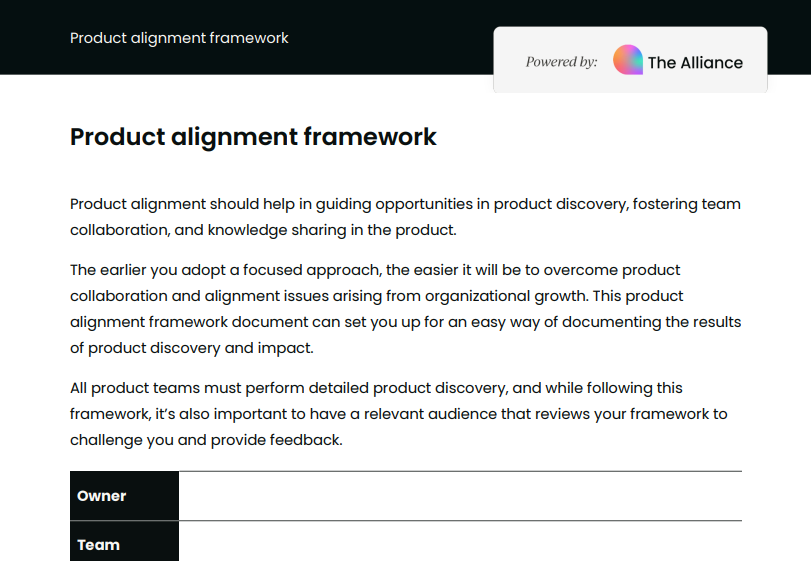
This framework is a structured document that guides product teams through the full lifecycle of a product opportunity, from problem framing to go-to-market strategy and post-launch reflection. It's organized into four main sections:
- Opportunity/problem framing: Define the problem statement, audience, and rationale for pursuing the opportunity, including links to customer research, OKR alignment, competitive positioning, success metrics, and potential solution directions.
- Solution framing: Document the proposed solution, rejected alternatives and the reasoning behind them, what's out of scope, dependencies and risks, and the GTM strategy including release milestones, marketing support, and pricing.
- Post-launch recap: Reflect on whether the goals were met and capture learnings to carry forward.
- Q&A and appendix: A living record of stakeholder questions and supporting materials that keeps the whole team informed.
Who is it for?
This framework is for product managers and product leaders who want a consistent, collaborative way to document product discovery and align their teams around a shared understanding of the problem, the solution, and the path to launch.
It's particularly useful when working across multiple teams or when stakeholder buy-in is essential; the built-in Q&A section makes it easy to address questions transparently and avoid repeated conversations.
How to use the framework
Start by filling in the owner, team, and status fields, then work through the opportunity and problem framing section before any solution work begins. This order matters; grounding the team in the problem first makes solution discussions more focused and better-informed.
Once a solution direction is agreed, move to the solution framing section and document the proposed approach alongside the alternatives you considered and why you didn't pursue them.
Use the GTM strategy section to align on the release plan and any marketing or operational needs before launch.
After launch, return to the post-launch recap to assess results and capture learnings, and keep the Q&A section updated throughout so stakeholder questions always have a clear, accessible answer.
Download your product alignment framework



Become a PLA Insider
Thank you for subscribing
Get exclusive insights, frameworks, and strategies from product leaders driving real business impact.
An email has been successfully sent to confirm your subscription.
 Follow us on LinkedIn