








Created by:
 Amelia Wilson
Whether you're kicking off your first consulting engagement or your fiftieth, a well-structured statement of work is one of the most important tools in your arsenal. It sets clear expectations, protects both parties, and gives your engagement a professional foundation before the real work begins.
This template, built specifically for product management consultants, gives you a solid starting point. All you need to do is fill in the details.
What is a statement of work template?
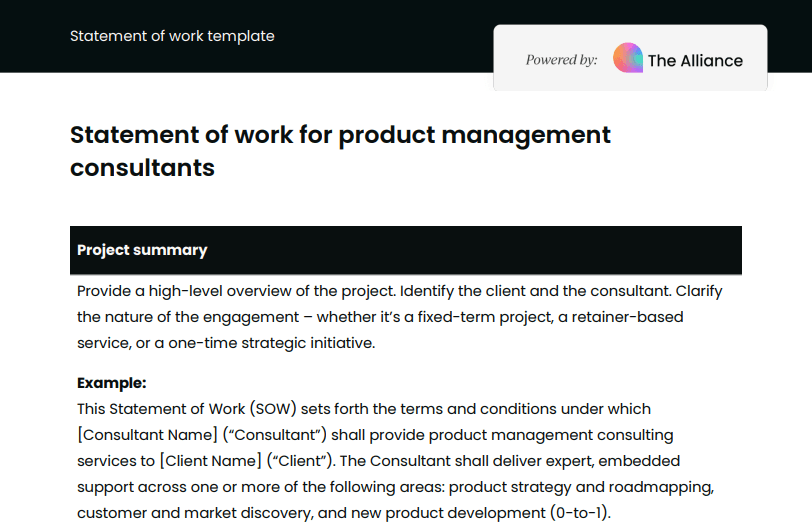
A statement of work (SOW) is a formal document that defines the terms of a consulting engagement. It spells out what you'll do, what you'll deliver, how long it'll take, and what you'll be paid – along with the legal provisions that protect everyone involved.
This template covers all the key sections you'd expect to see in a professional SOW: project summary, objectives, scope of work, deliverables, payment terms, legal clauses, and a signature block. Each section includes guidance on what to include and an example to get you started.
Think of it less as a rigid contract and more as a shared source of truth – something both you and your client can refer back to throughout the engagement.
Who is it for?
This template is designed for independent product management consultants and freelance PMs who work directly with clients. It's not industry-specific; you can adapt it for B2B SaaS, consumer products, fintech, or wherever your work takes you.
How to use the template
The template is available as a Google Doc, a PDF, or a downloadable .docx file – use whichever format works best for you.
Once you've got it open, here's how to make it yours:
- Start with the project summary: This is the first thing your client will read, so make it clear and specific. Name both parties, describe the nature of the engagement, and confirm the dates.
- Work through each section in order: The template is structured to mirror the natural flow of a consulting engagement – from objectives and scope through to payment and legal terms. Don't skip sections, even if they feel like formalities. They're there to protect you.
- Replace the example text with your own: Every section includes a plain-English example to show you what good looks like. Use it as a guide, then delete it and write your own.
- Customize the scope and deliverables carefully: These two sections do the most work in any SOW. Be as specific as you can about what's included – and, just as importantly, what isn't. Vague scope is where disputes tend to start.
- Review the legal terms: The template includes standard provisions around confidentiality, intellectual property, liability, and termination. They're written to be fair and balanced, but you should read them carefully and adapt them to your jurisdiction and situation. If in doubt, run it past a lawyer before you send.
- Get it signed before you start: It sounds obvious, but it's worth saying – don't begin work until both parties have signed. A countersigned SOW is your single best protection if things go sideways.
Grab your statement of work template


Become a PLA Insider
Thank you for subscribing
Get exclusive insights, frameworks, and strategies from product leaders driving real business impact.
An email has been successfully sent to confirm your subscription.
 Follow us on LinkedIn