









Created by:
 Product-Led Alliance
Before a feature gets built, the people working on it need to understand not just what it does, but why it exists, who it's for, and how it fits into the competitive landscape.
A mini market requirements document gives you a lightweight but comprehensive way to capture all of that in one place, without the overhead of a full market requirements document. This template helps you move faster while making sure your team has the context they need to build the right thing.
What is a mini market requirements document?
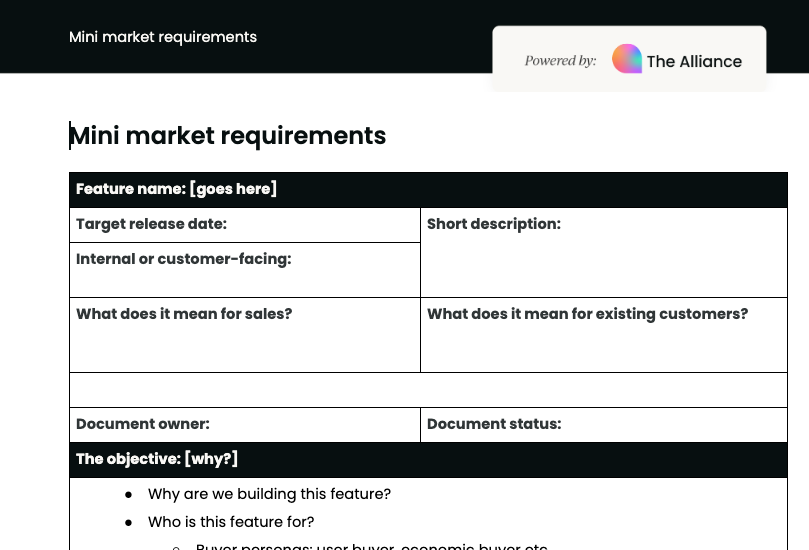
This template is a streamlined version of a market requirements document, designed to define the key details of a feature before development begins. It covers:
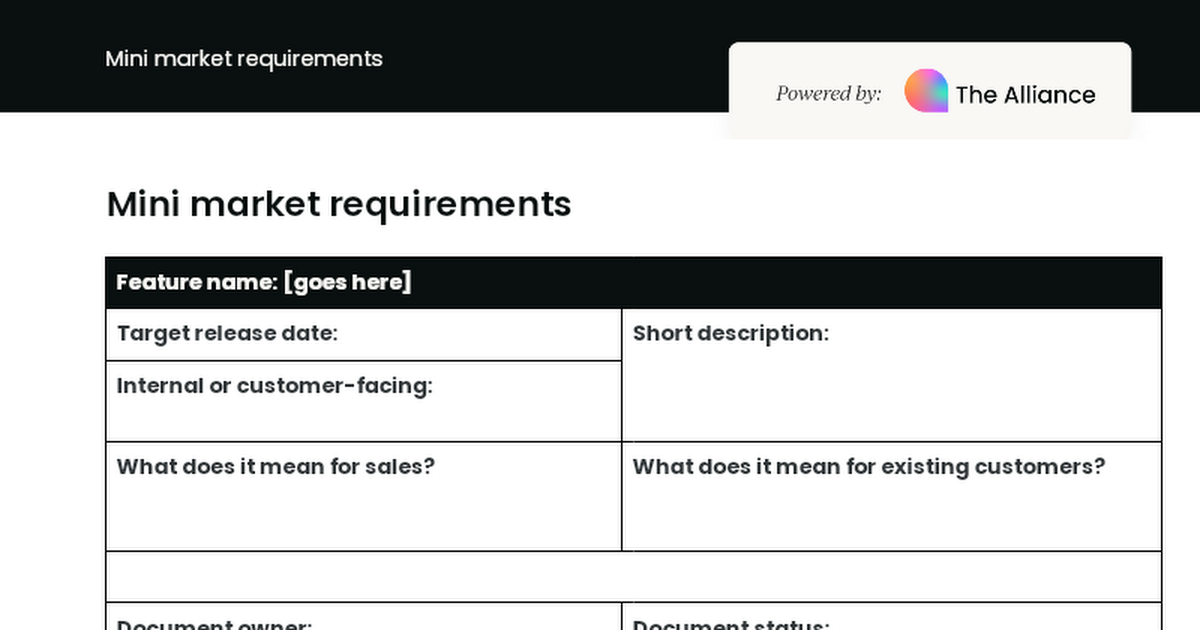
- Feature overview: Name, target release date, short description, and whether the feature is internal or customer-facing.
- Business context: What the feature means for sales and for existing customers.
- Objective: Why the feature is being built, who it's for (including buyer personas), and what problems it solves.
- Feature description: A detailed breakdown of each feature component and its benefits.
- Core components: How the feature will work in practice, supported by architectural diagrams or user flow demos if available.
- Competitive landscape: A side-by-side view of competitor strengths and weaknesses to inform positioning.
Who is it for?
This template is for product managers and product leaders who need a quick but thorough way to document feature requirements and share them across teams. It's particularly useful when you want to give engineering, design, sales, and customer success a shared reference point without investing the time a full market requirements document would take.
How to use the template
Start by filling in the feature overview and business context sections; these give stakeholders an immediate sense of what's being built and why it matters commercially. Then move to the objective section to articulate the problem you're solving and the audience you're solving it for.
Work through the feature description to document each component and its benefits, add core components and any supporting diagrams or user flows you have, and finish with the competitive landscape to round out the picture.
The template is designed to be completed iteratively, so don't worry about having everything finalized before you start.
Get your mini market requirements document



Become a PLA Insider
Thank you for subscribing
Get exclusive insights, frameworks, and strategies from product leaders driving real business impact.
An email has been successfully sent to confirm your subscription.
 Follow us on LinkedIn