





Created by:
 Product-Led Alliance
When you're building and releasing a product, the number of questions that need answering – by the product team, engineering, design, PMMs, and stakeholders – can quickly become overwhelming.
A well-structured product requirements document (PRD) cuts through that noise by acting as a single source of truth: one document that gives everyone the information they need, before they even have to ask.
This template covers every essential area, so you can go into launch with your whole organization aligned.
What is a product requirements document template?
A PRD sits in a specific place in the product documentation ecosystem. Unlike a market requirements document or business requirements document, which focus on customer demand and market opportunity, a PRD goes deeper on functionality, technical requirements, and use cases.
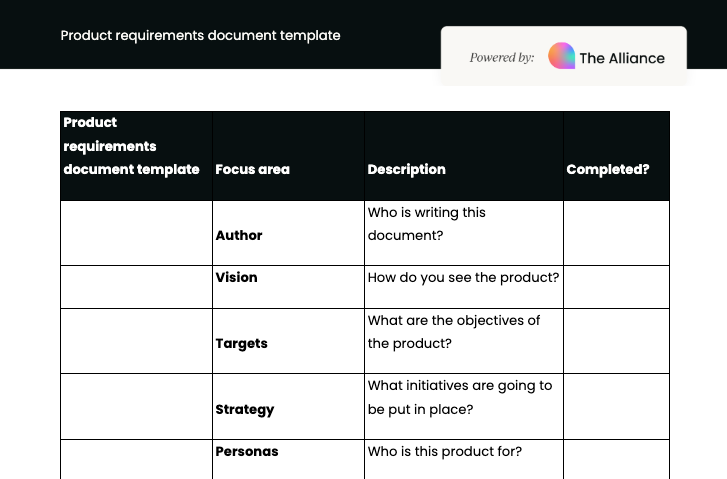
This template is organized into four key sections:
- Product overview: Author, product vision, targets, strategy, and user personas: the foundational context every stakeholder needs.
- Product features: Feature names, descriptions, the user pain points they address, the remedy each feature provides, UX flow, technical additions, UX design, and system and environment requirements.
- Assumptions, constraints, and dependencies: What needs to be in place, what's out of scope, and what the product relies on to function.
- Product release: Release title, date, associated initiatives, key features, and milestones.
Each row includes a "Completed?" column, making it easy to track progress across the document as you work through it.
Who is it for?
This template is for product managers and product leaders who need a comprehensive, structured way to communicate product requirements across their organization. It's designed to serve multiple audiences at once – from engineers who need technical detail to PMMs and stakeholders who need strategic context – without requiring a separate document for each.
How to use the template
Work through the template section by section, starting with the product overview to establish the vision, objectives, and personas before moving into the feature-level detail.
Complete the UX flow and technical additions in collaboration with your design and engineering teams, and use the assumptions, constraints, and dependencies section to surface anything that could affect delivery.
Finish with the product release section to lock in the timeline, milestones, and associated initiatives.
Use the "Completed?" column throughout to keep track of what's done and what still needs input.
Download your product requirements document template



Become a PLA Insider
Thank you for subscribing
Get exclusive insights, frameworks, and strategies from product leaders driving real business impact.
An email has been successfully sent to confirm your subscription.
 Follow us on LinkedIn