



Created by:
 Product-Led Alliance
A product roadmap does more than track what you're building; it communicates your product vision to the people who need to understand it, from internal stakeholders to external audiences. Without one, even well-intentioned teams can find themselves misaligned, reactive, and losing time to avoidable roadblocks.
This framework gives you the building blocks for creating a roadmap that keeps everyone pointed in the same direction, whatever stage your product is at.
What is a product roadmap framework?
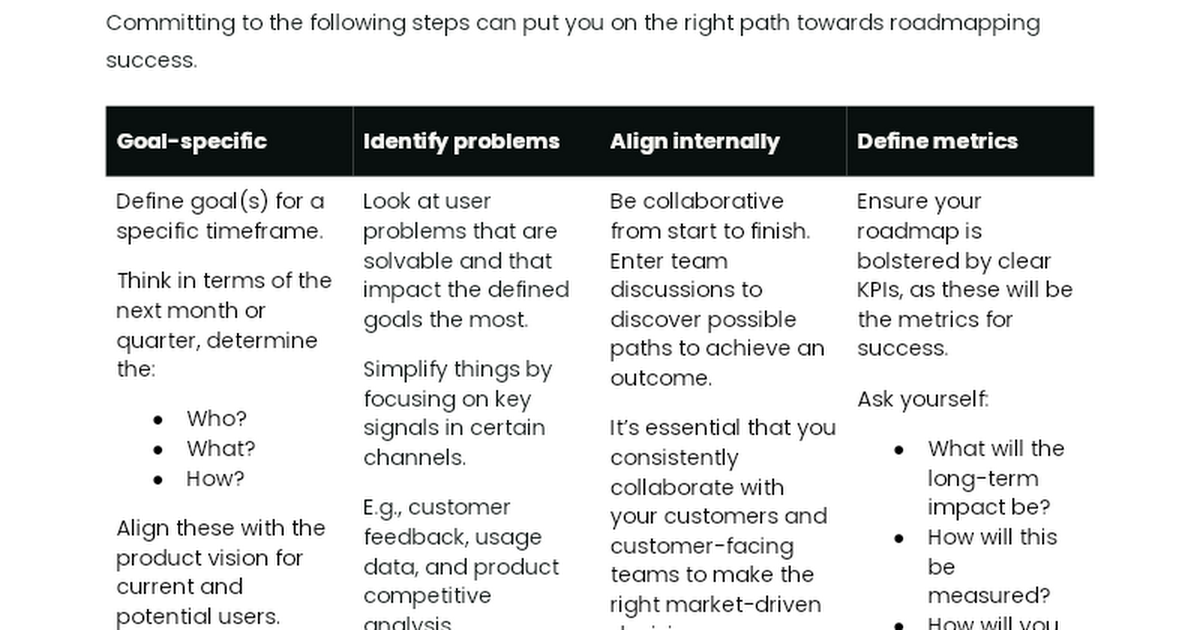
This framework covers both the process of building a roadmap and the different models you can use to visualize it. On the process side, it walks you through four essential steps:
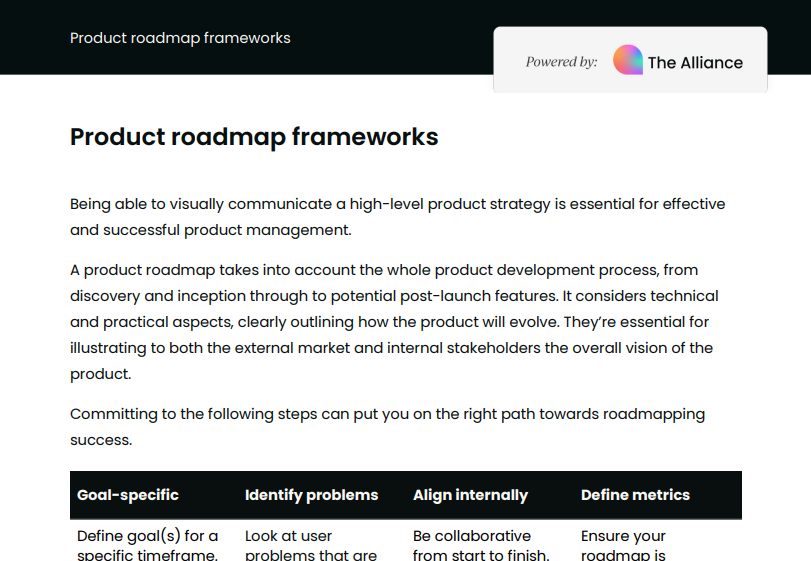
- Set goal-specific objectives for a defined timeframe, considering who you're building for, what you're building, and how it aligns with your product vision.
- Identify user problems that are solvable and most relevant to your goals, drawing on signals like customer feedback, usage data, and competitive analysis.
- Align internally through collaborative team discussions and ongoing engagement with customer-facing teams.
- Define metrics by setting clear KPIs and thinking through how you'll measure and communicate progress.
On the visualization side, it introduces three roadmap models – non-date, hybrid, and timeline – so you can choose the format that best fits your organization's stage and planning needs.
Who is it for?
This framework is for product managers and product leaders who want a structured approach to building and communicating their product roadmap. It's useful whether you're working with an early-stage product that needs flexibility, or a more mature organization that requires detailed long-term planning across multiple teams and deadlines.
How to use the framework
Start with the four-step process to define your goals, surface the right problems, align your team, and set the metrics you'll use to track progress.
From there, choose the roadmap model that best suits your situation:
- The non-date model works well when priorities are still shifting frequently.
- The hybrid model offers a balance of structure and flexibility by plotting goals at a monthly or quarterly level.
- The timeline model is best suited to organizations with complex, multi-department planning needs that extend a year or more into the future.
Revisit and update your roadmap regularly as your product and priorities evolve.
Get your product roadmap framework



Become a PLA Insider
Thank you for subscribing
Get exclusive insights, frameworks, and strategies from product leaders driving real business impact.
An email has been successfully sent to confirm your subscription.
 Follow us on LinkedIn