





There's a shift happening right now that every product leader needs to pay attention to: users are increasingly turning to AI tools like Claude, ChatGPT, and Gemini to get answers, instead of logging into your product at all.
That shift is happening fast, and it puts the product you've spent years building at risk of becoming optional.
The good news? You still have the chance to get ahead of it.
In this article, I'll walk you through:
- Why SaaS products are already primed for AI agents to connect to, whether you planned for it or not
- What "AI-native" actually means, and how MCP (Model Context Protocol) lets you govern that access instead of losing control of it
- A practical, phased roadmap for becoming AI-native
- The new monetization models this shift opens up
- Why this is an opportunity, not just a threat, if you move deliberately
The shift that's already happening
Users are going to AI tools to get answers. Whether it's ChatGPT, Claude, Gemini, or any of the other interfaces that are becoming part of people's daily routines, the expectation has changed.
Users want instant responses. They want to ask questions in plain language and get meaningful outputs back. They want to have a conversation with their data rather than click through a series of filters and menus to find what they need.
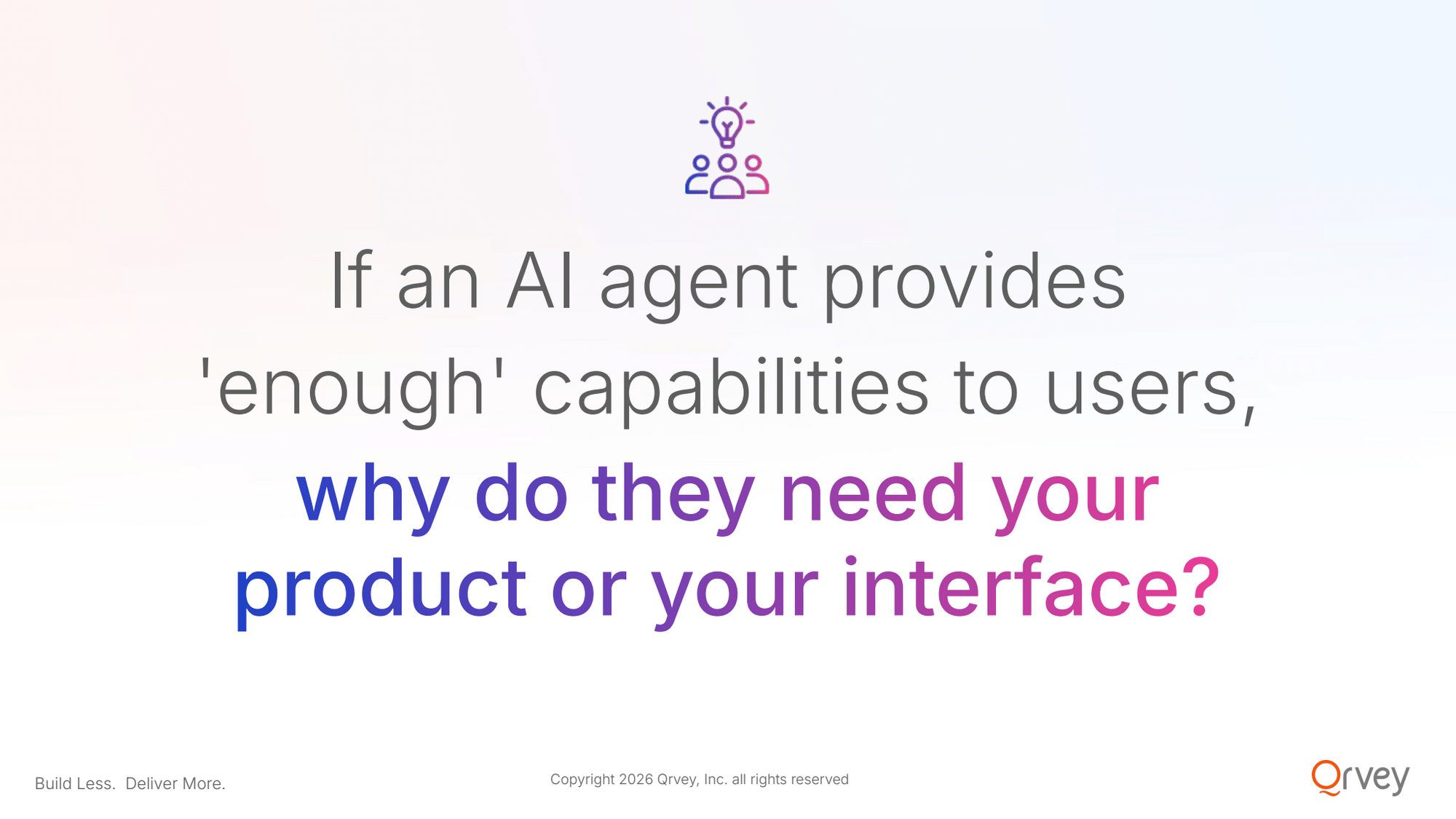
This creates a real tension for SaaS product teams. If your users are getting answers from Claude or Gemini, why do they need to log into your product to do it? If they can ask a general-purpose AI tool to pull insights from your API, run an analysis, and return a summary, the interface you've spent years building can start to feel like an optional step.
That's the risk, and it's worth taking seriously.
But here's what I’ve noticed: the companies that treat this as a threat and do nothing are the ones who end up losing user relationships. The companies that lean into it and become the AI-native layer in their users' workflows are the ones who end up owning those relationships.
For expert advice like this straight to your inbox twice a month, sign up for Pro+ membership.
You'll also get access to 10 certifications, a complimentary Summit ticket, and 100+ tried-and-true templates.
So, what are you waiting for?
Why SaaS products are already AI-ready (whether you planned for it or not)
One of the things that makes this moment interesting is that SaaS platforms are, by design, almost perfectly structured for AI agents to work with.
Think about what you've built. Structured data models. Multi-tenant architectures. APIs that external tools can communicate with. Security frameworks that govern access. All of the things that make a great SaaS product also make it very easy for AI agents to connect to, query, and extract value from.
That's a double-edged sword. On one hand, it means AI tools can already start interacting with your product without you necessarily inviting them to. On the other hand, it means you're not starting from scratch. The infrastructure is there. You just need to decide how you want to govern it.
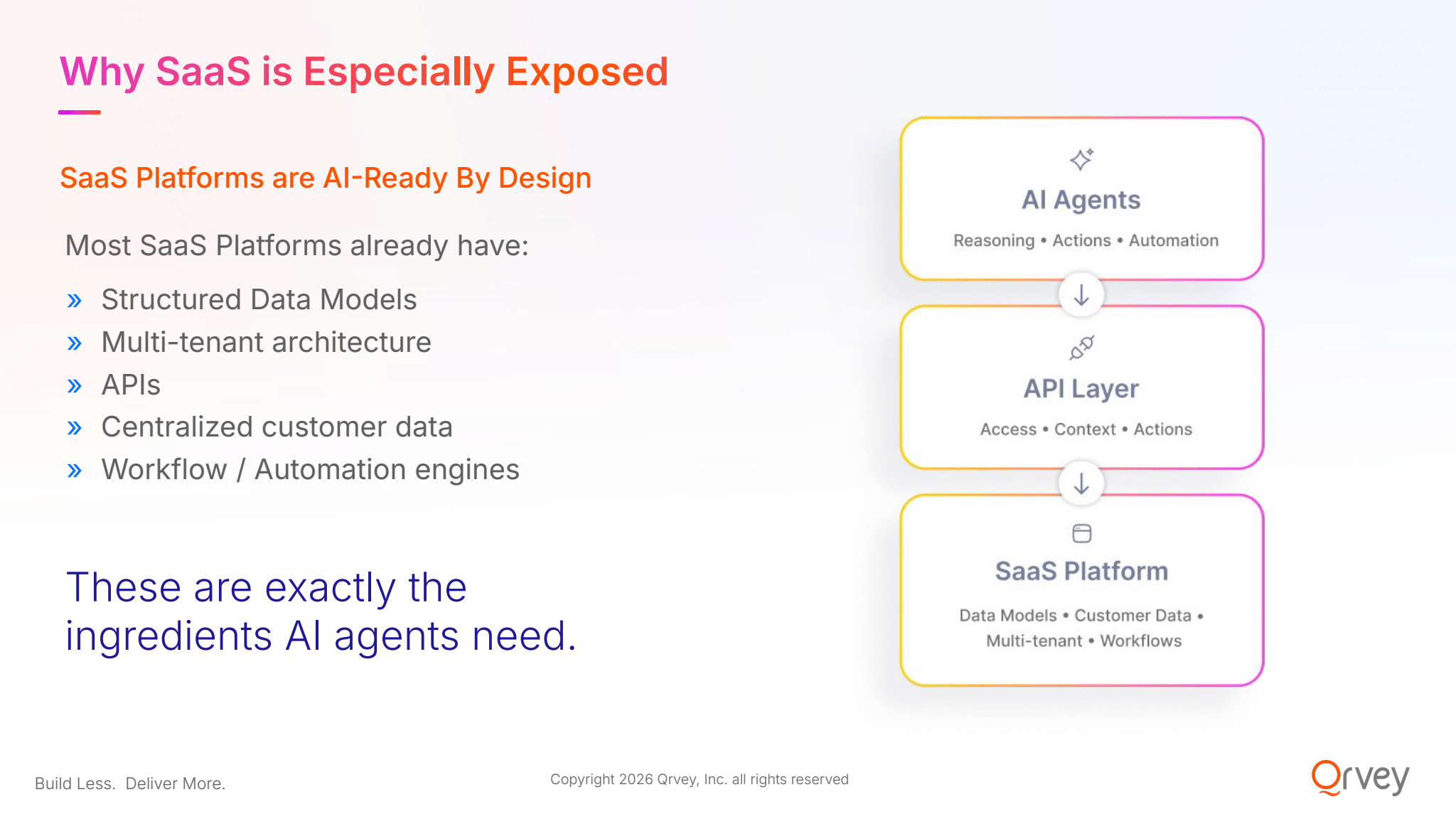
The companies that win here will be the ones who take that existing architecture and build an intentional AI-native layer on top of it, so that when users come looking for answers (whether through your product interface or through an external AI tool), they're still operating within an experience you control.
What "AI-native" means in practice
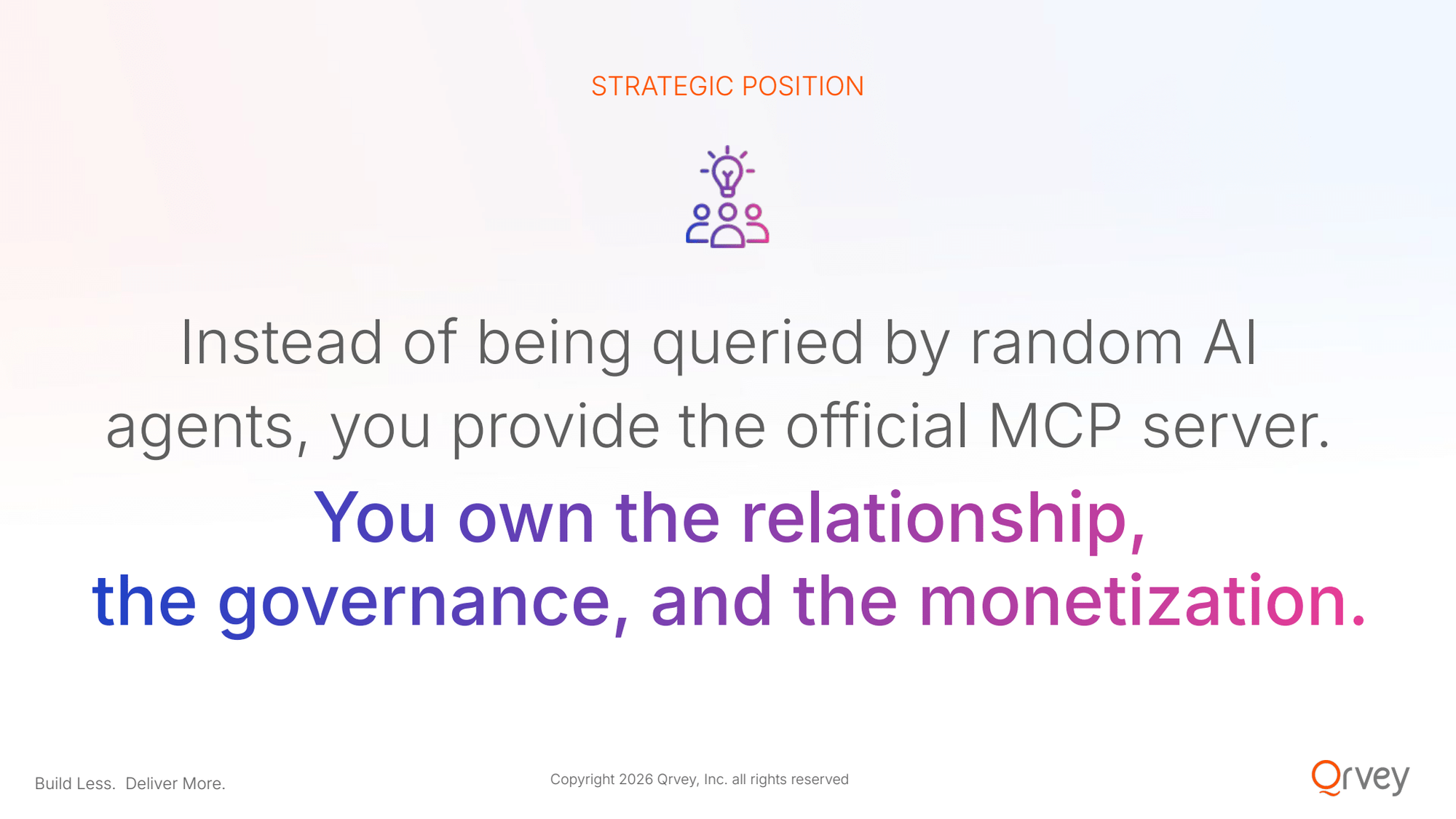
Becoming AI-native doesn't mean rebuilding your product from the ground up. It means creating interfaces you own and govern, so that no matter where your users are coming from, they can still access the information and capabilities you want to provide them.
One of the most important concepts to understand here is MCP, or Model Context Protocol. If you haven't started exploring what an MCP-ready architecture looks like for your product, now is the time. At Qrvey, this is where we've focused a lot of attention because it allows us to create a governed gateway into how external AI tools communicate with our product.


Become a PLA Insider
Thank you for subscribing
Get exclusive insights, frameworks, and strategies from product leaders driving real business impact.
An email has been successfully sent to confirm your subscription.
 Follow us on LinkedIn