









When you hear the phrase “quantum computing,” it might sound like something out of a sci-fi movie. Complex, futuristic, and a bit overwhelming, right? But what if I told you that this next-generation technology is something that could revolutionize not just the world of science but also the way we manage products and businesses?
Quantum computing for product managers (PMs) is quickly moving from theoretical curiosity to practical experimentation. As industries begin exploring its potential – from logistics optimization to cybersecurity – PMs need to understand not just what quantum computing is, but how it could shape product strategy, roadmaps, and competitive advantage. Whether you’re building AI-powered products or managing complex systems, quantum computing is a trend worth watching closely.
In this article, we’re diving deep into quantum computing, how it differs from classical computing, its use cases, and when we might start seeing it become mainstream. But don’t worry – we’re keeping things simple and conversational, so no need to be a tech wizz!
What is quantum computing?
Let’s start with the basics: what is quantum computing? Simply put, it’s an advanced type of computing that leverages the principles of quantum mechanics to perform calculations far faster than classical computers could ever dream of.
But what’s the difference? Classical computers, like the one you’re using now, work with bits. These bits are binary, meaning they can be either a 0 or a 1 at any given time. Quantum computers, on the other hand, use qubits, which can exist in a superposition of states. What does that mean? Qubits can be both 0 and 1 simultaneously. This opens up a whole new world of possibilities when it comes to processing data and solving problems.
It’s like a classical computer is a strict yes-or-no machine, while a quantum computer can entertain the possibility of “maybe” or “both.” This unique ability makes quantum computers exponentially more powerful for certain tasks, but more on that later.
Quantum computing vs. classical computing: A side-by-side look
So, what’s the real difference when we talk about quantum computing vs classical computing? Why should product managers care about it?
Data handling: Classical computers process data sequentially, bit by bit. Quantum computers, with their qubits, can process massive amounts of data simultaneously because of their ability to exist in multiple states at once. It’s like reading through 10 books in the time it takes a classical computer to read one.
Problem-solving: Classical computers excel at tasks that have clear, binary answers. But when it comes to complex, multi-variable problems – such as optimizing a supply chain, predicting market trends, or even managing product lifecycles – quantum computing can offer solutions exponentially faster.
Encryption: This is where quantum computing gets interesting for cybersecurity. Classical encryption systems may eventually be cracked by quantum computers, leading to a need for stronger encryption methods. In product management, where data protection is critical, the development of quantum-safe cryptography could become crucial in the near future.
Simulation and modeling: Imagine being able to simulate every possible iteration of a product feature, user behavior, or market condition in seconds rather than weeks. Quantum computers can handle such simulations effortlessly, making them a powerful tool for product managers trying to make data-driven decisions.
It’s important to note that quantum computers aren’t simply “faster” versions of classical computers. Instead, they’re better suited to very specific types of problems – particularly those involving massive combinations, probabilities, or complex simulations.
For most everyday tasks – like running apps, browsing the web, or managing standard product analytics – classical computers are still far more efficient and practical. Quantum computing shines when problems become too complex for classical systems to handle in a reasonable timeframe.
Here's a scannable look at the key differences:
How does quantum computing work?
Now that we’ve established the quantum computing vs classical computing differences, let’s break down how quantum computing actually works – without getting too technical.
Quantum computing uses quantum mechanic principles, a branch of physics that look at particles on a subatomic level. The two primary concepts that power quantum computing are superposition and entanglement.
- Superposition: This allows the exploration of multiple possibilities at the same time. As mentioned earlier, while classical bits can be either 0 or 1, qubits can be both 0 and 1 at the same time. It’s like having a cat that’s both alive and dead (thanks, Schrödinger!) until you observe it.
- Entanglement: In quantum computing, entanglement allows qubits to become interconnected in such a way that the state of one qubit can affect the state of another, even if they’re far apart. This makes processing even faster because changes in one qubit can instantaneously influence others, no matter the distance between them.
Together, these concepts allow quantum computers to solve certain problems much faster than classical computers ever could.
 Rebecca Stewart
Quantum computing use cases: Real-world applications for PMs
Alright, enough with the theory – let’s look at some use cases and how they can actually benefit product management.
Optimization problems
Imagine trying to find the most efficient delivery route for a fleet of trucks or the optimal layout of products in a warehouse. Classical computers struggle with these types of problems because there are too many variables to consider. Quantum computing can tackle these optimization problems with ease, offering solutions that save both time and money.
Risk analysis
In industries like finance or healthcare, analyzing risk is a huge part of product management. Quantum computing can process enormous datasets faster than classical computers, offering real-time insights that can help product managers make more informed decisions.
Artificial intelligence and machine learning
Quantum computing has the potential to enhance AI and machine learning – but it’s still very early days.
In theory, quantum systems could speed up how quickly models are trained or improve how efficiently large datasets are processed. This has led to growing interest in areas like quantum machine learning (QML).
However, most real-world applications are still experimental. Today, the more realistic approach is a hybrid one – where classical systems handle the bulk of AI workloads, with quantum computing used to support specific, high-complexity tasks.
For product managers, the key takeaway is this: quantum computing could amplify AI capabilities in the future – but it’s not replacing existing AI systems anytime soon.
Supply chain management
Quantum computers can help optimize supply chain logistics by simulating different scenarios and finding the most efficient strategies. This could lead to smoother operations, reduced costs, and more satisfied customers – a win for any product manager.
Drug discovery and materials science
In industries like pharmaceuticals and manufacturing, product managers could use quantum computing to simulate the behavior of molecules and materials, speeding up the discovery of new drugs or innovative materials.
Cybersecurity
As we mentioned earlier, quantum computing has the potential to break many of today’s encryption methods. This is because widely used systems – like RSA – rely on mathematical problems that quantum computers could eventually solve much faster than classical ones.
But it’s not all bad news.
There’s a growing field called post-quantum cryptography (PQC), focused on developing encryption methods that can withstand quantum attacks. Governments and standards bodies are already working on this. For example, the National Institute of Standards and Technology (NIST) has been actively developing and evaluating quantum-resistant algorithms.
For product managers, this has real implications. If your product handles sensitive data, authentication, or financial transactions, quantum-safe security could soon become a competitive differentiator – or even a requirement.
Paul Anthony Claxton
What does quantum computing mean for product strategy?
So far, we’ve talked a lot about what quantum computing is and where it might be used. But let’s zoom out for a second – what does this actually mean for product strategy?
This isn’t just another new technology to plug into your roadmap. It changes the kinds of problems worth solving in the first place.
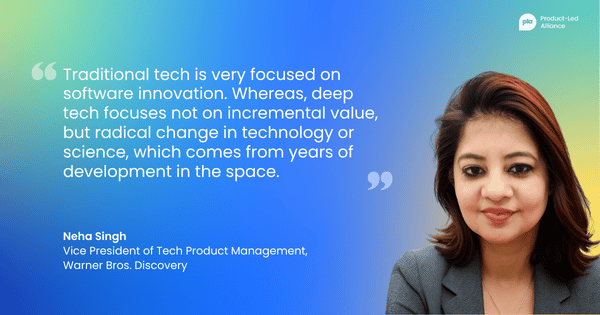
From incremental improvements to breakthrough problems
Most product development today is about optimization. Making things faster, cheaper, or slightly more efficient.
Quantum computing shifts that mindset.
Instead of asking, “How do we improve this by 10%?” product managers can start asking, “Is this a problem we couldn’t solve at all before?”
For example:
- Instead of improving delivery routes, you could calculate near-perfect global optimization across an entire network
- Instead of forecasting trends based on samples, you could simulate thousands of possible scenarios at once
In other words, it opens the door to entirely new categories of solutions.
New product opportunities are starting to emerge
We’re also seeing the early signs of new types of products built around quantum capabilities.
Think:
- Optimization-as-a-service platforms
- Advanced simulation tools for industries like pharma or materials
- Quantum-powered APIs delivered through cloud platforms
You’re unlikely to be building quantum hardware – but you might be building products that sit on top of it.
Just like cloud computing created a wave of new SaaS products, quantum could do the same – just in more specialized areas first.
Competitive advantage will favor early explorers
Here’s where it gets interesting.
Because quantum computing is still early, most companies aren’t doing much with it yet. That creates a window of opportunity.
Product teams that start exploring now – testing use cases, building internal knowledge, forming partnerships – will be in a much stronger position when the technology matures.
This is especially true in industries like:
- Finance
- Logistics
- Pharmaceuticals
- Energy
In these spaces, even small breakthroughs in optimization or simulation can translate into massive business value.
Quantum computing for beginners: What product managers need to know
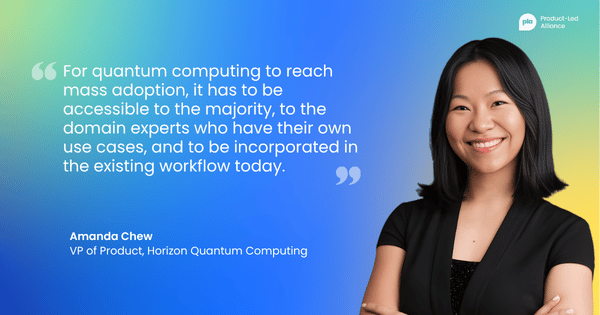
If you’re new to the world of quantum computing, it can seem like a daunting field to break into. However, as product managers, we don’t need to become quantum physicists – we just need to understand how this technology could impact our products and strategies. Here’s a quick primer for beginners.
- It's still in its early days: Quantum computing isn’t yet mainstream. While it holds enormous promise, the technology is still being developed. But it’s something product managers should keep an eye on because it has the potential to transform industries in the near future.
- It won’t replace classical computers: Quantum computers won’t be replacing your laptop anytime soon. They excel in specific tasks that classical computers struggle with, such as optimization, simulation, and encryption. For most day-to-day tasks, classical computers are still the way to go.
- Start learning now: While quantum computing might seem far off, product managers can get ahead of the curve by starting to learn the basics. Understanding the potential impact of quantum computing on your industry could give you a competitive edge when the technology becomes more widely available.
When will quantum computing be available?
This brings us to the big question: when will quantum computing become truly usable for businesses?
The reality is that we’re currently in what’s known as the NISQ era – short for Noisy Intermediate-Scale Quantum. In simple terms, today’s quantum computers are powerful but still limited. They can run experiments and solve niche problems, but they’re not yet reliable or scalable enough for widespread commercial use.
That said, progress is happening quickly.
Major players like IBM, Google, and Microsoft are investing heavily in quantum research, with roadmaps focused on improving stability, reducing errors, and scaling the number of qubits. At the same time, platforms like Azure Quantum and IBM Quantum are already giving companies access to quantum systems via the cloud.
This is where Quantum as a Service (QaaS) comes in. Much like cloud computing transformed access to classical infrastructure, QaaS allows teams to experiment with quantum computing without needing their own hardware.
So while we’re likely still several years away from mainstream adoption, product managers don’t have to wait to start exploring. Early experimentation is already possible – and that’s where forward-thinking teams are focusing their efforts.
Risks and limitations of quantum computing
As exciting as quantum computing is, it’s important to keep expectations grounded. This is still an emerging technology – and it comes with its fair share of challenges.
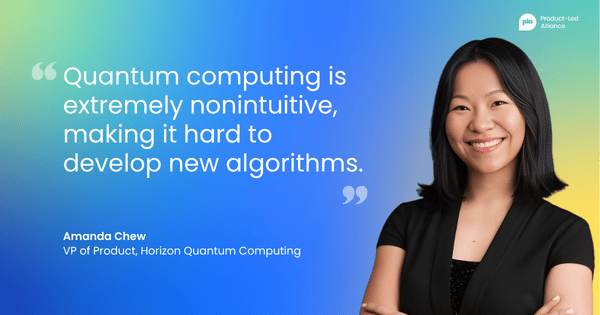
First, today’s quantum computers are highly unstable. Qubits are incredibly sensitive to their environment, which means errors can creep in quickly. This is one of the main reasons we’re still in the early “NISQ” era.
Second, real-world impact is still limited. While there have been promising experiments, most quantum advantages so far are confined to very specific, controlled problems.
There’s also a talent and accessibility gap. Quantum expertise is still rare, and building in-house capabilities isn’t realistic for most companies. For now, access is largely limited to cloud-based platforms and research partnerships.
And finally, it’s worth remembering that quantum computing isn’t a silver bullet. Many problems are still better – and more efficiently – solved using classical systems.
How should product managers prepare for the quantum revolution?
Quantum computing may still be in its infancy, but the savvy product manager will start preparing for its arrival now. Here are a few ways to get ahead of the curve:
- Stay informed: Quantum computing is quickly evolving. Keep up with the latest developments so you can spot opportunities for your products and your business.
- Think big: Quantum computing will make it possible to tackle problems that were previously unsolvable. Start thinking now about how you could leverage this technology to optimize your products, improve customer experiences, or streamline operations.
- Collaborate with experts: You don’t need to be a quantum physicist to benefit from quantum computing, but you may need to collaborate with experts in the field. Building partnerships with quantum computing researchers or companies could give you an early advantage.
- Experiment with quantum algorithms: If you’re feeling adventurous, start experimenting with quantum algorithms. There are already platforms that offer limited quantum computing capabilities via the cloud, and this is only going to grow as the technology develops.
Resources to learn quantum computing for product managers
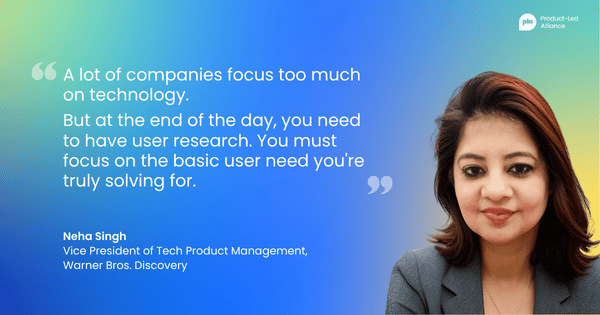
If you’re curious to go deeper, there are already plenty of accessible ways to start learning about quantum computing.
Here are a few good starting points:
- IBM Quantum Learning – Offers beginner-friendly resources and hands-on access to quantum systems via the cloud
- Microsoft Azure Quantum – Provides tools and documentation for experimenting with quantum algorithms
- Google Quantum AI – Shares research, educational content, and updates on progress in the field
- Online courses (Coursera, edX) – Many platforms now offer introductory courses tailored for non-technical audiences
The goal isn’t to become an expert overnight – but to build enough understanding to recognize where quantum computing might create opportunities in your products.
Conclusion
Quantum computing may still be in its early stages, but its long-term impact on product development and business strategy is hard to ignore. For product managers, the opportunity isn’t about mastering the physics – it’s about recognizing where this technology could unlock entirely new possibilities.
In the near term, that means staying informed, experimenting with emerging tools, and identifying problems that classical systems struggle to solve. In the longer term, it means rethinking what’s possible – from real-time optimization to entirely new categories of products.
The most effective PMs won’t wait for quantum computing to become mainstream – they’ll start building awareness now, so they’re ready to act when the moment arrives.
FAQs
What is quantum computing in simple terms?
Quantum computing is a type of computing that uses quantum mechanics to process information. Unlike classical computers that use bits (0 or 1), quantum computers use qubits, which can represent multiple states at once – allowing them to solve certain problems much faster.
Will quantum computing replace classical computers?
No. Quantum computers are designed for specific types of problems, such as optimization and simulation. Classical computers will continue to power everyday applications, while quantum systems will complement them in specialized areas.
Do product managers need to learn quantum computing?
Product managers don’t need to become experts in quantum. However, understanding the basics – and knowing where quantum computing could create value – will help PMs identify opportunities and stay ahead of emerging trends.
When will quantum computing be useful for businesses?
Early use cases are already emerging through cloud-based quantum services. However, widespread commercial impact is likely still several years away, with meaningful adoption expected in specialized industries first.
What industries will benefit most from quantum computing?
Industries dealing with complex systems and large-scale optimization will benefit first, including:
- Finance
- Logistics and supply chain
- Pharmaceuticals
- Energy
- Cybersecurity


Become a PLA Insider
Thank you for subscribing
Get exclusive insights, frameworks, and strategies from product leaders driving real business impact.
An email has been successfully sent to confirm your subscription.
 Follow us on LinkedIn