





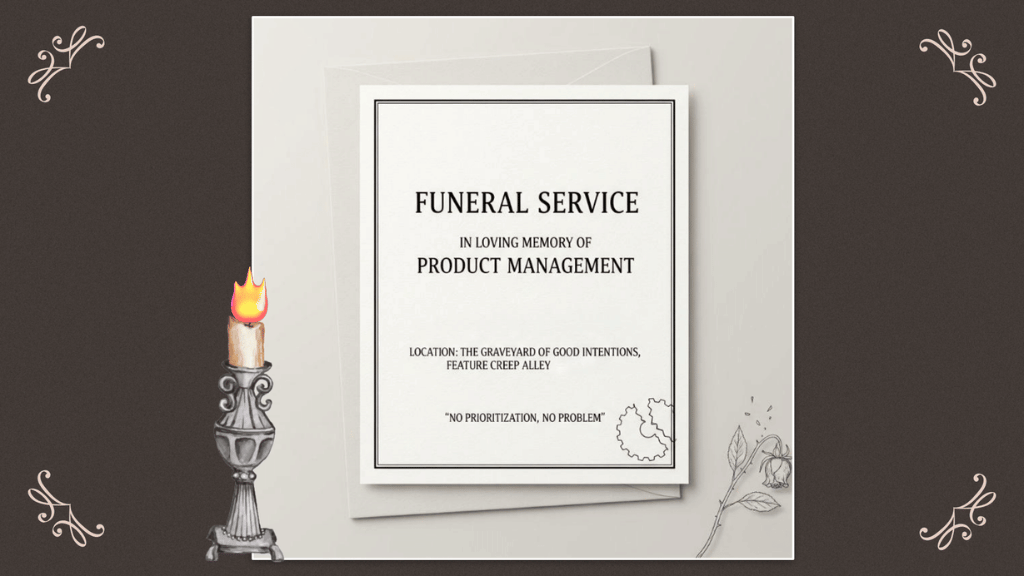
Dearly beloved, we are gathered here today to honor the memory of product management.
The graveyard is shrouded in fog, the air thick with the smell of failed retrospectives and burnt-out PMs.
One by one, our old adversaries arrive to pay their respects – and perhaps to make sure that product is truly dead this time. Sales-led growth shows up first, still bitter about how we made it redundant. The engineering-led motion follows close behind, muttering about how our sprint planning held them back.
And then, fashionably late as always, AI makes its entrance. Not just one AI, mind you – a whole parade of them. Agents, chatbots, automation tools. The final nail in our coffin.
They gather around the grave, each taking turns to eulogize product management. "We never really knew what they did," one says. "They loved talking about prioritization more than anyone else I’ve ever met," adds another.
But before we lower the casket, let's pause for a moment. What exactly brought us to this point?
Product management’s post-mortem
In true product fashion, we need a proper retrospective. What could AI have done to kill us?
Well, AI can write product requirements. That's traditionally been our domain, right? Check that box.
AI can test assumptions. Another core PM activity. Check.
It can build minimum viable product (MVPs) – or at least proofs of concept (POCs), depending on who you ask. The jury's still out on true MVPs, but they're getting closer every day.
Some AI tools even claim they can predict churn. Now that's something I definitely can't do without analytics tools backing me up.
And here's the kicker: AI does all this faster, deeper, and without ever getting tired. No burnout. No vacation days. No complaining about stakeholder meetings running over.
The conclusion seems obvious. If AI can do all these things, why do we need product managers?
For expert advice like this straight to your inbox twice a month, sign up for Pro+ membership.
You'll also get access to 10 certifications, a complimentary Summit ticket, and 100+ tried-and-true templates.
So, what are you waiting for?
The plot thickens
But wait. Something doesn't add up.
AI doesn't have a mind of its own. It needs incredibly precise instructions to function. It can't decide why something matters – only execute on the what.
So, what was the exact prompt that led AI to "kill" product management?
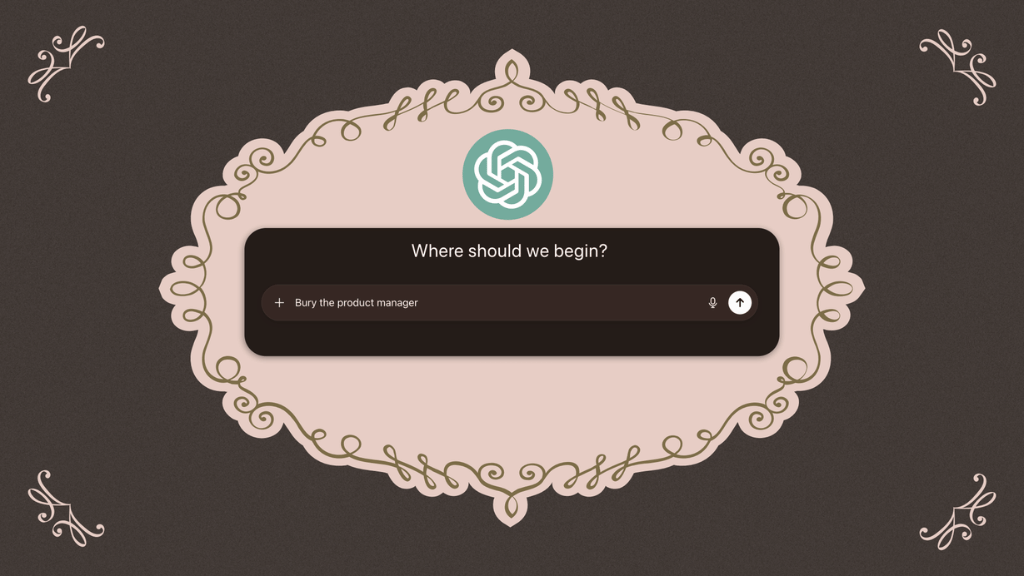
After some digging (pun intended), I’ve found it. The original instruction to our AI executioner reads: "Bury the product manager."
Not "kill the product manager." Not "replace the product manager." Just "bury."
Any PM worth their salt knows these are vastly different requirements. We've spent years dealing with the consequences of poorly written specs. This is just another case of ambiguous requirements leading to unintended outcomes.
AI doesn't read between the lines. It doesn't infer intent. It does exactly what you tell it to do – nothing more, nothing less.
Which means product management isn’t dead at all – it’s just buried under a mountain of badly written prompts.
Why PMs are outstanding prompt engineers
AI prompts are basically requirements. And if there's one thing product managers excel at, it's taking vague ideas and turning them into clear, actionable requirements.
How many times have you written a Jira ticket for your engineering team? Think about how specific you needed to be. Engineers, bless them, need literal instructions. They don't read between the lines. Context matters. Precision matters.
I once had an engineer tell me, "You specified everything you wanted, but you didn't tell me what you didn't want me to do. So I went ahead and built all these extra features." The ticket had clear scope, but apparently I needed to explicitly state what was out of scope too.
And guess what? That's exactly how AI works.
We've been prompt engineers since before "prompt engineering" was even a term. We just called it writing requirements.
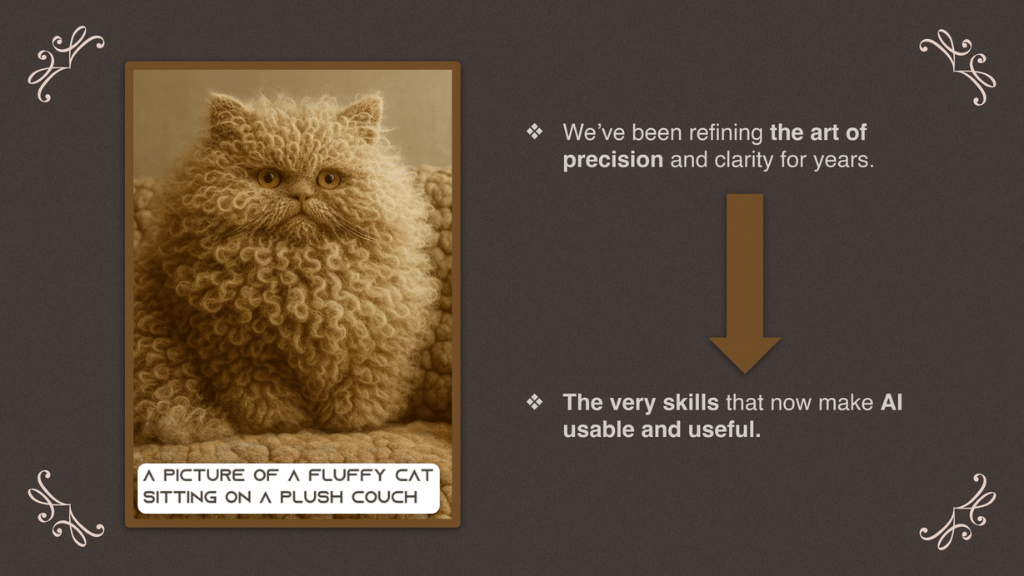
Let me show you what I mean. Tell AI to "create a picture of a fluffy cat sitting on a plush couch."
What do you get? Probably something that technically meets the criteria but completely misses what you actually wanted. Maybe the cat's too fluffy. Maybe the couch is the wrong style. Maybe the whole composition just feels... off.
Why? Because you weren't specific enough. You didn't provide sufficient context. You assumed the AI would understand your intent.
This is exactly the same challenge we've faced with development teams for years. The same skills that help us communicate effectively with engineers now make us incredibly valuable in the age of AI.


Become a PLA Insider
Thank you for subscribing
Get exclusive insights, frameworks, and strategies from product leaders driving real business impact.
An email has been successfully sent to confirm your subscription.
 Follow us on LinkedIn