









Templates and frameworks to pair with this playbook
Nail the skills
In product circles, we love to talk about launches, growth, and the thrill of getting a new product into users' hands. But here's what we don't talk about nearly enough: how to pull the plug. That silence costs us.
At JPMorganChase, I've had a front-row seat to what happens when organizations get this right, and what happens when they don't. And I can tell you, how you sunset a product matters just as much as how you launch one.
So, in this playbook, I'll share:
- The signals that tell you a product is nearing its end
- A framework for deciding what to sunset and when
- How to manage stakeholders, communications, and data migration
- How to look after the team behind the product
- How to turn a sunset into measurable growth
- A checklist to help you get your next sunsetting initiative right
Why sunsets deserve a playbook
Most of us are great at the introduction, growth, and maturity stages of the product lifecycle. We struggle with the decline phase and with the sunset. That struggle has a price, as teams keep pouring money into maintaining products that no longer earn their keep.
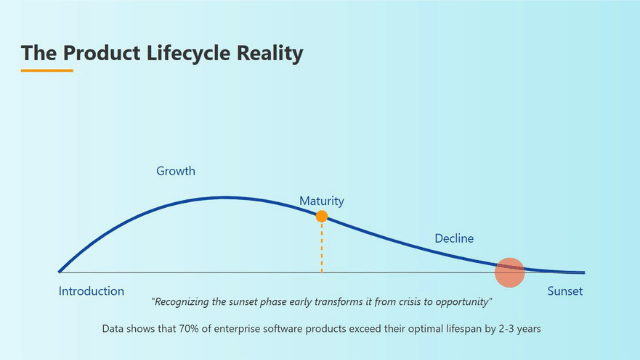
Recognizing early on when it’s time to sunset a product can turn a potential crisis into an opportunity. The key is to identify the inflection point before it becomes obvious to everyone. Teams that plan ahead keep customer retention high and maintenance and support costs low.
Spot the sunset signals early
So, how do you know when it’s time to sunset a product? I look for four signals:
- Declining adoption: Monthly active users fall quarter over quarter.
- Rising support costs: Cost per customer climbs as scale shrinks.
- Technical debt: Maintenance outweighs new feature development.
- Competitive obsolescence: New solutions make your technology look outdated.
The goal is to identify these signals proactively, before the product becomes a liability. At JPMorganChase, we built a tracker to spot these issues early. It gives us 12 to 18 months of warning before a critical decline.
Decide what to sunset, and when
Once you've spotted the signals, you need a structured way to make decisions. As a product manager, this is one of the hardest parts of the job: knowing what to prioritize and when.
A simple four-quadrant model can help. Think about your products in terms of value delivered and maintenance required.
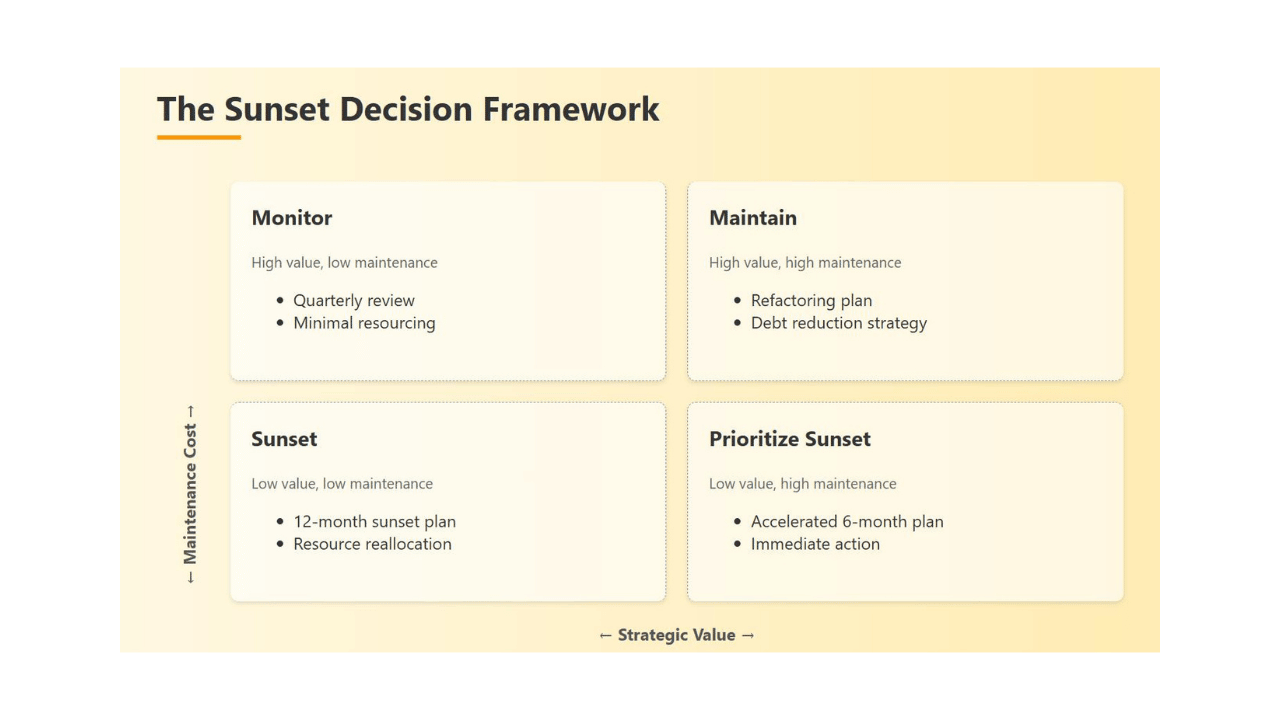
High-value, low-maintenance products are your stars. They need minimal attention and should largely be left to run.
High-value, high-maintenance products are candidates for technical debt reduction. You're probably getting returns worth the investment, but you should be working to bring those costs down over time.
Low-value, low-maintenance products are the ones to start thinking about sunsetting. They're not hurting you badly, but they're not helping either.
And low-value, high-maintenance products require the most urgent action. These should be on an accelerated sunset timeline, typically around six months. They're the clearest case for pulling the plug.
For expert advice like this straight to your inbox twice a month, sign up for Pro+ membership.
You'll also get access to 10 certifications, a complimentary Summit ticket, and 100+ tried-and-true templates.
So, what are you waiting for?
The challenges you'll face
Let's be honest about what makes product sunsets hard. It's rarely a technical problem. It's almost always a human one.
Teams get invested in the products they've built. That's a natural consequence of the care and effort they put into their work. Unfortunately, that emotional attachment, combined with sunk-cost thinking, leads organizations to keep investing based on what's already been spent rather than what's actually worth pursuing.
Then there's customer backlash. Users who've built workflows around your product don't love hearing it's going away. And internally, team reassignment creates friction that, if handled poorly, can damage morale and increase attrition.
Understanding these challenges is the first step toward proactive planning. Once you know what's coming, you can put countermeasures in place before you start.
Stakeholder management: Who needs to know what
Stakeholder management is crucial. Communication timing and depth change depending on where someone sits. I think about it in three circles:
- Inner circle: Leadership and key decision-makers, who should be involved early in the decision and the strategy.
- Middle circle: Power users and the support team, who learn the timeline, the migration plan, and what support will look like before any external announcement.
- Outer circle: Casual users and integration partners, who need a clear sunset timeline and the alternative solutions they'll move to.
Build a communication timeline
Getting communication right takes time and intentionality. A 12-month communication plan might look something like this:


Become a PLA Insider
Thank you for subscribing
Get exclusive insights, frameworks, and strategies from product leaders driving real business impact.
An email has been successfully sent to confirm your subscription.
 Follow us on LinkedIn