







Templates and frameworks to pair with this playbook
- AI ethics and governance framework
- AI-powered premortem worksheet
- Problem statement template
- Jobs-to-be-done canvas
- Launch review framework
Nail the skills
Every roadmap I see these days has AI on it. It usually starts with a simple leadership request: "Can we add an AI feature to this?" and rarely with the question that matters most: "Would a customer actually trust AI to do this job?"
I've spent six years at Amazon building enterprise products, and here's what I've learned. Shipping AI has become easier because there are so many models to choose from. Running it is where things get interesting.
The launch goes well, the dashboards stay green, and somewhere between month three and month six, customers’ trust in the product quietly declines. Nothing crashes, so nobody sounds an alarm.
In this playbook, I'll share why that happens and the framework I use to keep AI products trustworthy and reliable. Here's what I'll cover:
- Why AI products fail after a great launch
- The five traps behind declining customer trust
- Why traditional product playbooks stop working once AI enters the room
- The TRUST framework for keeping AI reliable in production
- A short playbook you can take to your team on Monday
The day one illusion
To keep this practical, I'll use a simple product as our example: StyleMate, an AI shopping copilot. It understands natural language, recommends outfits, checks inventory, and helps customers get the items they need. Nothing revolutionary, which is exactly why it's a useful test case.
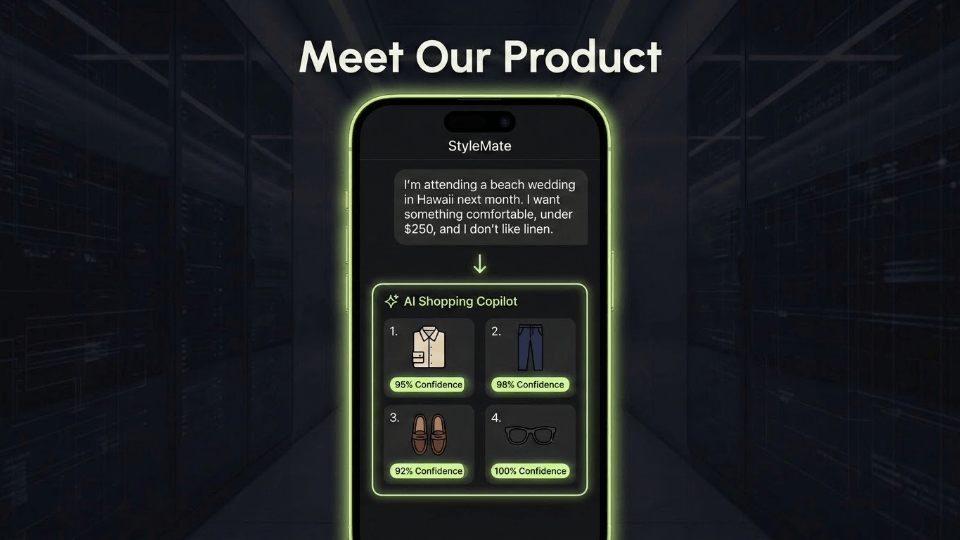
Day one goes beautifully. A customer types that they're going to a beach wedding in Hawaii next month and wants something comfortable, under $250, and no linen. StyleMate comes back with four strong recommendations. Customers are impressed, leadership is impressed, and adoption climbs over the next 30 days because people want to give it a shot.
Then three to six months pass, and the cracks start to show. The infrastructure is up, latency is fine, and the system has never crashed once. But StyleMate recommended four things and customers ignored three of them. Trust is declining, and no dashboard is telling you so.
What quiet failure looks like
With traditional software, failure is loud. Something won't load, there's a crash, and the team is running around putting out fires. AI products rarely fail that way.
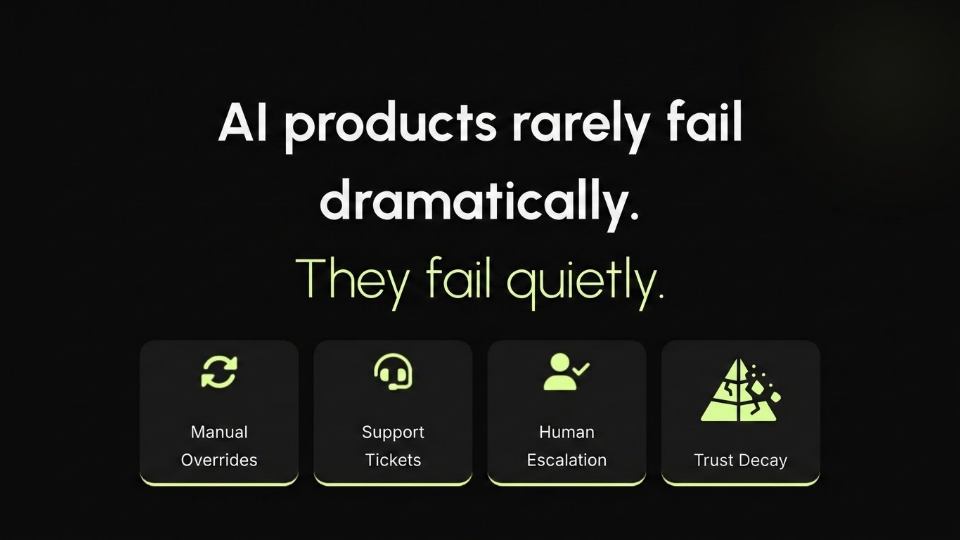
Instead, support tickets creep up. An engineer adds an override. An operations team builds a manual workaround. Customer trust starts to decay. None of it looks like a typical failure, so nobody treats it as one. That's what I mean when I say AI products fail quietly.
Five reasons AI products quietly fail
Over the years, I've seen the same five patterns show up again and again.
1. The technology trap
This one is becoming an industry epidemic. A new model drops, and we all want to give it a try. It's human nature, and I feel it too.
But with enterprise AI, starting from the technology means you may end up launching a product that never had a real problem to solve.
For expert advice like this straight to your inbox twice a month, sign up for Pro+ membership.
You'll also get access to 10 certifications, a complimentary Summit ticket, and 100+ tried-and-true templates.
So, what are you waiting for?
2. Launch bias
When we launch something, we celebrate, do the press release, and move on to the next roadmap item.
That worked well for traditional software, where we'd spend some time maintaining and call it done. With AI, launch is just the beginning. The product only truly ships once more and more customers start interacting with it.
3. Wrong success metrics
I'm obsessed with metrics, and you still need the typical ones: adoption, retention, and the rest. But AI products need one more metric: behavioral trust. Do people actually trust what your product tells them? Few teams track this.
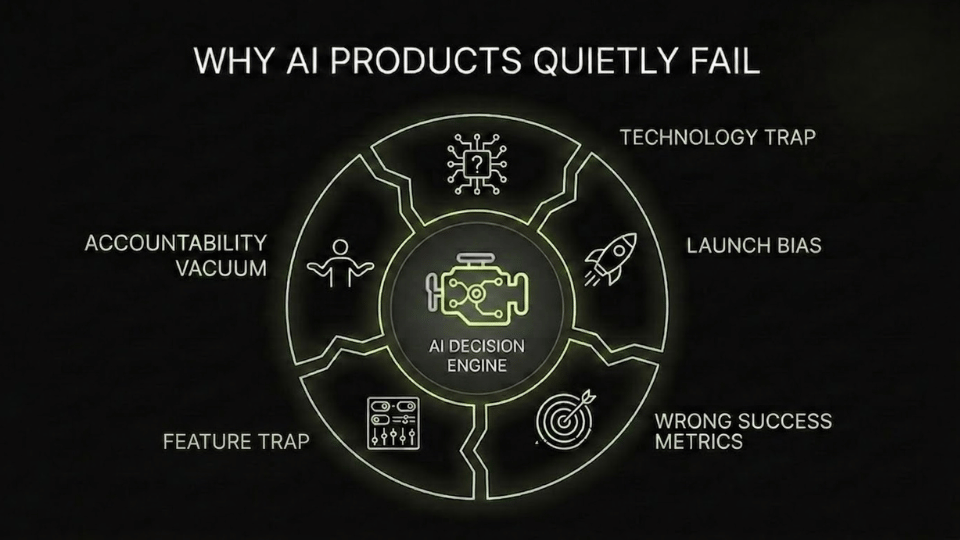
4. The feature trap
Many teams treat AI as just another feature, when really it’s a capability.
Take our StyleMate example – you might think of it as an AI copilot, but StyleMate will gradually start making decisions that affect inventory and what people buy, changing the whole operational structure around it. It's an operational capability, and if you don't think about it from that angle, you're headed for failure.


Become a PLA Insider
Thank you for subscribing
Get exclusive insights, frameworks, and strategies from product leaders driving real business impact.
An email has been successfully sent to confirm your subscription.
 Follow us on LinkedIn