







Three out of four SaaS companies have added generative AI features to their products. Only 15% are successfully charging for them.
That gap, between building AI and getting paid for it, has become one of the most pressing challenges in product-led growth. And the people thinking hardest about it come at the problem from surprisingly different angles.
At recent Product-Led Alliance events, four practitioners laid out their perspectives on AI monetization.
Prittam Bagani, Vice President, Product Management at Chargebee, argued that product teams have to own pricing now, full stop, because AI moves too fast for anyone else to keep up.
Keyuri Anand, Senior Product Leader at Clio, went further, showing how the core product-led growth (PLG) metrics most teams rely on, activation, retention, and expansion, are structurally broken for AI products and need to be rebuilt from scratch.
James Colgan, Operating Partner at Cathay Innovation and a veteran of Microsoft and Slack, framed the challenge through the lens of product-led growth and the changing cost expectations of AI-native users.
And Charanya Kannan, Senior Product Director at Navan, argued that pricing decisions need to start from revenue architecture, not product features.
Each speaker approached the topic differently, but their insights converge on a few uncomfortable truths about monetizing AI.
Pricing has to keep pace with the product
Prittam Bagani's session in Washington, DC, this year made a simple but underappreciated point: because AI capabilities evolve so quickly, pricing has to evolve at the same pace, and product is best positioned to drive that.
His argument was direct: pricing is a collaborative sport; everyone from sales to product to the C-suite has a stake in it. But because AI capabilities change so quickly, whoever owns pricing needs to understand what the product can actually do at any given moment.
That's product's job, not finance's, not commercial's.
"If your product is evolving quickly because of AI, you have to evolve your pricing at the same pace," Prittam told the audience, pointing to OpenAI's pricing page as a live example of how often these decisions now need revisiting.
The practical implication is that usage-based billing has become the default starting point for most teams making the transition from legacy SaaS pricing.
Tracking usage and identifying the right value metric, the thing customers actually pay for, is the critical intermediate step. From there, companies building new AI-native products can move directly to agentic or outcome-based pricing, but most teams working with mature products are navigating that shift more gradually.
Prittam also noted that this isn't just a PLG problem: product's role in owning pricing is becoming just as important in sales-led motions, where it's historically mattered less.
 Saurav Sharma
The PLG metrics you're using don't work for AI products
Keyuri Anand’s session in Austin this year delivered the most provocative argument of the four. If Prittam was talking about who owns pricing decisions, Keyuri was questioning whether the underlying model for measuring success still holds up at all.
The argument came from someone building AI teammates, autonomous AI agents that do work on behalf of users rather than tools that users interact with directly. The core claim was that the standard product-led growth framework, measure activation, retention, and expansion, produces the wrong answers when the product is an AI agent rather than a traditional SaaS interface.
Activation
Take activation. In traditional product-led growth, a user is activated when they've configured a dashboard and run their first report. For an AI teammate, activation happens when the AI completes a task autonomously, and a human approves the result.
The user never "uses" the product in the conventional sense. They review what the AI did.
Retention
Retention is even more telling. Traditional SaaS measures retention by frequency: daily active users, monthly active users, and how often someone logs in. AI products don't work that way.
For example, a RevOps manager whose AI teammate is running in the background, fixing pipeline bottlenecks without being asked, may never log in.
Retention for AI is measured by accuracy. If the AI keeps delivering correct results, it gets sticky. If it starts making mistakes, the user stops trusting it, regardless of how often they interact with it.
Expansion
Expansion is where the model really breaks down. Seat-based growth assumes that more users mean more licenses. But an AI agent that makes a team member 10 times more productive means a company might need one license where they used to need ten.
"You're increasing productivity by 10 times," Keyuri said. "So you're not going to sell as many licenses. So how do you measure expansion?"
The answer she proposed was tiered, authority-based pricing: customers pay more as they unlock higher levels of AI autonomy, plus an outcome-based layer on top. For a marketing AI teammate, for example, that might mean charging per lead generated, on top of the base-tier price.
 Rebecca Stewart
Why your cost structure should change how you think about engagement
James Colgan's talk at the San Francisco 2025 summit approached pricing from a completely different direction. His focus was on how AI is rewriting the rules of product-led growth, and one of his sharpest observations was about the relationship between user engagement and cost.
In traditional SaaS, heavy engagement is unambiguously good. The more a user interacts with your product, the stickier it becomes, the higher your retention, and the better your net dollar retention looks. AI changes this in a fundamental way.
"In the age of AI, where your cost structure is different, your most engaged user could end up being your most expensive one," James told the audience.
Every interaction with an AI feature consumes tokens and inference compute. A customer who sends 500 queries a day to your AI assistant is generating real, recurring costs that scale with their usage. If you're pricing on a flat per-seat basis, that customer is actively eroding your margins.
This has direct implications for how product teams should think about design and pricing simultaneously. James argued that AI products need to optimize for resolution, getting the user to their answer quickly and efficiently, rather than interaction, keeping them engaged for as long as possible.
The goal should be to infer the user's intent, calculate the solution, and deliver results with minimal back-and-forth, because every additional exchange increases your cost of goods sold.
This framing connects to Keyuri's observations on retention. If you're optimizing for resolution rather than interaction, measuring success by accuracy and outcomes starts to look like the most natural approach, one that aligns your incentives with the customer's goals and your own cost structure.
James also emphasized that the shift from seat-based to value-based pricing is inevitable for AI products. "If we're talking about an agentic AI that replaces or rather augments a customer support person, how are you going to price that?" he asked. "It's not $20 a month."
 Michael Pierce
Pricing as revenue architecture, not feature decoration
The fourth perspective came from Charanya Kannan, who brought a management consulting lens to the pricing conversation. In her San Francisco 2025 session, she argued that too many product managers think about pricing as something you layer on top of a finished product, when it should actually be driven by a clear understanding of where revenue comes from.
A lot of product managers tend to optimize for conversion without asking whether user conversion actually drives revenue, she observed. In B2B SaaS specifically, user conversion often isn't the metric that matters most. What matters is the productivity gain your enterprise customer experiences and how you frame that gain in commercial terms.
The framework was deliberately simple: revenue is driven by three things – total users, frequency of usage, and the price you charge – while costs break down into fixed and variable buckets. The art of pricing lies in understanding which of those levers actually matters for your specific business model and making sure your pricing metric is aligned with it.
This thinking complements Prittam's more tactical argument. Where Prittam focused on the organizational question of who owns pricing, Charanya’s perspective explains how to choose between models in the first place.
Charanya also raised a point about metric conflicts that's particularly relevant for AI monetization, drawing on an example from her own consulting work: a startup that compensated its customer support agents based on user satisfaction scores.
The agents, chasing high CSAT, started waiving subscription fees and giving away the product for free to keep users happy. Revenue declined, and the company couldn't understand why, despite a perfect customer satisfaction record. The root cause was an incentive structure that rewarded one metric (user happiness) at the direct expense of another (revenue).
Resolving that kind of conflict requires someone who can see the full P&L picture, and that's increasingly becoming the product manager's job.
 Michelle Stervosky
How to approach AI monetization right now
If you're a product manager or product leader trying to figure out how to monetize your AI features, the collective wisdom from these four talks points toward a few practical starting points.
First, understand your cost structure before you pick a pricing model. AI's linear cost scaling means that per-seat pricing will likely erode your margins over time, even if it's the easiest thing to launch with today.
Second, question whether your existing success metrics actually fit. If you're building AI agents or autonomous features, frequency-based metrics can give you a false read. Build the instrumentation to track accuracy and outcomes instead.
Third, consider whether you can price on outcomes rather than activities. It's harder to implement, and few companies have made the leap yet, but it aligns your revenue with customer value in a way that other models don't.
And finally, build the organizational muscle to iterate. The companies that will win at AI monetization aren't the ones that get pricing right on day one. They're the ones that can test, learn, and adjust faster than their competitors, while keeping their product teams focused on building rather than wrestling with billing infrastructure.
The 85% of SaaS companies that haven't yet figured out how to charge for their AI features aren't necessarily behind. They're just at the beginning of a pricing journey that everyone is still navigating.
The advantage goes to those who start that journey with clear frameworks, honest cost accounting, and a willingness to experiment.
Want more from the people shaping product leadership?
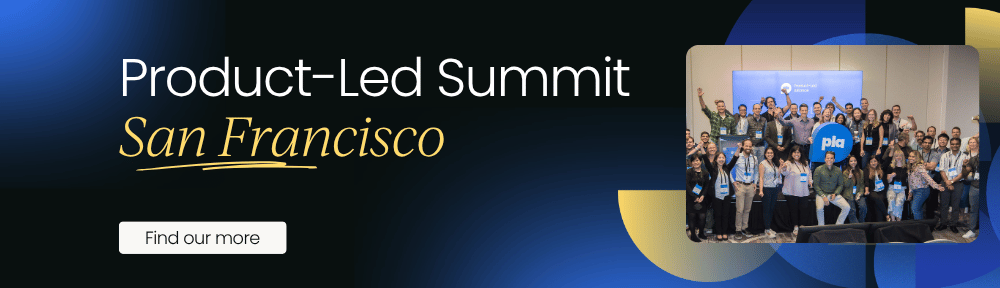
Head to Product-Led Summit, San Francisco, on September 22 & 23, for two days of frameworks, war stories, and hard-won lessons from the leaders actually building this stuff.
Charanya Kannan will share practical frameworks for connecting product investments to measurable business results and building a culture of accountability and continuous improvement.
And Varanjot Kaur, Product Management Lead at WhatsApp, shares key monetization lessons from WhatsApp.
Join the room where ideas are built.


Become a PLA Insider
Thank you for subscribing
Get exclusive insights, frameworks, and strategies from product leaders driving real business impact.
An email has been successfully sent to confirm your subscription.
 Follow us on LinkedIn