







The role of product management is changing faster than most of us realize.
What used to be a fairly clean career ladder, where you went from PM to senior PM to director and eventually to CPO, is being reshaped into something broader, more commercial, and frankly, more demanding.
Product leaders are increasingly expected to think and act like general managers, owning business outcomes rather than just shipping software.
In this article, I’ll walk you through why this PM to GM shift is happening, what it looks like in practice, and most importantly, four very tactical things you can start doing right away to capture the opportunity.
Let’s dive in.
Why product leaders are being asked to run the business
Let's start with the macro picture.
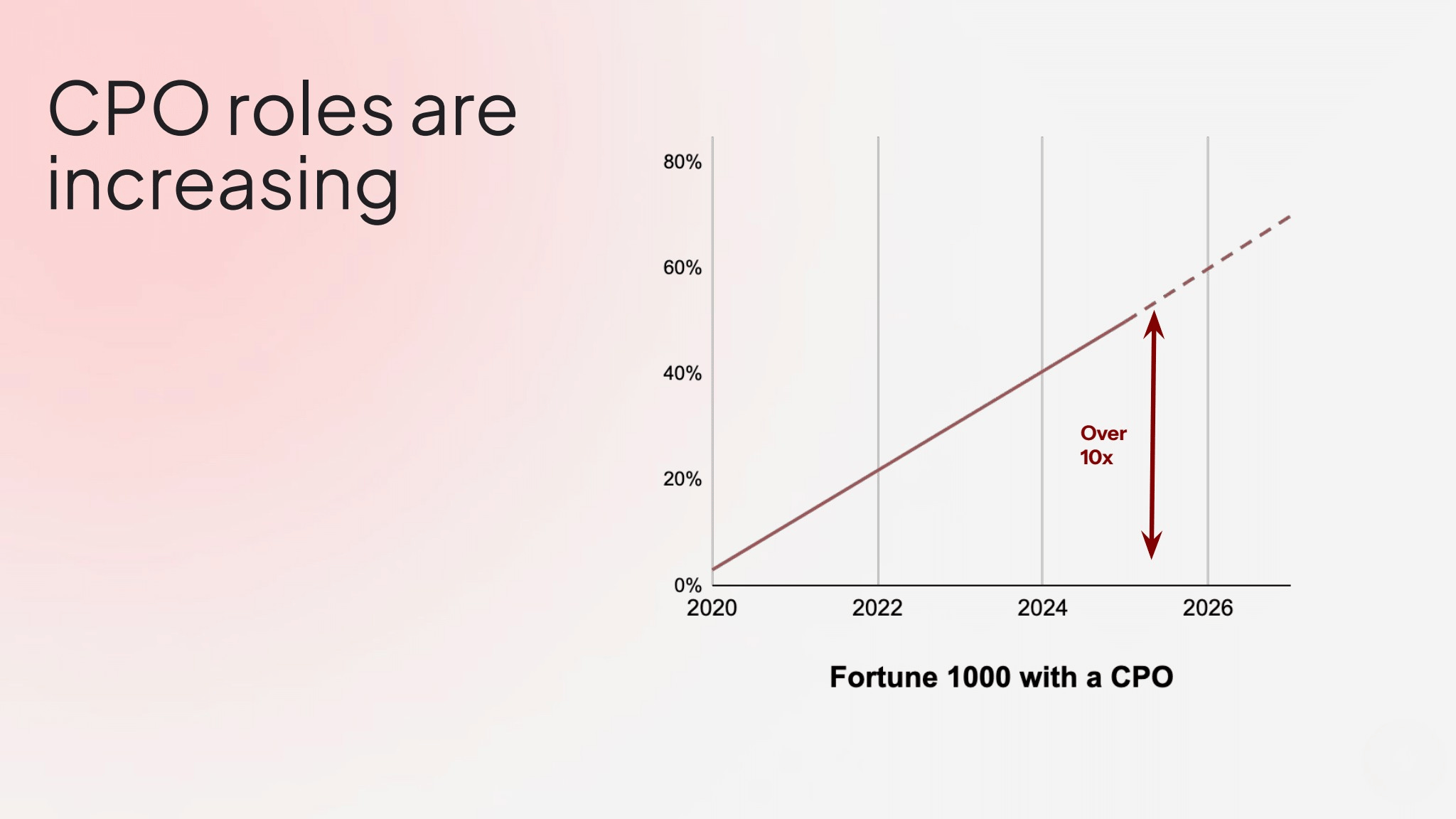
CPO roles are increasing rapidly. According to Products That Count’s 2025 CPO Insights Report, the share of Fortune 1000 companies with a Chief Product Officer has increased tenfold since 2020. That's a massive jump. Companies are making room for product leaders in their C-suite at a pace we haven't seen before.
Beyond just having more CPOs, companies with strong product leadership tend to outperform the market. The same study compared the S&P 500, where roughly 50% of companies post annualized positive returns, with companies that have award-winning CPOs, where about 85% post annualized positive returns.
There's some self-selection happening here (tech companies tend to have CPOs and tend to do better), so take it with a grain of salt. Still, the headline holds: product-first companies with strong CPOs tend to outperform their peers.
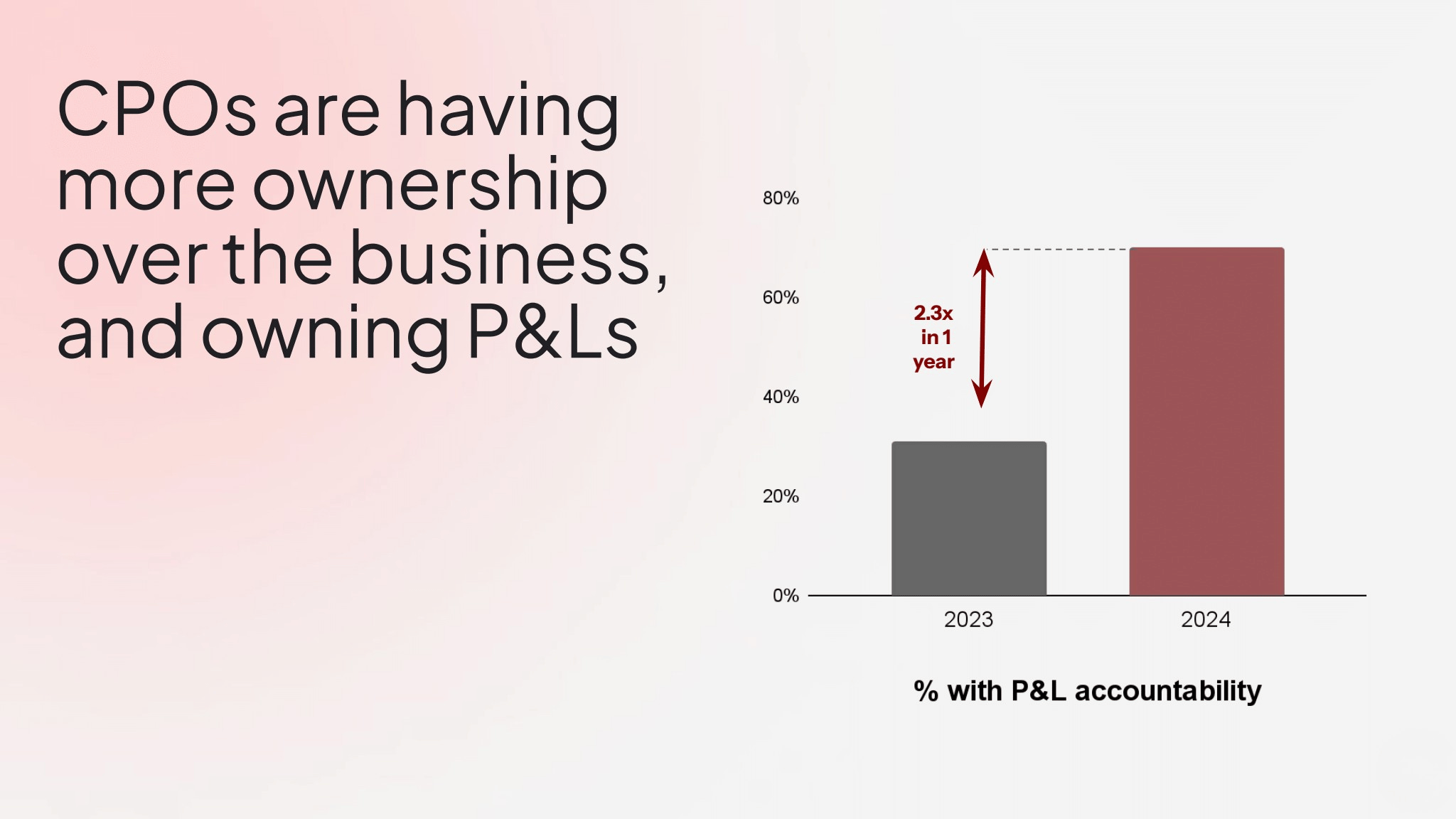
What's even more interesting is how the role itself is evolving. CPOs are increasingly owning profit and loss (P&L). As of 2024, about 70% of CPOs interviewed in this study had some form of P&L ownership. A year earlier, that figure was just 30%. The pace of change is nuts!
The path from CPO to CEO
This shift shows up in how product leaders see themselves, too. According to a study by Peak Product and EgonZehnder, more than eight in ten CPOs intend to become CEO one day; they view that as a natural career progression.
We're seeing this play out in practice, too. For instance, Neal Mohan went from Chief Product Officer to CEO of YouTube, while Sundar Pichai moved from leading Google's product portfolio to becoming CEO of its parent company, Alphabet. The pattern is becoming hard to ignore.
You might be thinking, "Great, but I'm not a CPO, and I'm nowhere close. How does this apply to me right now?" Fair question. The good news is, this shift is already happening at less senior levels.
If you've been in the job market recently and looked at senior PM or VP roles, you'll notice the language has changed. Job descriptions now mention business cases, P&L experience, financial savvy, identifying market opportunities, driving go-to-market, GM mindset, and leading conversations with finance. All of this is baked into what companies expect from product leaders, even at mid-levels.
For expert advice like this straight to your inbox twice a month, sign up for Pro+ membership.
You'll also get access to 10 certifications, a complimentary Summit ticket, and 100+ tried-and-true templates.
So, what are you waiting for?
AI is accelerating this shift
And, of course, AI is accelerating everything. It’s automating a lot of the tactical, data-driven work PMs used to spend their days on – drafting requirements, writing user stories, analyzing customer research, and doing competitive analysis.
As tactical work gets automated, PMs’ focus shifts toward the more strategic, business-oriented work that defines a general manager.
Four pillars to position yourself for leadership
Let’s recap: CPO roles are growing fast, strong CPOs drive outsized business performance, P&L ownership is becoming standard, the CPO-to-CEO path is more common, GM-style expectations are showing up in mid-level job descriptions, and AI is speeding all of this up.
The question is, what can you actually do about it? There are four pillars you should focus on:
- Own the P&L, not just the roadmap
- Master go-to-market
- Expand cross-functionally
- Leverage AI to up-level your work
Let’s take a closer look.
Pillar one: Own the P&L, not just the roadmap
We've all heard the line that product managers are the "mini-CEO" of their product. To be honest, I've rarely seen that play out in practice. The goal of this pillar is to make that aspiration more real.
The main goal of a PM isn't to ship software; it's to drive business outcomes with software. Revenue is your north star here.
Some companies push this all the way and have product co-own revenue targets with sales, with PM variable compensation tied directly to business outcomes. I'm not suggesting we all do that, but it's a sign of how serious some teams have gotten about aligning product with revenue.
Tactically, two things matter here:


Become a PLA Insider
Thank you for subscribing
Get exclusive insights, frameworks, and strategies from product leaders driving real business impact.
An email has been successfully sent to confirm your subscription.
 Follow us on LinkedIn