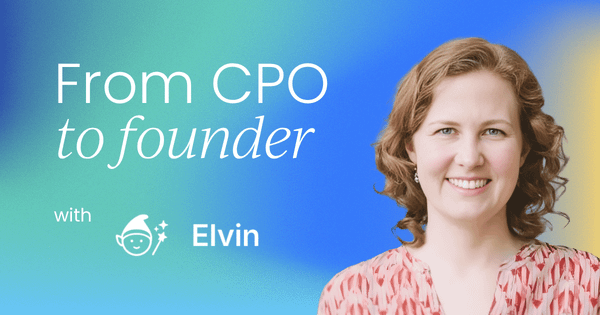





Late last year, I quit my CPO job and decided to become a founder.
Be honest with yourself for a second. I bet you've considered it too.
It's pretty hard not to these days. As product people, we used to have to build everything from scratch, and now we can just vibe-code our way into something usable.
The gap between an idea and a working product is smaller than it's ever been. That feels pretty amazing. So, a lot of product leaders are sitting there wondering, could this be me?
In this article, I want to share what the founder journey actually looks like from the inside. I'll cover three things, because as you know, the best things come in threes:
- The story behind my founding journey
- What’s better about being a founder than a CPO
- What's worse about being a founder (unfortunately, it’s not all rainbows and unicorns)
Let’s dive in.
The Elvin story
Our story begins back in 2018. I was leading a product team at Slack. I'd just left Google, where, as you might imagine, we did not use Slack. I remember being overwhelmed by that giant wall of messages hitting me every morning.
One day, I walked into a meeting with my manager, who said, "Hey Ellie, I DM'd you two hours ago. Didn't you see it? What about my channel post? What's your take? I didn't see a reaction from you." I knew then that I was going to have to learn how to play the Slack game much better.
That’s when my product brain kicked in. Why was I playing whack-a-mole, trying to figure out which channel mattered? Slack runs on a computer with infinite memory. Where was the thing that just said, Ellie, this is what's important?
I went to my MIT classmate, who was Head of Slack AI at the time, and asked him whether AI could look across Slack and its integrations – Jira, your calendar, all of it – and surface what you actually needed to do. He said, "Cool idea. One day, AI will do that, but not today." I left that meeting feeling pretty disappointed.
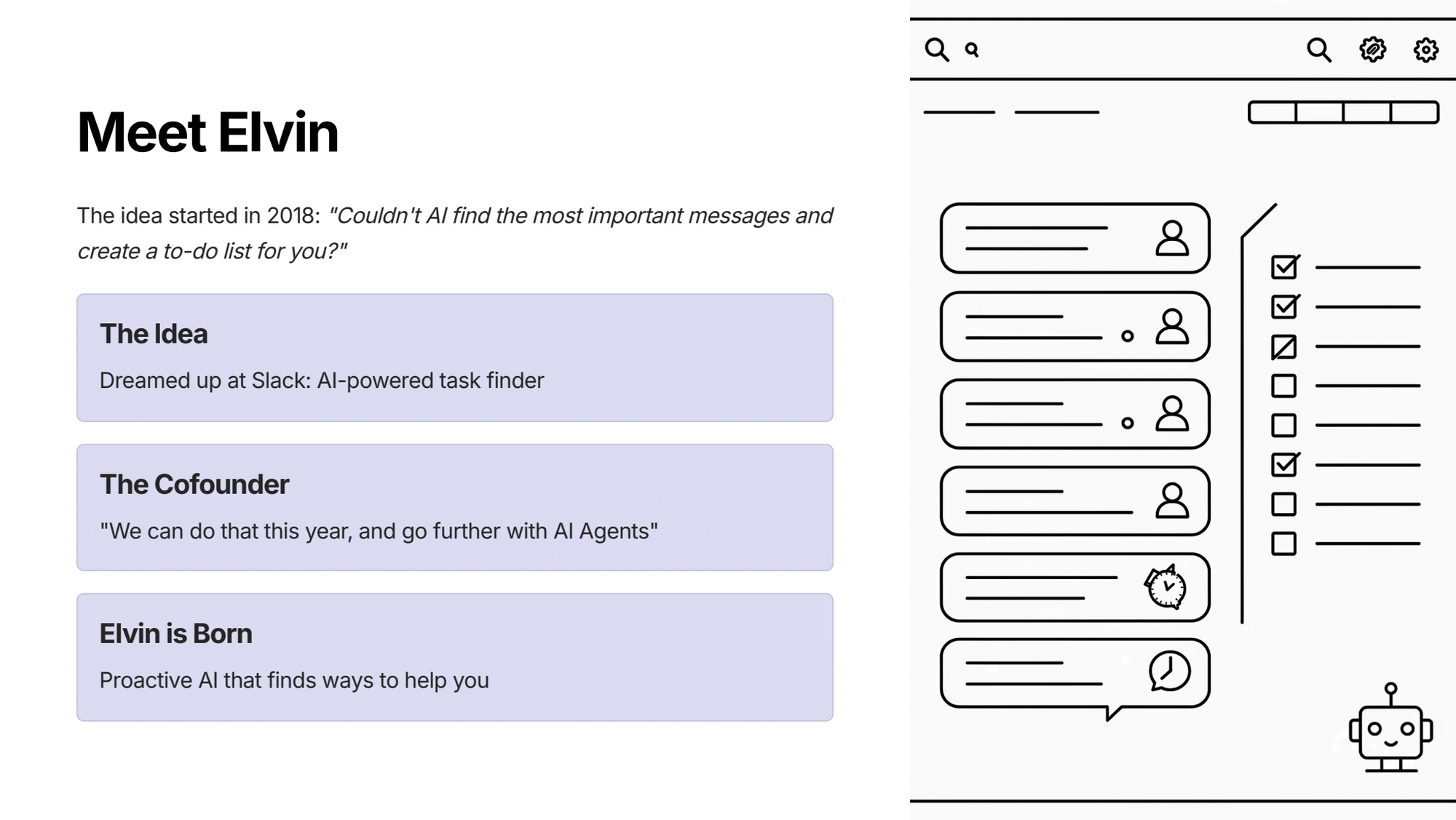
Fast forward to 2025. My then-CTO and now-co-founder, Vinay, was showing me how to use v0 for vibe coding. He asked what we could build, and I told him this story. He said, "We could totally build that. In fact, we could build something even better – something that actually does some of those tasks for you."
That's how Elvin was born.
For expert advice like this straight to your inbox twice a month, sign up for Pro+ membership.
You'll also get access to 10 certifications, a complimentary Summit ticket, and 100+ tried-and-true templates.
So, what are you waiting for?
The problem with most AI today
AI today is hugely powerful, but it acts like that person in your life who says, "Hey, I'm here. If you want me to do something, let me know." I look at it and think, "Buddy, I've got an inbox full of messages and a calendar full of scheduling conflicts. Look around – there's something for you to do. Just go ahead and do it."
That's the focus of Elvin. The future of AI is proactivity – and with the right security model and trust relationship, it can get things done for you, not just wait to be asked.
Think about all those hours you spend preparing for meetings, reading emails, and writing summaries. That's exactly what we want AI to take off your plate, so you can save your energy for the deep thinking that actually matters.
What's better about being a founder
If you’re thinking about founding a company, you might be wondering if the grass is really greener on the other side. In truth, sometimes it is, but sometimes it isn’t.
Let's go through the things that are genuinely better.
1. Awesome co-founders
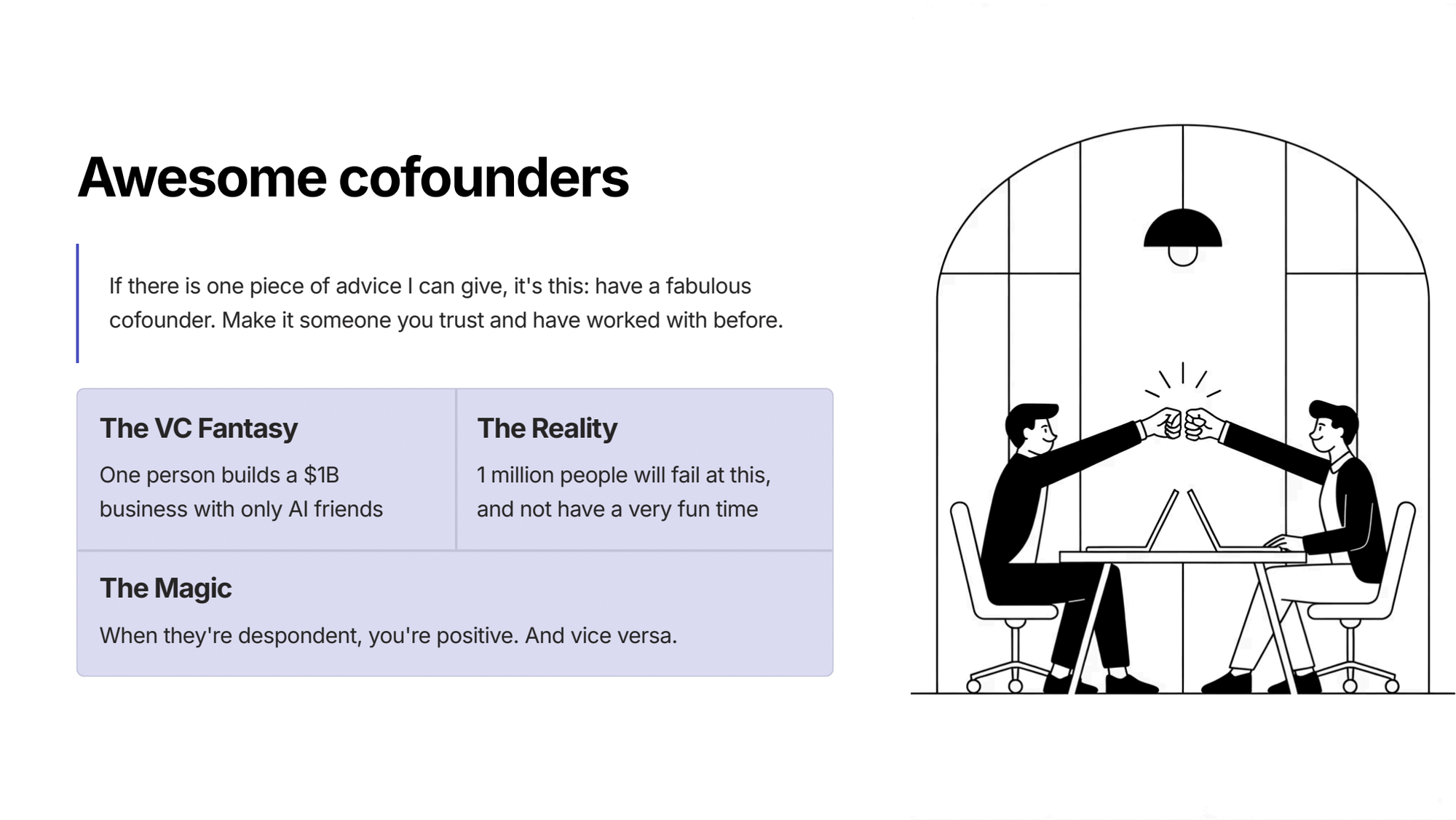
This is the biggest piece of advice I'd give anyone going down this path. Find someone you work well with, someone you trust, someone you've already shared experience with. VCs will tell you a co-founder split is one of the top reasons startups fail.
What I didn't realize until I was in it is that the value isn't just complementary skill sets. It's also that when Vinay is having a bad day, chances are I'm having a good one, and vice versa. With startups, the highs are higher, and the lows are lower. Having someone to counterbalance you is invaluable.
2. A chance to relearn everything
Last year, as a CPO, I had so much work to get done that I couldn't carve out time to learn new tools or new ways of working. There's always a new tool, a new way of doing things, and we all want to spend time learning, but adding more hours onto a full-time job is hard.


Become a PLA Insider
Thank you for subscribing
Get exclusive insights, frameworks, and strategies from product leaders driving real business impact.
An email has been successfully sent to confirm your subscription.
 Follow us on LinkedIn