






This article is about a part of our jobs that we don't discuss enough: the people part. Let’s start with a story.
Early in my management career, I had a one-on-one that I was not prepared for. The person walking in had more tenure than me, and I could tell the moment he sat down that he was ready to unload. Engineering wasn't reading his acceptance criteria. Customer success kept asking him the same questions despite all the documentation he had provided. It just kept going.
At one point, he said something I simply didn't have an answer for. So I was honest. I told him I needed to think about it. Then he looked at me and said, "That's telling me that you don't care."
I was floored. My honesty got thrown back in my face, and I had nothing – no framework, no training, no script – to prepare me for that moment. Here's what I've come to understand since then: many of us become managers by accident, and we’re completely unprepared.
You get promoted because it was that or stay on the IC track, or there was a reorg, or the position just opened up. Maybe you got a mentor or read a book. But none of that really matters until you're in the room with a hostile person and you have to confront the problem in real time.
That's what I want to talk about today: how we get better at handling that pressure, and how we help our teams do the same. Here's what we'll cover:
- Why product leaders are squeezed from every direction, and what the data says
- Why building the wrong thing quickly has never been easier, and how we filter ideas before they reach our teams
- Why the manager is the biggest lever on team happiness
- Three moves for better one-on-ones, and the Claude Project I built to support them
For expert advice like this straight to your inbox twice a month, sign up for Pro+ membership.
You'll also get access to 10 certifications, a complimentary Summit ticket, and 100+ tried-and-true templates.
So, what are you waiting for?
What our teams are dealing with
Let's be honest about the reality product managers are living in right now.
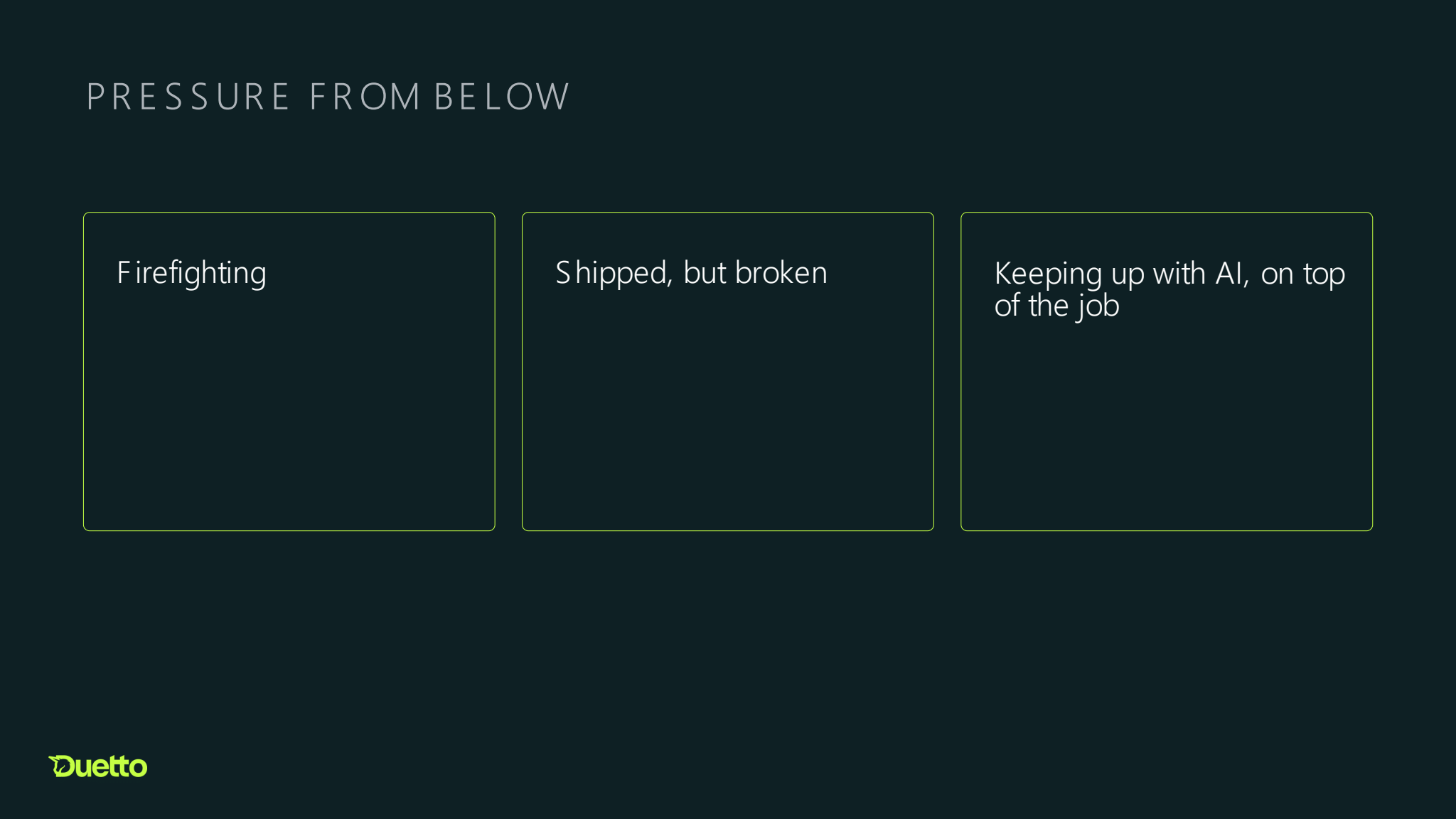
Most days are spent firefighting. A P1 bug comes in, and it’s all hands on deck, and then they find out it belongs to another team entirely. Or something just shipped and now they're chasing down bugs before NPS scores take a hit.
Meanwhile, they're supposed to be thinking about the roadmap, preparing enablement for sales and marketing, and staying current on every AI development happening in the industry. And maybe, just maybe, they also have a personal life. It's exhausting, and I don't think we always acknowledge that.
But what about the managers? We're supposed to alleviate some of that pressure, except we're under an enormous amount of pressure ourselves.
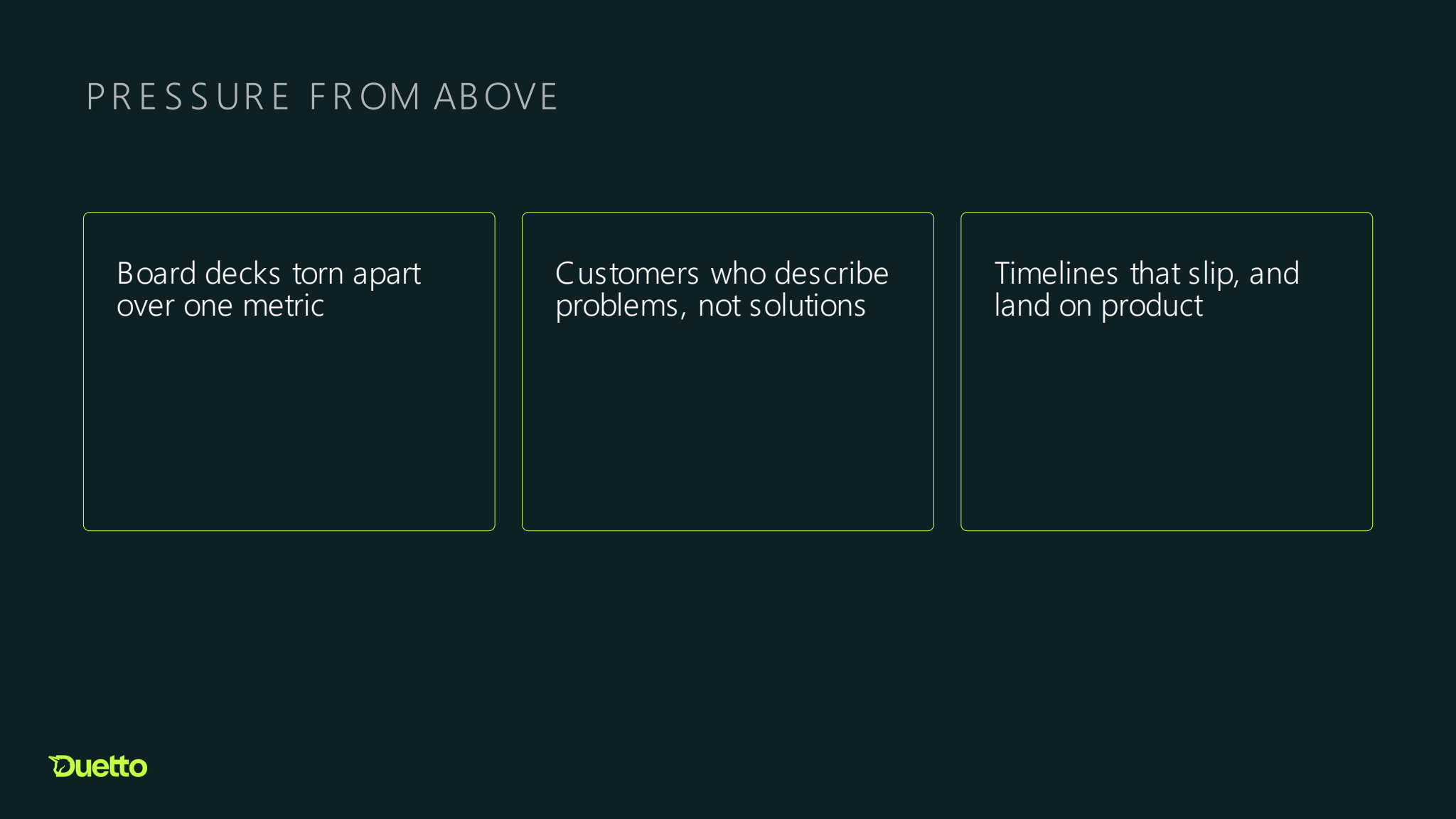
I recently prepared a board deck and didn't sleep properly for three weeks. I was convinced that one wrong metric in a 400-page document would get me shredded for the entire meeting.
Customers add to this pressure, especially the big, loud ones. They're great at telling you their problems, but they struggle to say whether your solution is any good until it's in their hands. And when timelines slip, it's somehow always product's fault. We're expected to pull rabbits out of hats with resources we don't have.
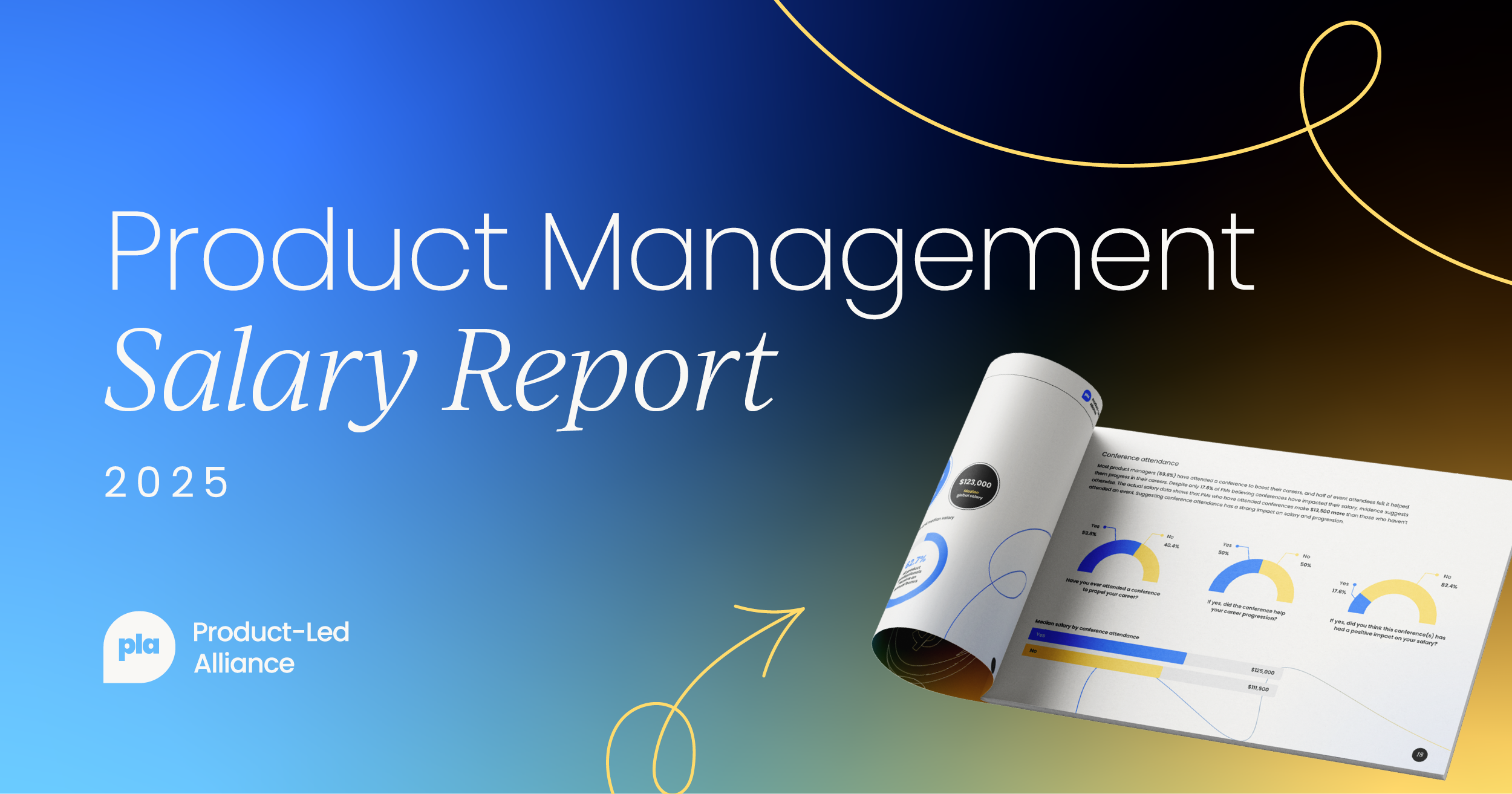
The State of Product Management report backs this up. When asked what most often causes misalignment between product strategy and the roadmap, 49.2% of respondents pointed to resource and capacity constraints. Shifting priorities due to short-term commitments came in a close second at 47.5% – and shifting priorities have never been more constant than they are right now.
The real risk of the AI moment
On top of all of this, we're now expected to be AI-native, and our discipline is getting blurry in ways that are both exciting and concerning.
We're seeing product, design, and engineering start to merge in some organizations. That has upsides. An empowered, solution-minded engineer can build quickly and produce great results.
It also has risks. Nine times out of ten, that engineer will skip steps an experienced product leader or designer knows you shouldn't skip, whether that's because of the market, design principles, or just hard-won context about what customers actually need. Now you're stuck supporting a product you may never have bought into.
This blurring of roles hides a trap: it’s never been easier to build the wrong thing quickly. Product sense – knowing what's actually worth building – has always been a constraint. That hasn't gone away. It's just become harder to see.
The shift in what we're responsible for


Become a PLA Insider
Thank you for subscribing
Get exclusive insights, frameworks, and strategies from product leaders driving real business impact.
An email has been successfully sent to confirm your subscription.
 Follow us on LinkedIn